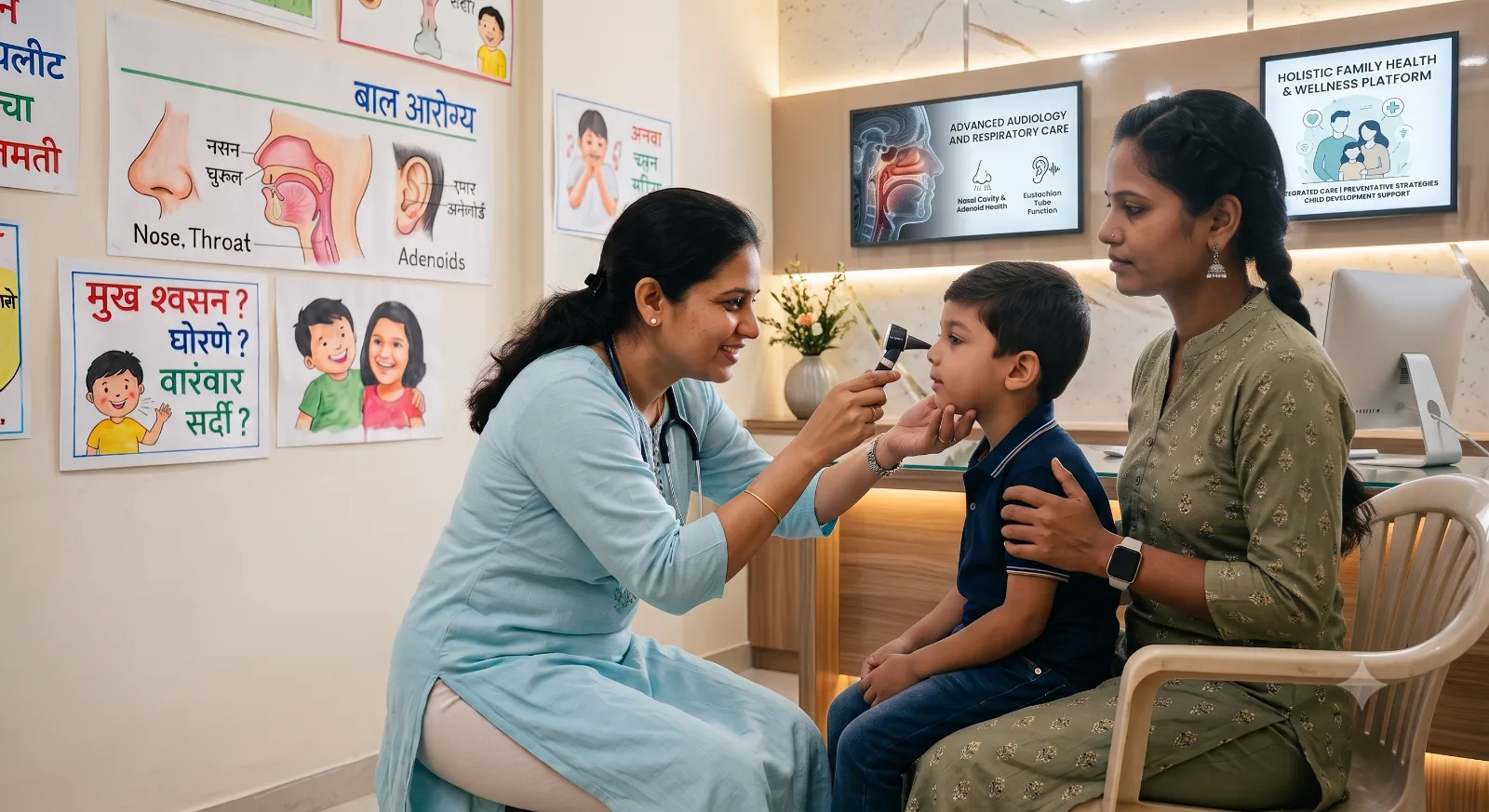
Breast Milk and the Gut Health: Why the First Food Matters in a Child's Life
 Written by Dr. Rajeshwari Yadav
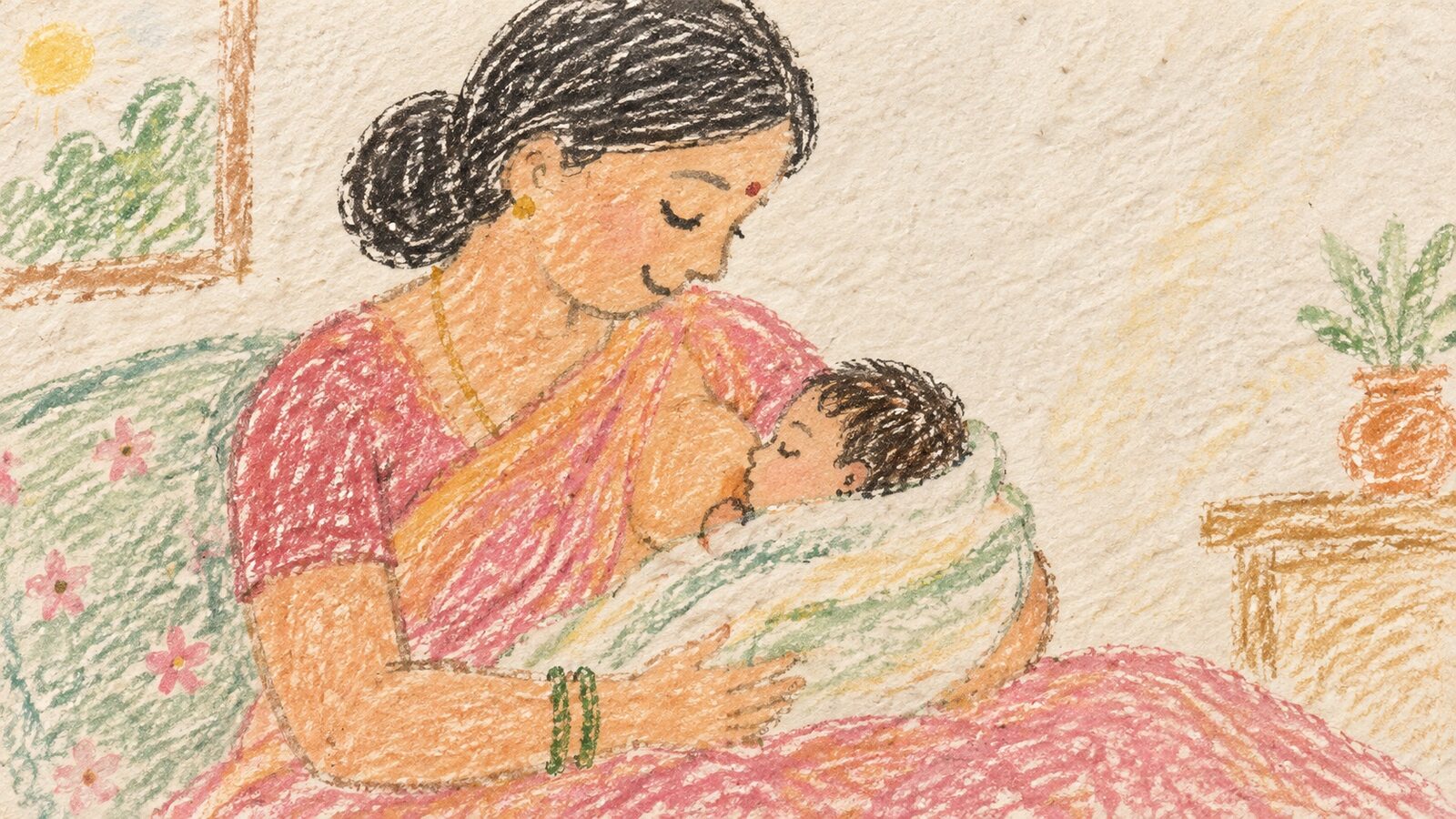
A question I have been asking in my clinical practice for years
During our medical college days, while taking the history of a child, there was always a column that asked about breastfeeding.
Was the child breastfed? For how long? Was formula milk introduced? At what age?
For many years, I must admit, I used to ask these questions rather mechanically. It was one of those routine questions that had to be asked and documented in the case history. We collected the information, filled the column and moved on to the next question.
But as my clinical experience grew, something began to change.
I started becoming more conscious of this particular aspect of a child's history. Especially when I began seeing more children with recurrent infections, allergies, skin conditions and developmental concerns, I became increasingly curious about their early feeding history.
I would often find myself comparing the histories of children who had received their mother's milk during infancy with those who had received very little breast milk or were primarily formula-fed.
Over time, I started noticing differences in the kinds of health concerns these children presented with. It made me wonder whether the earliest nutritional experiences of a child were influencing something much deeper than just physical growth and weight gain.
Of course, these were clinical observations, not controlled scientific comparisons. But they made me curious enough to look beyond the usual case history.
Recently, while reading about the infant gut microbiota, I went through several papers and the work done to date (the references are listed at the end of this article).
And suddenly, many of the questions I had been carrying from my clinical practice started connecting with the science of how a child's internal microbial environment develops.
Breast milk is much more than nutrition
We generally understand breast milk as the most natural source of nutrition for a newborn. It provides fats, proteins, carbohydrates, vitamins and several essential nutrients required for growth and development.
But there is something more fascinating happening here.
Human milk is also an important contributor to the development of a baby's gut microbiota. Now, what exactly is gut microbiota?
Our digestive tract is home to trillions of microorganisms, including bacteria that participate in digestion, metabolic processes, immune regulation and maintaining the intestinal environment.
A newborn does not begin life with the same complex microbial community that an adult has. During infancy, this microbial population gradually develops and changes. The first year of life is particularly important because the gut microbiota is undergoing a dynamic process of microbial establishment and development.
A Stanford University study from 2007 followed the developing gut microbiota of fourteen infants from birth until their first birthday. Interestingly, the researchers found that microbial development was highly individual. Even though the babies were going through the same broad developmental stage, their microbial communities followed different patterns.
This tells us something important.
A child's gut microbiota is not simply acquired overnight. It develops through a complex interaction between several factors, including nutrition, environment and other early-life influences.
And breast milk has a particularly interesting role in this process.
The role of HMOs: nature's way of feeding beneficial bacteria
One of the most interesting components of human milk is something called Human Milk Oligosaccharides, commonly known as HMOs. These are complex carbohydrates naturally present in breast milk.
Here is the fascinating part. Unlike most nutrients in breast milk, HMOs are not primarily meant to be digested and absorbed by the baby.
Then why does breast milk contain them?
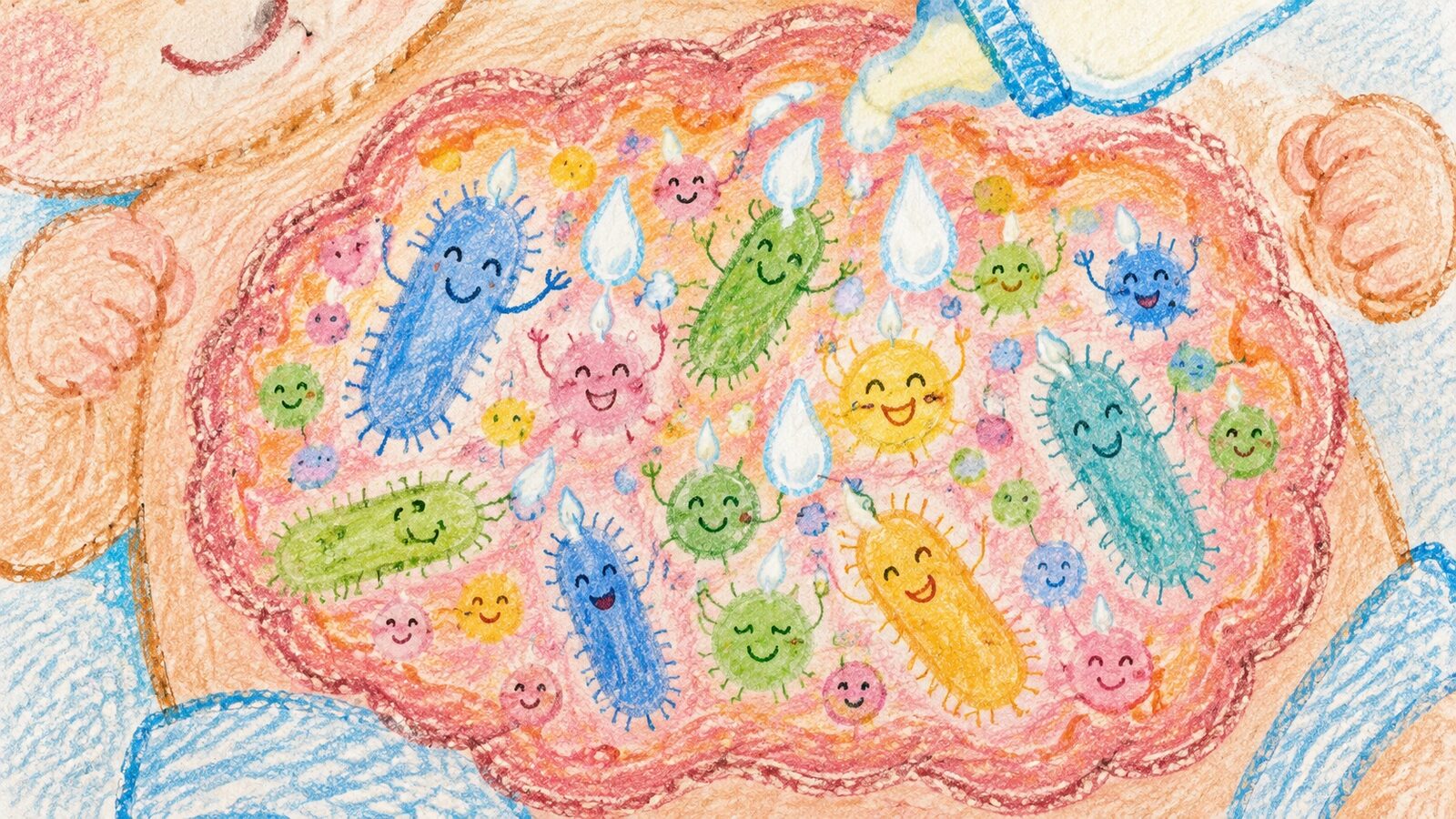
Because they serve another important purpose. They provide nourishment to certain beneficial microorganisms living in the baby's gut.
In simple words, the mother is not only feeding her baby. She is also providing nourishment to the beneficial bacteria that are gradually establishing themselves inside the baby's digestive system.
Among these bacteria, Bifidobacteria are particularly important. HMOs selectively nourish beneficial bacteria such as Bifidobacteria and also help support the establishment of other bacterial groups, including Bacteroides. These microorganisms contribute to the developing microbial ecosystem of the infant gut.
Isn't that remarkable? Something that the baby's digestive system cannot directly digest becomes valuable because it feeds the microorganisms that help shape the baby's internal environment.
Breast milk also provides antibodies and other immune-supporting molecules that help protect the infant while the baby's own immune system is still developing.
So, breast milk is doing several things simultaneously:
- It nourishes the baby
- It supports immune protection
- It helps guide the development of the infant gut microbiota
This is one of the reasons why we should look at breastfeeding as something much more than simply providing calories and nutrition.
What about babies who receive formula milk?
This is another important aspect worth understanding.
Modern infant formula has made significant advances and provides essential nutrition for babies who cannot be breastfed or need supplementation. But nutritional adequacy and biological equivalence are not necessarily the same thing.
Human milk contains a remarkably complex combination of HMOs, antibodies, immune molecules and other components that are difficult to reproduce completely in manufactured formula.
Some formula manufacturers have attempted to incorporate prebiotics such as GOS (galacto-oligosaccharides) and even selected probiotic bacteria to better support the infant gut microbiota. These developments are useful areas of nutritional research. However, GOS and HMOs are not chemically identical, and adding selected ingredients does not automatically reproduce the complete biological effects of human milk. This also highlights that the ideal combination of microorganisms for an infant's developing gut is not yet fully understood.
This is an important distinction.
Formula milk is an essential alternative when breastfeeding is not possible or sufficient. Mothers should never be made to feel guilty about circumstances beyond their control.
But where breastfeeding is possible, supported and desired, it deserves every encouragement.
Even partial breastfeeding can be valuable. Every mother and every baby have their own circumstances, and the objective should always be to support the child's health without judging the mother's choices.
Another important part of a child's early health history: antibiotics
In my clinical practice, there is another question I have increasingly started paying attention to.
How frequently did the child receive antibiotics during the first few years of life?
Did the child have repeated episodes of respiratory infections, throat infections, ear infections or gastrointestinal illnesses? How many times were antibiotics prescribed? Were they genuinely indicated? Was there a pattern of recurrent illness?
Why am I interested in this?
Because antibiotics, while sometimes absolutely necessary and life-saving, can also influence the gut microbiota.
Antibiotics do not distinguish perfectly between bacteria causing an infection and beneficial bacteria residing in the gut. Depending on the antibiotic, its duration and the individual child's microbial environment, treatment can reduce the abundance of certain beneficial microorganisms and alter the balance of the microbial community.
Repeated antibiotic exposure, particularly during early childhood, deserves attention because this is a period when the gut microbiota is still developing.
This does not mean that every child receiving antibiotics will develop a chronic health problem. Nor does it mean that antibiotics should be avoided when medically necessary. But it does mean that we should be thoughtful about their use.
A child with recurrent illnesses should not simply be evaluated episode by episode. We should also ask why these illnesses keep recurring, what factors may be contributing to them and whether there is an opportunity to reduce unnecessary antibiotic exposure.
This is why I consider antibiotic history an important part of my paediatric case-taking.
How do we approach this at Caitanya Healing by Homeopathy?
At Caitanya Healing by Homeopathy, we believe that understanding a child's health requires looking beyond the immediate complaint.
When a child comes to us with recurrent allergies, repeated infections, eczema, psoriasis, autism, ADHD or other chronic health concerns, we try to understand the complete story. We pay attention to several aspects:
- Was the child breastfed? If yes, for how long?
- Was formula milk introduced during infancy?
- What was the child's early nutritional history?
- Was there a history of frequent antibiotic exposure?
- Does the child have recurrent respiratory, digestive or skin-related complaints?
- How are the child's digestion, bowel habits, sleep, diet and general development?
We consider these details as part of the child's broader clinical picture rather than isolated pieces of information.
Our approach also emphasises responsible antibiotic use. Antibiotics should be prescribed when clinically indicated, not automatically for every episode of fever, cough or cold.
We use homeopathy as a part of our clinical approach, with the intention of supporting the child's overall care. For children with autism and ADHD, we also believe in an individualised, multidisciplinary approach that recognises the importance of developmental assessment and appropriate therapies.
Our intention is to understand the child as a whole, rather than repeatedly treating one symptom at a time.
A simple question, a deeper meaning
I often think about how a question that once seemed like just another column in our medical college case history has become such an important part of my clinical enquiry.
Breastfeeding history. Formula feeding. Early nutrition. Antibiotic exposure.
These may look like simple historical details, but together they help us understand some of the earliest influences on a child's developing internal environment.
A child's health journey does not begin when the child first falls ill. It begins much earlier, with the environment, nutrition and experiences that shape the child's development.
As parents, understanding the importance of breastfeeding, supporting appropriate nutrition and avoiding unnecessary antibiotic exposure are meaningful steps towards protecting a child's health.
And as clinicians, perhaps we need to ask better questions, listen more carefully and look at the child's complete health story.
If your child is experiencing recurrent allergies, repeated infections, eczema, other chronic skin conditions or developmental concerns such as autism and ADHD, we would be happy to understand the child's complete clinical history and guide you towards an appropriate, individualised care plan.
Message the clinic directly — we usually reply the same day.
Ask us on WhatsApp