
Low on Energy? It Could Be a Vitamin You’re Missing
When I first started practicing, I used to believe that with a little sunshine and a decent diet, our bodies could manage most things on their own, especially when it came to essential vitamins like D and B12. But over the years, in clinic after clinic, test report after test report, I noticed a trend I could no longer ignore: even the healthiest-looking individuals were low in these two silent nutrients.
And the truth is — this isn’t just a trend. It’s a quiet health crisis that’s touching children, teens, mothers, working adults, and even elders.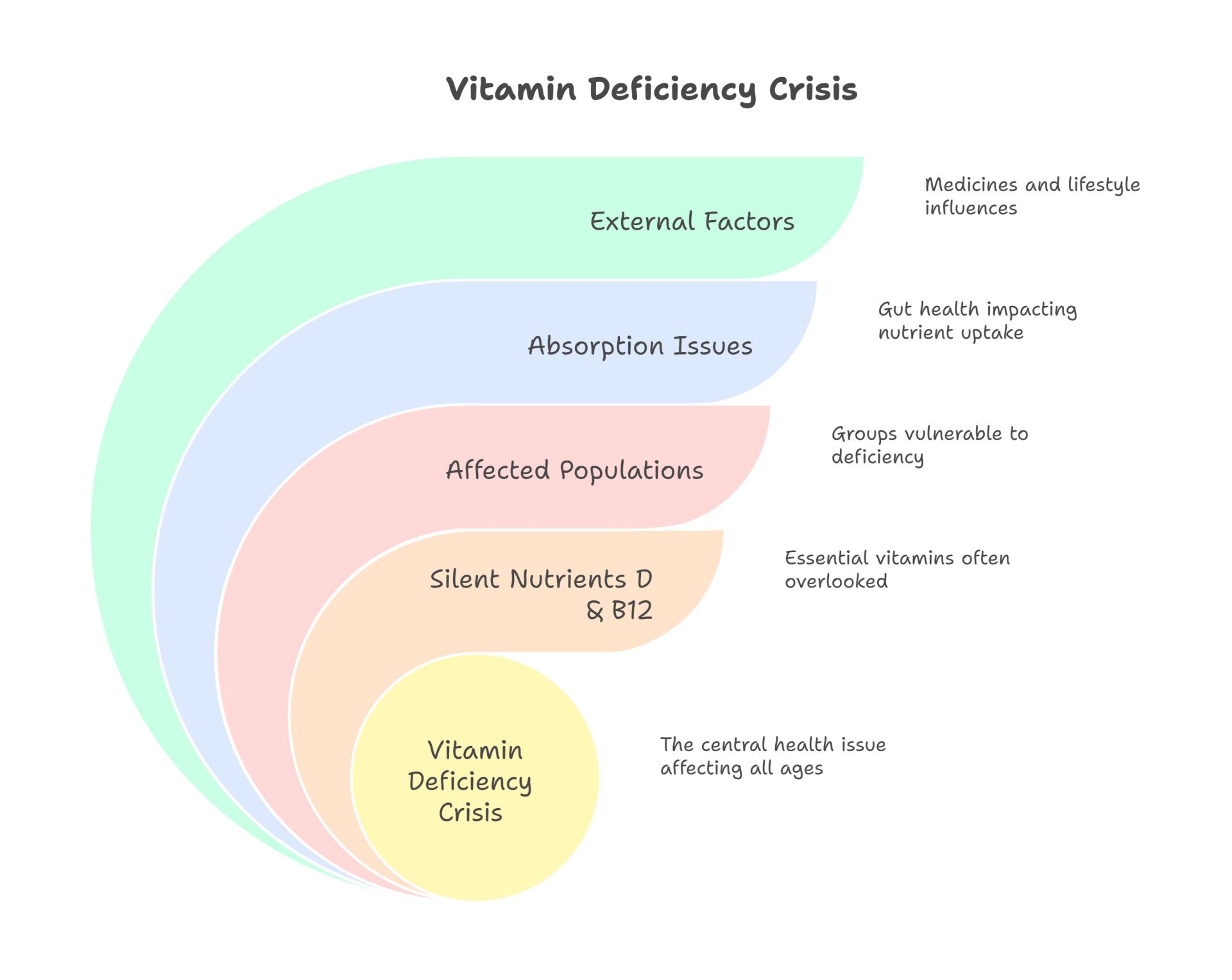
But why? Isn’t the Indian sun enough?
You’d think so. But Vitamin D isn’t just about sun exposure. That’s just where the journey begins.
What many people don’t realize is that after your skin makes Vitamin D from sunlight, it needs to pass through the liver, then the kidneys, and then finally be absorbed and utilized properly by your cells. It’s like a well-rehearsed orchestra — if even one instrument is out of tune, the music doesn’t sound right.
Let me walk you through what I often explain to parents or patients when they ask, “But doctor, I go out in the sun every day. Why am I still low on Vitamin D?”
1. Your Gut Might Not Be Absorbing It Well
This is a big one. Vitamin D is fat-soluble, meaning it depends on proper fat digestion and a healthy gut lining to be absorbed. So, even if you’re taking a good supplement or eating well, if your gut is inflamed, stressed, or leaky (think undiagnosed IBS, food intolerances, acidity, or chronic constipation), your body simply isn’t getting the benefit.
I remember working with a 10-year-old boy who had recurrent infections and always seemed fatigued. Despite his outdoor play, his Vitamin D and B12 levels were consistently low, and it all traced back to poor gut health.
2. Certain Medicines Quietly Deplete It
We don’t talk enough about how common medications interfere with nutrients. Drugs like corticosteroids, antacids, epilepsy medications, or even weight-loss drugs can reduce Vitamin D absorption or increase its breakdown in the liver. I see this frequently in adults who are managing multiple conditions.
It’s not just about what you take in — it’s also about what your body is forced to excrete or break down faster than it should.
3. Vitamin D Gets Trapped in Body Fat
Yes, trapped! Vitamin D binds to fat cells and gets stored instead of being available for the body to use. That means people with higher body fat percentages — including children with early signs of obesity — might show normal levels but have poor bioavailability.
They often need 2–3 times the usual intake to achieve the same effect. A classic case of “looks fine on paper,” but clinically unwell.
4. The Liver & Kidneys Have More Work Than We Realize
The conversion of sunlight into usable vitamin D involves both the liver and kidneys. So if someone has fatty liver (common even in thin individuals), alcohol consumption, or age-related kidney slowdown, this chain is disrupted. It’s a silent issue, but one I screen for routinely in my practice.
5. Your Genes Might Be Wired Differently
Here’s something fascinating: some of us have genetic variations that affect how well our bodies use Vitamin D. This means that even with good levels, the cells aren’t getting the message.
This is especially important for immunity, mood, and neurological health. It reminds us that health is deeply personal, and sometimes, the standard lab report doesn’t tell the full story.
And what about B12?
Vitamin B12 is another quiet player in energy, memory, nerve health, and mood regulation. I’ve seen teenage girls with anxiety and low focus, new mothers with extreme fatigue, and young children with irritability — all showing low B12 levels despite no obvious risk.
Why?
Because B12 absorption requires something called “intrinsic factor” in the stomach, which gets hampered with age, poor diet, acidity, or gut inflammation, vegans and vegetarians are especially at risk, but even non-vegetarians aren’t immune. It’s not about eating enough — it’s about absorbing sufficient.
So… should we all supplement?
In an ideal world, food and lifestyle would be enough. But today, with depleted soil, long indoor hours, digestive issues, and environmental stressors, a little support goes a long way.
In my practice, I gently incorporate homeopathy to improve gut absorption, reduce inflammation, and enhance the body’s ability to process and utilize nutrients. Combined with the right diet and smart supplementation, it becomes a sustainable, long-term solution.
In Summary:
- Low Vitamin D & B12 aren’t just due to poor sunlight or poor food.
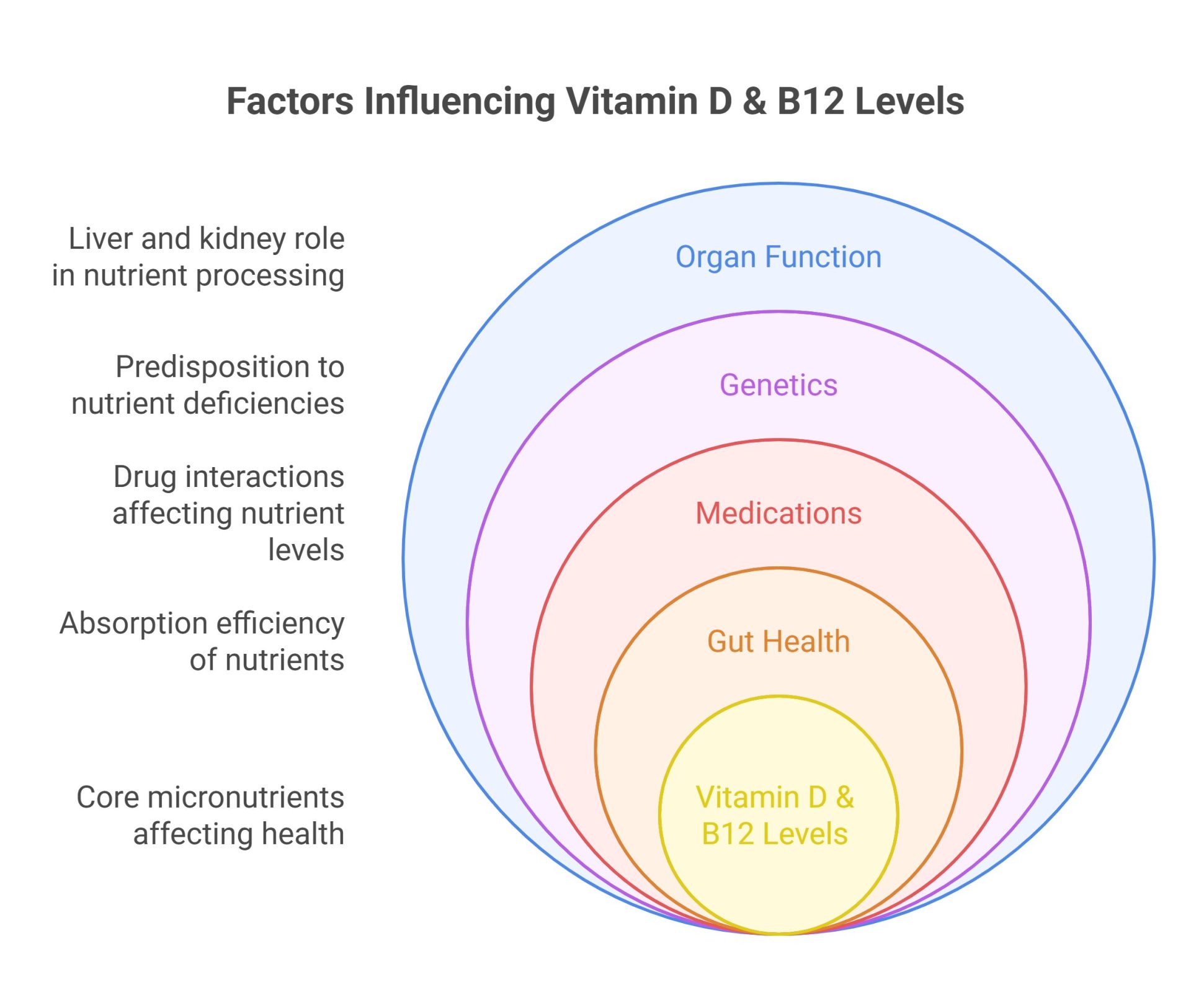
- Gut health, medications, genetics, and organ function all play a role.
- Supplementing isn’t a sign of weakness — it’s a step toward long-term strength.
- And most importantly, it’s never too early or too late to take charge of your child’s or your micronutrient health.



Write a Comment