Category: Depression

Bullying, How to Spot It, Stop It, and Heal Your Child with Homeopathy

“Mumma, please don’t send me to school today… my head hurts.”

What if it’s not a fever, but fear?

In India, 42% of school-going children have faced bullying. It’s silent. It’s scarring. And for many children, it becomes a hidden trauma that affects their mood, health, and confidence.

As a parent, how can you recognize the signs of a child’s mental health issues? And how can you help your child heal—emotionally and physically—without resorting to harsh measures?

Let’s explore the impact of bullying, how to spot it, how to respond, and how gentle, constitutional homeopathy can become your child’s emotional rescue tool.

 Quick Facts About Bullying in India

  • 42% of students report being bullied at school (NCPCR)
  • Bullying is more common in middle school (Classes 6–8)
  • Girls experience more emotional bullying; boys experience more physical bullying
  • Cyberbullying is rising among children aged 10–16
  • Verbal abuse, teasing over appearance, caste, or academic performance are common triggers

Why Do Kids Bully?

Before rushing to punish, take a pause and ask—why is this happening?

Bullying is often a symptom, not the root cause.

Your child—or another child—may be bullying because:

  • They feel powerless or ignored at home
  • They’re mimicking aggressive behavior from parents, teachers, or the media
  • They’ve been victims of bullying themselves
  • They’re struggling emotionally and don’t know how to ask for help

Important: Children who bully also need healing, not just punishment. Treating them with compassion opens the door for real change.

Is Your Child Being Bullied? Look for These Signs

Bullying doesn’t always leave bruises. But the emotional signs can be just as painful.

Watch out for these subtle red flags:

  • Sudden refusal to attend school or tuition
  • Repeated complaints of headaches, stomachaches, especially on school days
  • Mood swings, crying spells, or emotional withdrawal
  • Declining interest in friends, hobbies, or social events
  • Sudden changes in screen time—either constant use or complete avoidance
  • Quickly hiding screens or switching tabs
  • Deleted social media accounts or sudden changes in digital behavior

Note: If you notice these signs, listen first. Be calm. Don’t rush to judge or react. Your child needs safety, not solutions.

Types of Bullying in Indian School Contexts

  • Verbal bullying: Teasing over looks, caste, accent, or academic marks
  • Physical bullying: Pushing, slapping, hitting—especially among boys
  • Cyberbullying: Trolling, shaming, leaking photos, or group chat exclusion
  • Social bullying: Isolation, gossip, or turning peer groups against a child
  • Academic bullying: Teachers or peers mocking performance or learning difficulties

How You Can Help: Practical Actions for Indian Parents

At Home:

  • Create a non-judgmental space to talk. Let your child vent.
  • Reassure them: “You didn’t do anything wrong.”
  • Build emotional literacy—help them name their feelings.
  • Role-play safe responses: “Please stop,” or “That’s not okay.”
  • Reinforce self-worth through stories, affirmations, and routine.

At School:

  • Document incidents—dates, names, screenshots.
  • Approach the class teacher, school counselor, or principal.
  • Refer to CBSE/State anti-bullying policies. Schools are now legally required to respond.

In Case of Cyberbullying:

  • Take screenshots, save chat logs, and report abusive posts
  • If needed, file a complaint with your local Cyber Crime Cell under the IT Act
  • Set healthy screen-time routines and reinforce boundaries around sharing personal content

How Homeopathy Can Gently Heal the Emotional Scars of Bullying

Bullying doesn’t just affect the mind—it affects the entire child.

A bullied child may develop:

  • Anxiety, phobias, or panic attacks
  • Bedwetting or frequent illness
  • Sleep disturbances and nightmares
  • Aggression, withdrawal, or poor concentration
  • Gut issues, appetite loss, or hormonal imbalances

This is where constitutional homeopathy works beautifully.

Instead of suppressing symptoms, it:

  • Addresses the deep emotional trauma stored in the body
  • Matches your child’s unique personality, emotions, and physical complaints
  • Calms the nervous system and boosts emotional regulation
  • Restores confidence, sleep, appetite, and overall well-being

Real Healing: A Story from My Practice

A 12-year-old boy came to me with daily headaches and withdrawal from school. Gentle questioning revealed that classmates had mocked him for his stammer. With a carefully selected constitutional remedy, lifestyle tweaks, and emotional coaching, his symptoms resolved. He returned to school with courage and even joined a drama group six months later.

Your Child Deserves to Feel Safe, Seen, and Strong

Bullying can shake a child’s sense of self. But with love, clarity, and holistic support, healing is always possible.

You don’t have to do it alone.

Need Support?

Is your child showing signs of stress, withdrawal, or frequent illness?
You don’t have to wait for it to get worse.

Let’s gently uncover what’s beneath the surface—and start healing from the inside out.


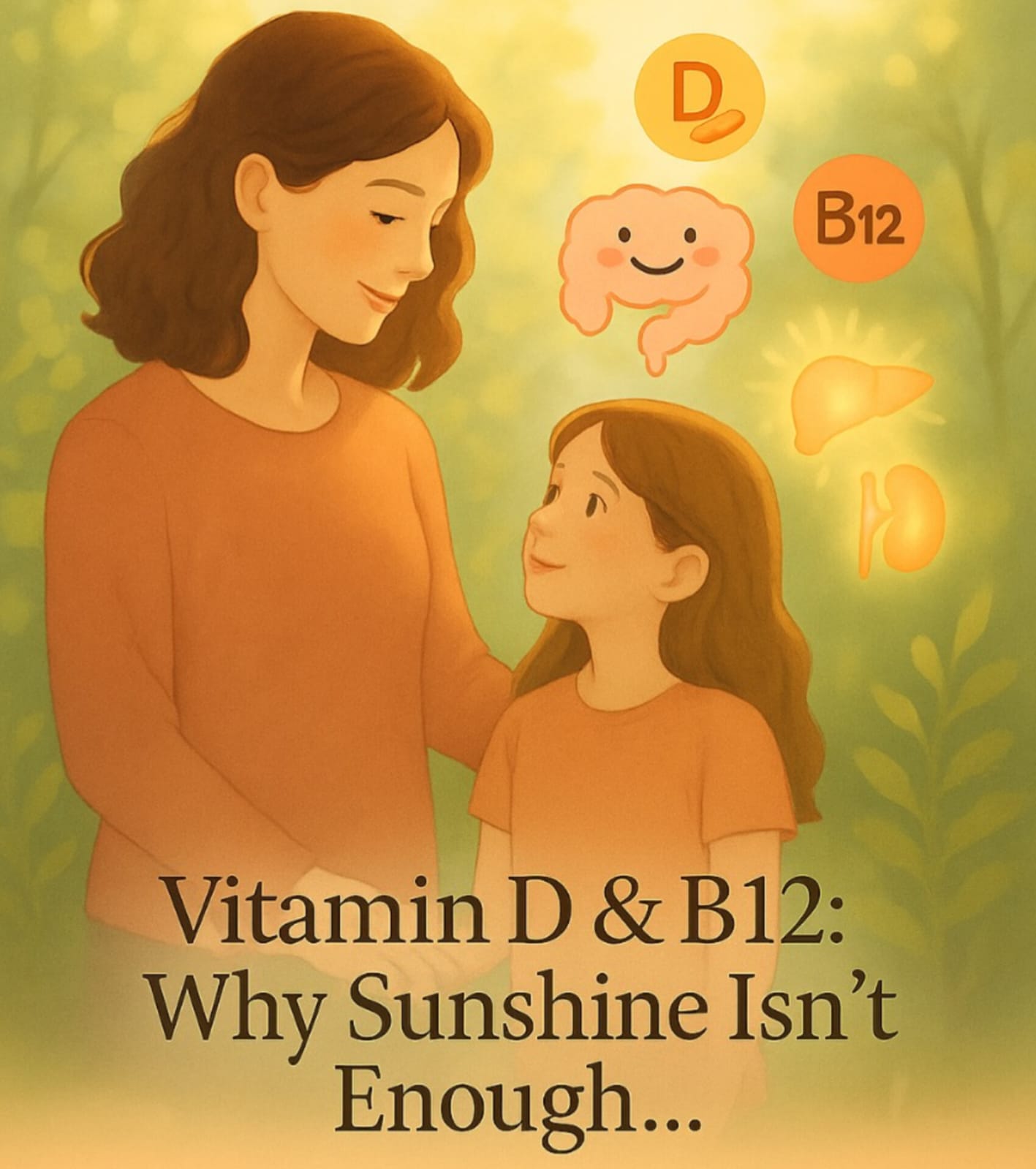
Low on Energy? It Could Be a Vitamin You’re Missing

When I first started practicing, I used to believe that with a little sunshine and a decent diet, our bodies could manage most things on their own, especially when it came to essential vitamins like D and B12. But over the years, in clinic after clinic, test report after test report, I noticed a trend I could no longer ignore: even the healthiest-looking individuals were low in these two silent nutrients.

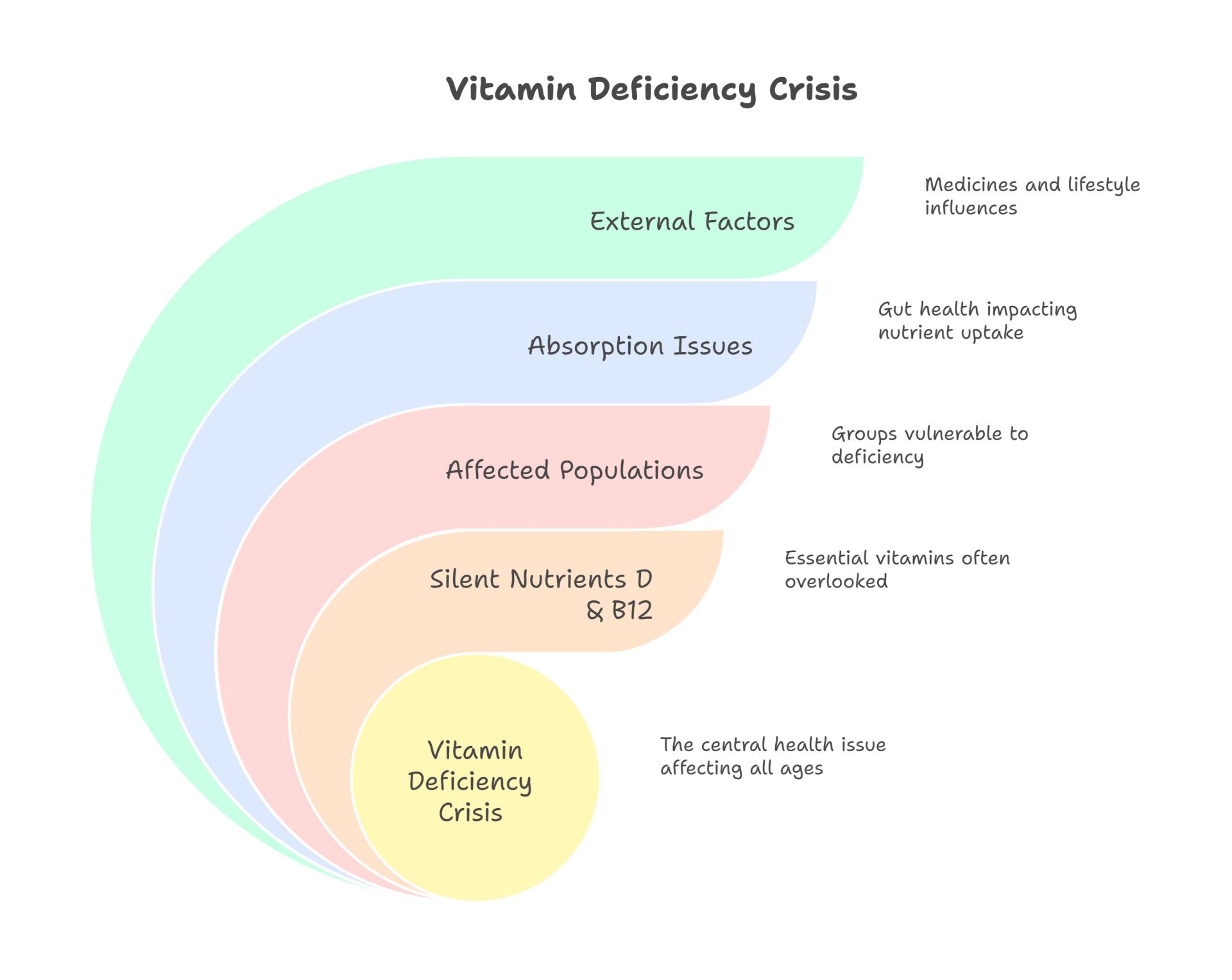
And the truth is — this isn’t just a trend. It’s a quiet health crisis that’s touching children, teens, mothers, working adults, and even elders.

But why? Isn’t the Indian sun enough?

You’d think so. But Vitamin D isn’t just about sun exposure. That’s just where the journey begins.

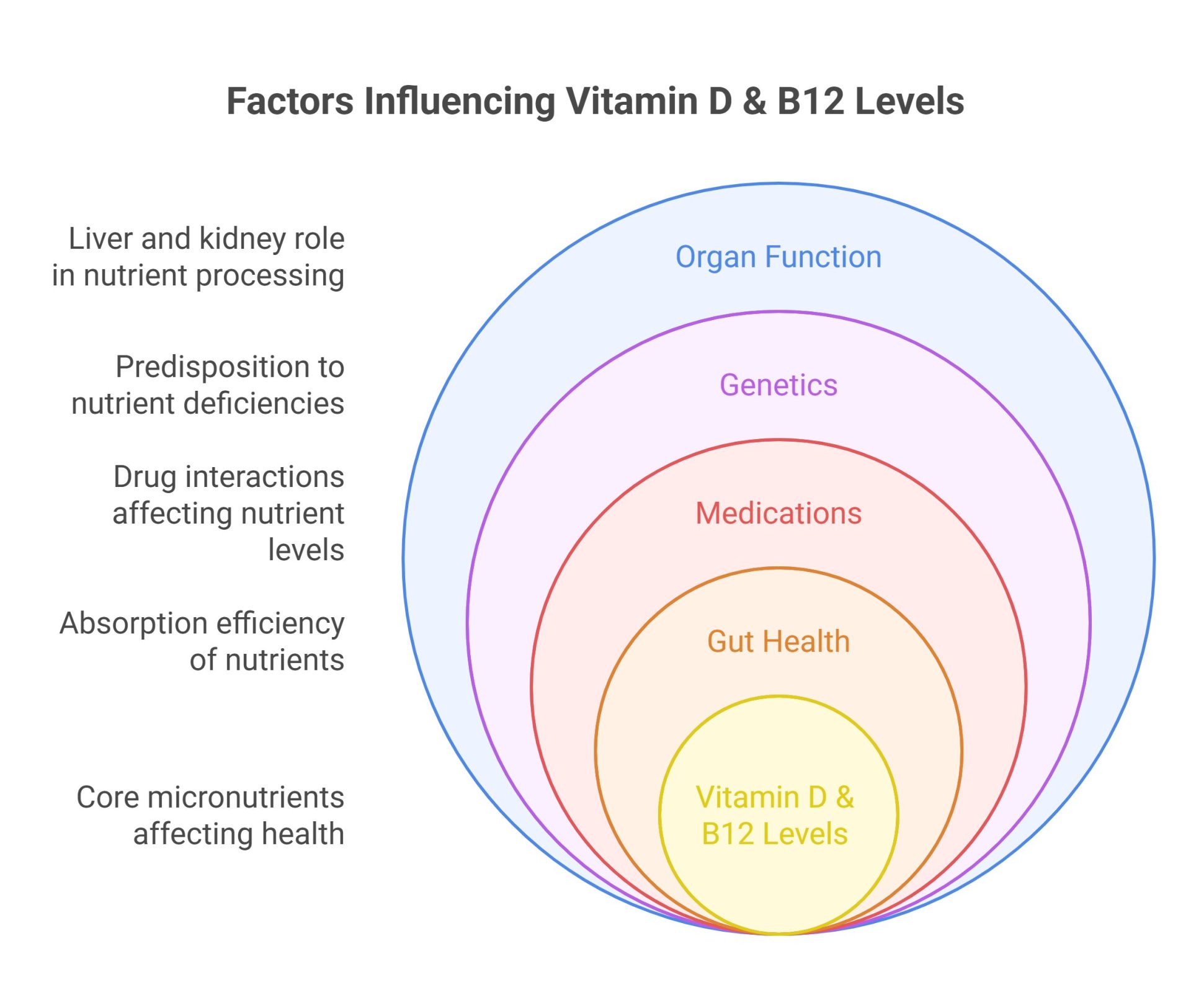
What many people don’t realize is that after your skin makes Vitamin D from sunlight, it needs to pass through the liver, then the kidneys, and then finally be absorbed and utilized properly by your cells. It’s like a well-rehearsed orchestra — if even one instrument is out of tune, the music doesn’t sound right.

Let me walk you through what I often explain to parents or patients when they ask, “But doctor, I go out in the sun every day. Why am I still low on Vitamin D?”

1. Your Gut Might Not Be Absorbing It Well

This is a big one. Vitamin D is fat-soluble, meaning it depends on proper fat digestion and a healthy gut lining to be absorbed. So, even if you’re taking a good supplement or eating well, if your gut is inflamed, stressed, or leaky (think undiagnosed IBS, food intolerances, acidity, or chronic constipation), your body simply isn’t getting the benefit.

I remember working with a 10-year-old boy who had recurrent infections and always seemed fatigued. Despite his outdoor play, his Vitamin D and B12 levels were consistently low, and it all traced back to poor gut health.

2. Certain Medicines Quietly Deplete It

We don’t talk enough about how common medications interfere with nutrients. Drugs like corticosteroids, antacids, epilepsy medications, or even weight-loss drugs can reduce Vitamin D absorption or increase its breakdown in the liver. I see this frequently in adults who are managing multiple conditions.

It’s not just about what you take in — it’s also about what your body is forced to excrete or break down faster than it should.

3. Vitamin D Gets Trapped in Body Fat

Yes, trapped! Vitamin D binds to fat cells and gets stored instead of being available for the body to use. That means people with higher body fat percentages — including children with early signs of obesity — might show normal levels but have poor bioavailability.

They often need 2–3 times the usual intake to achieve the same effect. A classic case of “looks fine on paper,” but clinically unwell.

4. The Liver & Kidneys Have More Work Than We Realize

The conversion of sunlight into usable vitamin D involves both the liver and kidneys. So if someone has fatty liver (common even in thin individuals), alcohol consumption, or age-related kidney slowdown, this chain is disrupted. It’s a silent issue, but one I screen for routinely in my practice.

5. Your Genes Might Be Wired Differently

Here’s something fascinating: some of us have genetic variations that affect how well our bodies use Vitamin D. This means that even with good levels, the cells aren’t getting the message.

This is especially important for immunity, mood, and neurological health. It reminds us that health is deeply personal, and sometimes, the standard lab report doesn’t tell the full story.

And what about B12?

Vitamin B12 is another quiet player in energy, memory, nerve health, and mood regulation. I’ve seen teenage girls with anxiety and low focus, new mothers with extreme fatigue, and young children with irritability — all showing low B12 levels despite no obvious risk.

Why?

Because B12 absorption requires something called “intrinsic factor” in the stomach, which gets hampered with age, poor diet, acidity, or gut inflammation, vegans and vegetarians are especially at risk, but even non-vegetarians aren’t immune. It’s not about eating enough — it’s about absorbing sufficient.

So… should we all supplement?

In an ideal world, food and lifestyle would be enough. But today, with depleted soil, long indoor hours, digestive issues, and environmental stressors, a little support goes a long way.

In my practice, I gently incorporate homeopathy to improve gut absorption, reduce inflammation, and enhance the body’s ability to process and utilize nutrients. Combined with the right diet and smart supplementation, it becomes a sustainable, long-term solution.

In Summary:

  • Low Vitamin D & B12 aren’t just due to poor sunlight or poor food.
  • Gut health, medications, genetics, and organ function all play a role.
  • Supplementing isn’t a sign of weakness — it’s a step toward long-term strength.
  • And most importantly, it’s never too early or too late to take charge of your child’s or your micronutrient health.

A Doctor’s Guide to Early Signs of Autism, ADHD & Learning Issues in Indian Kids

Apna bachpan yaad hai? Hamare parents ne kai baar bola hoga — “Bachpan mein sabhi aise hote hain, theek ho jaayega.” And honestly, unki baat mein pyaar toh tha, lekin aaj ke zamane mein sirf pyaar kaafi nahi hai — clarity bhi zaroori hai.

This question, “Is it just a phase?”, is one of the most common and important doubts I hear from parents. And if you’ve been wondering the same about your child, aap akelay nahi ho.

Let’s break it down together — one step at a time. Scientifically. Compassionately. No jargon. Just a real conversation that might bring you clarity and peace

Sabhi bachhe alag hote hain — True or just comfort talk?

Yes — it’s true that every child develops at their own pace. Some walk at 10 months, some at 15. Some speak by 1.5 years, others by 2. But there’s a range of normal. Science calls these developmental milestones — important markers to help us catch when a child might need extra support.

For example, if your child is:

    • Not making eye contact
    • Doesn’t respond to name by 12 months
    • Is not pointing or waving by 15 months
    • Hasn’t spoken meaningful words by 18–24 months
    • Repeats phrases but doesn’t use them to communicate
    • Can’t sit still for even a few minutes
    • Lines up toys, flaps hands, or avoids interaction

Yeh sirf “alag” hona nahi hai — yeh developmental red flags ho sakte hain. Not labels, not judgments — just signals. Aur jitni jaldi hum in par kaam karein, utna accha outcome hota hai.

It’s Not Just Behavior — It’s Brain Wiring

Neurodevelopmental disorders — like Autism Spectrum Disorder (ASD), Attention Deficit Hyperactivity Disorder (ADHD), and Learning Disabilities (LD) — parenting se nahi hote. Inka base hota hai brain wiring, genetics, sometimes early birth-related complications or environmental influences.

Indian parents often hear or think:

  • “Ladka hai, isliye late bol raha hai.”
  • “Ghar mein sab late bolte hain.”
  • “Shayad TV zyada dekh liya.”
  • “Main working mom hoon, meri wajah se toh nahi?”

Please remember: Blame doesn’t help. Awareness does. Yeh kisi ka fault nahi hai — but knowing early helps us give the child the right tools to thrive.

Why Waiting Can Hurt

Kai baar relatives ya even doctors bolte hain, “Waqt ke saath theek ho jaata hai.”

But science tells us something else. The brain is most adaptable — neuroplastic — in the first 5–6 years of life. After that, it’s like clay that begins to harden.

Studies show that children who receive support before the age of 3 show significantly better long-term outcomes in language, attention, behavior, and social development.

But what if I’m overthinking?

That’s a genuine fear many parents share — “Kahi main overreact toh nahi kar rahi?”

Think of it this way — agar aapke bacche ko blurred vision ho, aap uska eyesight test karwaate ho na? Evaluation means clarity. If everything’s fine, you get peace. If there’s a concern, you get time to act.

How Can Homeopathy Help — Scientifically?

Once we know what we’re dealing with, the next step is support.

This is where integrative care, including homeopathy, comes in. Now, I want to be very clear — homeopathy is not a replacement for therapies like speech, occupational therapy, or special education. But what it does offer is internal support to the child’s nervous system.

Homeopathic medicines are selected based on the child’s complete symptom picture — not just the diagnosis, but the child’s unique personality, fears, sleep, digestion, and emotional responses.

Emerging research shows that:

  • Homeopathy can help regulate sensory processing, especially in hypersensitive children.
  • It may help in improving sleep, anxiety, attention span, and emotional control — all crucial for learning.
  • Children receiving homeopathic care alongside therapies often show faster emotional settling and better engagement in sessions.

The goal is not to “cure” the child — the goal is to support their nervous system, reduce stress responses, improve adaptability, and gently assist development from the inside out.

Most importantly, homeopathy is safe, gentle, and non-toxic, making it ideal for growing brains and bodies.

What You Can Do Today

Start observing and noting patterns in your child over a few weeks.

Consult a developmental expert, not just a general pediatrician.

Don’t delay screening — tools like M-CHAT or Conners Scale are simple and available in many clinics.

Consider integrative support, including homeopathy, alongside therapy.

Trust yourself. You know your child best.

From Confusion to Clarity

I’ve seen non-verbal 3-year-olds become confident communicators.

I’ve seen children once lost in their own world slowly but surely begin to respond, connect, and even shine.

Kya yeh overnight hua? Nahi. Yeh hua because parents didn’t ignore their doubts — they acted on them.

So if you’re asking yourself, “Is this just a phase?” — it’s time to trust that instinct. Because early action is not fear — it’s faith in your child’s potential.

Let’s make decisions not out of panic, but out of informed compassion.


Don’t Hold Back Your Sleep Disorder

In today’s world of fast pace, looking after a family, job, relationship,  distraction of social media and other responsibility, what I have observed we easily compromise our sleep to balance another part. We don’t need research to tell us that sleep is critical for brain function, but there’s plenty of it out there. We’ve all experienced groggy feeling, poor decision making and memory loss after a night of little or no sleep. 

What happens when a person doesn’t get enough sleep?

Studies have shown a clear relationship between sleep, food consumption, weight regulation, and metabolism.

people, who habitually sleep less than six hours per night are more likely to have a higher-than-average body mas index (BMI)? Researchers believe that this is because our bodies secrete hormones while we sleep that control appetite, metabolism, and glucose processing. Lack of sleep can wreak serious havoc on your insulin levels, put you at higher risk for diabetes, anxiety, and depression and worsen your PCOS symptoms, especially if you sleep less than five hours per night.


What causes sleep disorders?


  • Lifestyle choices:- Sleep is often the first thing to be sacrificed when we are overcommitted.


  • Disease and/or medical conditions: Many diseases and conditions make it difficult to sleep, either because you cannot get comfortable and relax or because they literally wake you, as in the case of sleep apnea. Often these diseases are caused, in part by sleep deprivation. Diseases such as coronary disease allergies cough, asthma, some chronic pain, depression, women by sleep deprivation, creating an unhealthy cycle.


  • Sleep apnea: If you snore loudly and wake with a dry mouth, headaches, or shortness of breath, and if your partner observes that you stop breathing during sleep, you should be tested for sleep apnea, Sleep apnea will worsen your insulin resistance and glucose processing.


  • Medication: Sleep disruption is a common side effect of many popular medications. 


  • Melatonin imbalance: Melatonin is a powerful hormone that regulates your circadian rhythm, the cycle of waking, and Sleep Disruption in its levels often results in sleep deprivation or unhealthy sleep patterns.


  • Cortisol imbalance: Your cortisol levels should naturally rise and fall. Ideally, they peak around 8 a.m. and drop off between midnight and 4 a.m. If you wake between 1 and 3 a.m. it may be because of low adrenal function and cortisol or inadequate glycogen reserves in the liver.


  • Strive to sleep seven to eight hours per night. Six hours seems to be the minimum amount of sleep the average person needs per night to function and be healthy. More than eight and a half to nine hours can also create metabolic issues. Here are some tips for getting a good night’s sleep


Measures to take for proper sleep 


  • Eat the right foods. Choose foods that promote sleep (potassium-rich fruit, dark leafy greens, turkey, whole grains), and avoid sleep-interfering foods (anything high in fat or sugar even natural sugars like berries). If blood sugar drops below 50 mg/dL at night, it can increase levels of adrenaline, glucagon, cortisol, and growth hormone, all of which can stimulate the brain. Eating a big meal before sleep is not a good idea either. Your body will be too busy digesting to focus on the restorative aspects of sleep, like detoxifying, regenerating cells, and reviving. If you must eat before bed, the best snacks contain both carbohydrates and protein. Legumes, nuts, and seeds are all good choices.
  • Support your adrenal glands. Although cortisol helps your body to adjust to perceived emergencies, chronic stress can lead to adrenal fatigue, a cortisol imbalance, and sleeplessness. Take steps to manage your stress during the day. Experiment with relaxation techniques, yoga, and daily movement.
  • Supplement with magnesium. Magnesium is the “relaxation mineral.” Leafy green veggies, oatmeal, pumpkin seeds, black beans, and almonds are all good sources of magnesium. You can also choose a high-quality supplement or take an Epsom-salt bath. Adequate magnesium doesn’t guarantee a good night’s sleep, but lack of magnesium will literally keep you up at night.
  • Boost your melatonin. Melatonin must have darkness to trigger activation (even if it is supplemented). Turn off lights and pull light-blocking shades. Turn off electronics at least an hour before bedtime.
  • Practice a sleep ritual. A sleep ritual is a crucial element for ensuring a good night’s sleep. Relax your body and mind for 30 to 60 minutes before bedtime to signal your body that it is time to sleep. It gives your mind time to settle so it isn’t racing and making “to-do lists” and helps your muscles to let go of the stress of the day. Try to go to bed at the same time each night. Turn off electronics at least an hour before bed, and practice letting the stresses of the day melt away. Repeat the same steps every night before bed, and your body will begin to go to sleep.
  • Cut back (or cut out) caffeine, stimulants, and sugar, especially after lunch. Don’t consume caffeine four to six hours before bed. This includes dark chocolate!
  • Avoid alcohol. Don’t drink alcohol for several hours before sleep. If you have a glass of wine to help you sleep, it will initially act as a sedative, but it disrupts REM (rapid eye movement) sleep, and you’ll wake up in the middle of the night when the alcohol is being metabolized.


  • Seek treatment if you have an underlying medical condition. A health-care professional can help you resolve sleep apnea, depression, or anxiety.


Conclusion:- sleep disorder is not deadly, but not taken due care it may lead to chronic diseases in long run with decreased productivity. In homeopathy, we take into detail understanding of root cause in case understanding and try to resolve it from within its source in order to avoid any further complication in the most sustainable and non-addictive medicine.