Author: Dr. Rajeshwari Yadav

Is It IBS? Understanding Irritable Bowel Syndrome in Children

Have you noticed your child complaining of stomach pain that comes and goes, sometimes with constipation, sometimes with loose motions? Do they say they feel better after passing stools? You might wonder, “Is this just something they ate, or something more?” In many such cases, the answer could be Irritable Bowel Syndrome, or IBS.

What Is IBS in Children?

Irritable Bowel Syndrome is a functional gastrointestinal disorder. That means the structure of the digestive tract is normal, but how it works is not. It’s a condition where your child’s gut becomes overly sensitive or reactive, leading to recurring symptoms.

Children with IBS:

  • Complaint of abdominal pain for at least 8 weeks over the past year
  • Often feel better after a bowel movement
  • Experience pain with changes in the form or frequency of stools
  • May have constipation, diarrhea, or both
  • Often describe bloating, mucus in the stool, or urgency to go

IBS is not dangerous, but it can cause significant distress and impact your child’s everyday life, school, play, appetite, and mood.

Why Does It Happen?

IBS is believed to be the result of a miscommunication between the brain and the gut. Factors that contribute include:

  • Sensitive gut nerves reacting to normal digestion as pain
  • Stress or anxiety, which can amplify gut signals
  • Food intolerances, like excess sugar or dairy
  • A history of gut infections
  • Genetic tendency—it may run in families

In simpler terms, your child’s digestive system is like a car alarm that goes off too easily—even a light breeze (a normal meal, a little gas) can trigger it.

How Is IBS Different from Other Conditions?

Unlike inflammatory bowel disease (IBD) or celiac disease, IBS does not involve tissue damage, inflammation, or malabsorption. That’s why blood tests and scans are often normal.

But IBS is real. The pain and discomfort are genuine, and your child needs support, not dismissal.

Red Flags: When It Might Not Be IBS

It’s important to rule out more serious problems. See your doctor if your child also has:

  • Weight loss or poor growth
  • Blood in stool or urine
  • Persistent vomiting
  • Fever, rash, or joint pain
  • Extreme tiredness between episodes
  • Family history of IBD or celiac disease.


How Is IBS Diagnosed?

Diagnosis is usually clinical, based on a detailed history and symptom pattern. There’s no single test for IBS, but your child’s doctor might order:

  • Blood tests (to rule out anemia, infection, and  inflammation)
  • Stool tests (to check for infections or parasites)
  • Ultrasound (to rule out organ issues)

Most tests are done to exclude other causes of abdominal pain.

How Can I Help My Child With IBS?

1. Diet Changes

Some simple dietary changes can work wonders:

  • Increase fiber intake gradually (age in years + 5 grams/day)
  • Avoid fermentable sugars like fructose (fruit juice, soda, chewing gum)
  • Try a short trial of a dairy-free diet if lactose intolerance is suspected
  • Keep a food and symptom diary to identify triggers

2. Manage Stress

School pressure, family changes, or even excitement can trigger symptoms. Helping your child manage stress is a key part of IBS care.

Helpful practices include:

  • Breathing exercises
  • Relaxation techniques
  • Journaling or drawing feelings
  • Regular routines for sleep and meals

Some children may benefit from seeing a pediatric psychologist, especially if they show signs of anxiety or low mood.

Should My Child Stay Home From School?

Only if they’re vomiting or have a fever. Otherwise, school attendance is encouraged. Staying home for too long increases anxiety and worsens symptoms. If needed, the school can offer short rest breaks when pain flares.

The Good News

IBS can feel overwhelming, but with the right care, most children learn to manage it well. Symptoms often reduce significantly over time, especially when there’s understanding, support, and consistent routines at home.

Takeaway for Parents

Your child’s tummy pain is not “in their head,” and they’re not just trying to avoid school or food. IBS is a real condition, but also a manageable one. By addressing gut sensitivity, stress, and diet, you can help your child feel like themselves again.

If you feel stuck or unsure where to begin, know that you’re not alone. At Holistic Parenting Tribe, we combine homeopathy, gut care, and lifestyle support to gently bring balance back to your child’s life.

Homeopathy for IBS: A Gentle Reset for the Gut and Mind

Many parents come to me after trying everything—diet changes, tests, even medications—but their child’s tummy troubles continue. That’s where homeopathy brings in its quiet magic.

Unlike conventional approaches that suppress symptoms, homeopathy works by identifying the root emotional and physical patterns that make your child’s gut so reactive.

It’s not just “what” the child eats, but how they process life experiences that matters.


Real Story: A Mother’s Relief and a Child’s Turnaround

I once saw an 8-year-old girl, Aarohi, who had been struggling for nearly a year. Her mornings began with an urgency to use the bathroom—sometimes three or four times before school. Her parents had done every test possible. All were normal.

But she had stopped eating her favorite foods. She was terrified to go to birthday parties. Her once-cheerful energy had dulled. Her mother told me, “Every time she smiles, I’m scared it will turn into a stomach ache.”

During our consultation, I discovered that Aarohi was a perfectionist—worried about school marks, scared to make mistakes. Her IBS wasn’t just from food—it was tied to deep anticipatory anxiety.

I gave her a personalized homeopathic remedy based on her unique emotional and physical makeup.

Within two weeks, the early-morning bathroom runs reduced. Her appetite returned. Over two months, her confidence and calmness grew—and so did her smile.

Her gut healed because her nervous system healed. That’s the power of well-matched homeopathy.

 How Homeopathy Works for IBS

  • It calms hypersensitive gut nerves
  • It reduces anxiety and emotional reactivity
  • It supports digestion, absorption, and elimination naturally
  • It strengthens your child’s resilience from the inside out

Each remedy is tailored to your child’s story, not just their symptoms.

If your child’s tummy seems to carry the weight of their world, homeopathy can be the gentle switch that helps their system reset.


Why Does My Child’s Stomach Always Hurt?

Understanding Functional Abdominal Pain in Children

Your child clutches their tummy again, wincing. Maybe it’s just after breakfast… or right before school. You’ve been to the doctor, done the tests—everything comes back “normal.” But your child’s pain is real. It’s frequent, unpredictable, and starting to affect their daily life.
If you’re feeling helpless, confused, or even doubting yourself, you are not alone.

Many children experience Functional Abdominal Pain (FAP), a common yet often misunderstood condition where a child has recurring stomach pain without any visible medical cause. No ulcers, no infections, no inflammation—yet the discomfort is genuine and sometimes intense.

So what’s going on?

In children with FAP, the gut becomes overly sensitive. Normal digestion, mild gas, or even emotional stress can trigger cramping or pain. Think of the gut as a balloon—if squeezed too tightly or stretched too far, it hurts. For some kids, even a gentle squeeze is too much. Their pain threshold is lower, and their nervous system is just more reactive.

This blog will help you understand:

  • Why your child’s pain is not imaginary

  • What symptoms to watch for

  • How emotions and stress influence the gut

  • When to worry—and when to relax

  • How you can help your child feel better, naturally and holistically

Let’s break the cycle of frustration and fear—and give your child the comfort, clarity, and care they deserve.

What Exactly Is Functional Abdominal Pain?

Functional Abdominal Pain (FAP) is a condition where the child experiences chronic or recurrent belly pain, but no medical test finds anything physically wrong. No ulcers. No infections. No inflammation. And yet, the pain is there, often centered around the belly button.

This is not “just in their head.”
It’s a real, recognized condition. The pain arises from how the nervous system and digestive tract communicate.

In simple terms:

  • The gut has its network of nerves, often called the “second brain.”

  • In children with FAP, these gut nerves become extra sensitive.

  • Normal digestion or emotional stress can cause the gut to overreact, sending strong pain signals to the brain, even when nothing is medically wrong.

And just like some kids get headaches from stress or excitement, others get stomach aches.

What Does It Look Like in Real Life?

Children with FAP often:

  • Complaint of stomach pain that comes and goes unpredictably

  • Say the pain isn’t tied to eating or using the toilet

  • Point to the pain around the belly button

  • Appear otherwise well in between episodes

  • Sometimes experience nausea, bloating, or feeling full easily

This pain can disrupt:

  • Sleep

  • School attendance

  • Playtime

  • Eating habits

  • Emotional wellbeing

It may seem mild some days and unbearable on others. And often, there’s no clear trigger. A fun birthday party or school test could bring on a flare. That’s because emotions and gut sensitivity are deeply connected.

Why Emotional Stress Makes It Worse

Did you know your child’s gut is wired to their emotional brain?

Stressful or exciting events—exams, social worries, even sleepovers—can cause the gut to contract more forcefully or send amplified pain signals.

So while your child may not have a stomach “disease,” their nervous system is amplifying pain, and that’s very real.

When Should You Worry? Red Flags Every Parent Must Know

While functional abdominal pain is common and usually not dangerous, there are times when stomach pain can signal something more serious. Here are the red flags to watch for:

Contact your doctor if your child has:

  • Unexplained weight loss or isn’t growing normally

  • Bloody diarrhea

  • Persistent vomiting

  • Blood in the urine or pain while peeing

  • Fever, rash, chills, or joint pain

  • Low energy between pain episodes

  • A family history of IBD or celiac disease

These symptoms may point to conditions like inflammatory bowel disease, celiac disease, or organ issues, which need specific medical treatment.

How Is Functional Abdominal Pain Diagnosed?

There’s no single test to diagnose FAP. Your doctor uses a combination of:

  • Symptom history

  • Growth patterns

  • Physical examination

 If needed, tests may include:

  • Blood work (to rule out anemia, inflammation)

  • Urine tests (for infection or kidney issues)

  • Stool tests (for blood or parasites)

  • Ultrasound (to view abdominal organs)

In most children with FAP, all these tests come back normal. That’s a good sign—it rules out serious illness and allows us to focus on supporting gut sensitivity gently.

How Can You Help Your Child Feel Better? A Holistic Healing Approach

Once serious causes are ruled out, managing Functional Abdominal Pain is all about supporting your child’s sensitive gut and nervous system—gently, consistently, and holistically.

1. Diet Therapy: Healing Through the Plate

  • Avoid fermentable sugars like fruit juice, soda, candy, gum (which ferment in the gut and cause gas)

  • Try a dairy-free week to check for lactose intolerance

  •  Increase fiber intake (age in years + 5 grams/day)

  •  Skip fizzy and caffeinated drinks

  • Use a food diary to track patterns

2. Emotional Support: Calming the Gut-Brain Axis

  • Reassure your child that their pain is real, but manageable

  • Teach breathing exercises or guided relaxation

  • Stick to routines (sleep, meals, screen time)

  • Consider mind-body therapy or counseling if stress is high

3. Homeopathy: Gentle, Individualized Healing

Homeopathy offers a natural, side-effect-free way to:

  • Calm gut sensitivity

  • Balance emotions

  • Improve resilience

A few commonly used remedies:

  • Colocynthis – for pain relieved by pressure

  • Lycopodium – for gassy, anxious children

  • Pulsatilla – for clingy, emotionally sensitive kids

  • Nux vomica – for irritable children with diet-related pain

The best results come with individualized prescribing based on your child’s overall constitution and emotional pattern.

The Takeaway: You’re Not Imagining It, and Neither Is Your Child

If your child keeps saying, “My tummy hurts,” and tests don’t give you answers, you may feel stuck. But you’re not alone.

Functional abdominal pain is the body’s way of asking for balance between food, emotions, and nervous system sensitivity. With small, thoughtful changes in diet, routine, and emotional support—and gentle, holistic care—most children bounce back beautifully.

  •  You don’t have to wait for the pain to “just go away.”
  •  And you don’t need to manage it all on your own.

Let’s Help Your Child Heal—Gently and Naturally

At Holistic Parenting Tribe, we use a blend of homeopathy, gut support, and lifestyle healing to restore your child’s well-being from the inside out.

👉 Book a personalized gut-health consult for your child today.
Let’s explore the root cause, ease their discomfort, and help them thrive.

8 Daily Tips to Calm Your Hyperactive Child

After reading my earlier blog on recognizing the signs of hyperactivity, many parents ask:
“Okay, but what can I do to help my child every day?”
And the answer is—a lot.

Parenting a hyperactive child is not about controlling their energy. It’s about learning how to channel it with calm, clarity, and care.

Let’s explore the small yet powerful shifts you can make at home to help your child feel more grounded, understood, and successful.

1. Create Predictable, Visual Routines

Hyperactive children thrive on rhythm. Their nervous systems crave structure, even if they resist it at times.

  •  Use visual schedules with pictures or drawings.
  •   Create predictable sequences: Wake → Brush → Dress → Eat → School.
  •   Use timers or songs for transitions. (“After this song ends, it’s time to clean up.”)

When children know what’s coming next, it reduces internal chaos, and behavior often improves naturally.

2. Build Calm Spaces in Their Day

Your child’s world often feels loud, fast, and overwhelming—even when they don’t show it.

You can help by designing moments of calm:

  • A quiet nook with books, soft pillows, and dim lighting
  • Gentle music or nature sounds
  • Sensory play, like clay, sand, water, or kneading dough
  • Coloring mandalas, finger painting, or stringing beads

These aren’t just fun—they’re therapeutic tools that regulate the nervous system and help the child “reset.”

In homeopathy, we often notice that children calm significantly when their sensory environment matches their constitutional needs—whether it’s needing warmth, silence, touch, or rhythm. These details also guide remedy selection.

3. Observe Triggers and Patterns (Start a Daily Log)

Every child has a unique behavioral rhythm.
Some get restless before meals. Others unravel after screen time or post-school fatigue.

Keep a simple daily tracker for a week. Note:

  • Times of peak restlessness
  • Food or sleep patterns
  • Triggers (noise, crowds, transitions)
  • Moments of calm (music, physical touch, bath time)

Once you see the pattern, you can plan instead of reacting.

Bonus Tip: You can use our [Gut-Behavior Tracker] to easily map this connection—many parents find surprising clues here, especially around food, mood, and attention.

4. Praise Progress, Not Just Perfection

Hyperactive children are often corrected constantly: “Sit down.” “Stop that.” “Pay attention.”

Over time, this chips away at their confidence. Instead:

  •  Catch them doing something right.
  •  Celebrate small wins: “I love how you sat quietly for 5 minutes!”
  • Use reward charts not as bribes, but as visual reinforcement.

Positive attention teaches faster than criticism.
And emotionally, these children bloom under encouragement.

In homeopathic case-taking, noticing a child’s emotional response to praise, failure, criticism, or pressure gives deep clues about their temperament—and helps match them with the most effective remedy.

5. Nourish the Body-Brain Connection

Some children are sensitive to what goes into their bodies, even when tests are normal.

Try these daily shifts:

  • Balanced meals with steady protein and fiber
  • Regular hydration (many children drink far less than needed)
  • Reduce artificial colors, junk snacks, and sugary drinks
  • Avoid screen time an hour before sleep

You don’t need to restrict everything, just observe, rotate, and tune in.

6. Consider Gentle Homeopathic Support

Homeopathy doesn’t aim to suppress energy, but to balance it from within.

When chosen correctly, remedies support:

  • Emotional self-regulation
  • Restful sleep
  • Reduced impulsivity
  • Better sensory tolerance
  • Smoother transitions

In my clinic, I combine behavioral tracking, developmental screening, and constitutional prescribing to support the child holistically.

Prioritize Sleep and Soothing Bedtime Rituals

Winding down is hard for hyperactive children, but essential.

Try this bedtime rhythm:

  • Warm bath with lavender
  •  Story time with soft lighting
  •  Comfort object or favorite blanket
  • Room darkening and quiet
  • Consistent bedtime (even on weekends)

Avoid overstimulation close to bedtime—TV, fights, or even loud laughter can delay sleep.

Many children show marked improvement with homeopathic sleep support, especially when paired with calming evening rituals.

8. Seek Help Early—Not Out of Fear, But Wisdom

Sometimes, despite your best efforts, things still feel overwhelming.
Your child might be struggling in school, socially, or emotionally.

This is not a failure—it’s a signal to bring in expert guidance.

In our Holistic Parenting Tribe clinic, we offer:

  • Developmental assessments for early detection
  • Personalized homeopathy for long-term regulation
  • Parent support sessions to help you respond, not react
  • Diet and lifestyle roadmaps based on your child’s rhythm

When we work together, we don’t “fix” the child—we free their potential.

In Closing: You Have More Power Than You Think

Every small step you take—observing a pattern, changing a bedtime ritual, choosing empathy over urgency—builds a calmer world for your child.

Hyperactivity isn’t the end of ease and joy in parenting. It’s just a different path—one that, when walked with insight and intention, can be deeply rewarding.

If you’d like personalized support, I invite you to:

 [Book a consultation with me]
 [Download the Gut-Behavior PDF]
 

Let’s raise children who feel seen, safe, and supported in their fullest, brightest selves.

Low on Energy? It Could Be a Vitamin You’re Missing

When I first started practicing, I used to believe that with a little sunshine and a decent diet, our bodies could manage most things on their own, especially when it came to essential vitamins like D and B12. But over the years, in clinic after clinic, test report after test report, I noticed a trend I could no longer ignore: even the healthiest-looking individuals were low in these two silent nutrients.

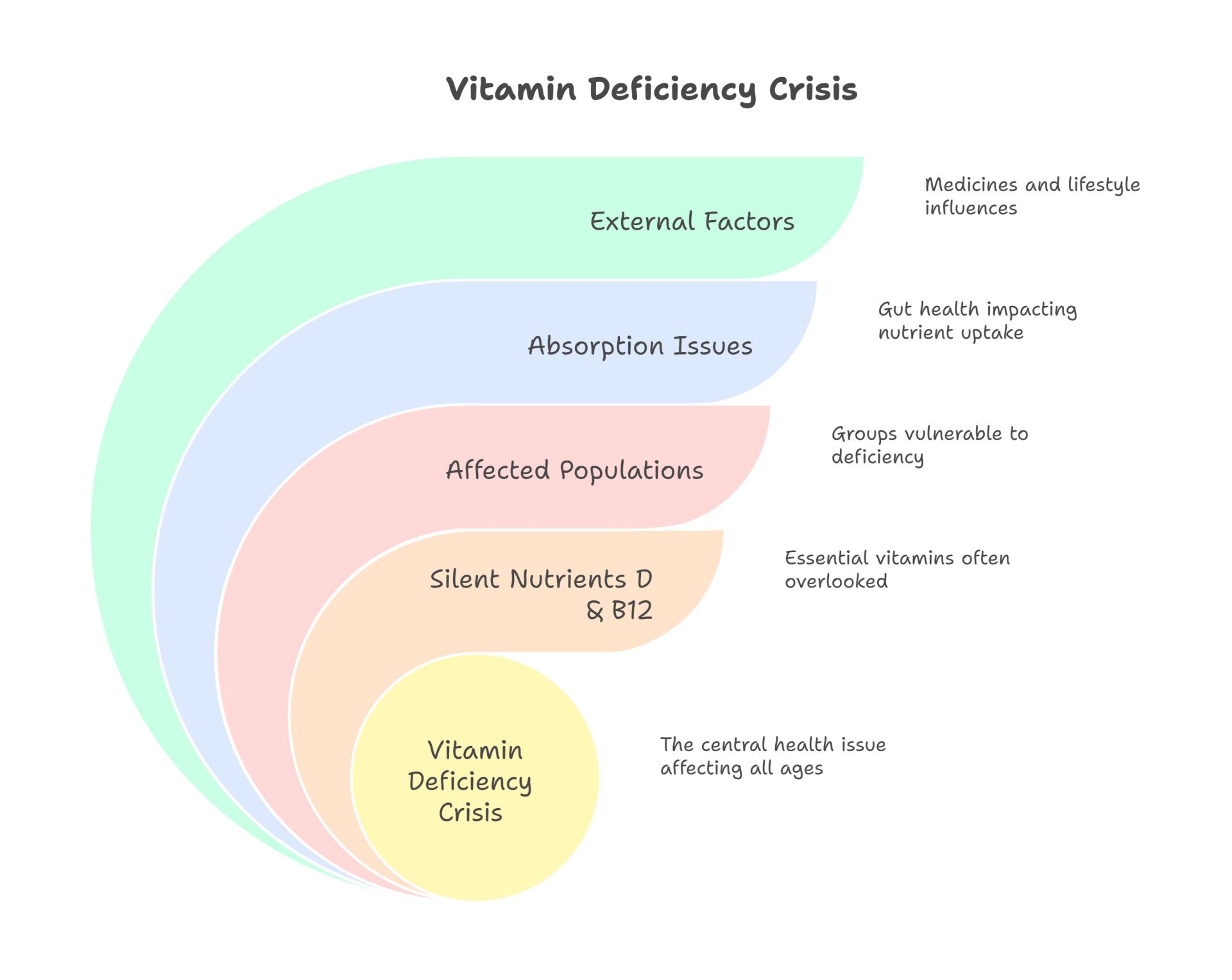
And the truth is — this isn’t just a trend. It’s a quiet health crisis that’s touching children, teens, mothers, working adults, and even elders.

But why? Isn’t the Indian sun enough?

You’d think so. But Vitamin D isn’t just about sun exposure. That’s just where the journey begins.

What many people don’t realize is that after your skin makes Vitamin D from sunlight, it needs to pass through the liver, then the kidneys, and then finally be absorbed and utilized properly by your cells. It’s like a well-rehearsed orchestra — if even one instrument is out of tune, the music doesn’t sound right.

Let me walk you through what I often explain to parents or patients when they ask, “But doctor, I go out in the sun every day. Why am I still low on Vitamin D?”

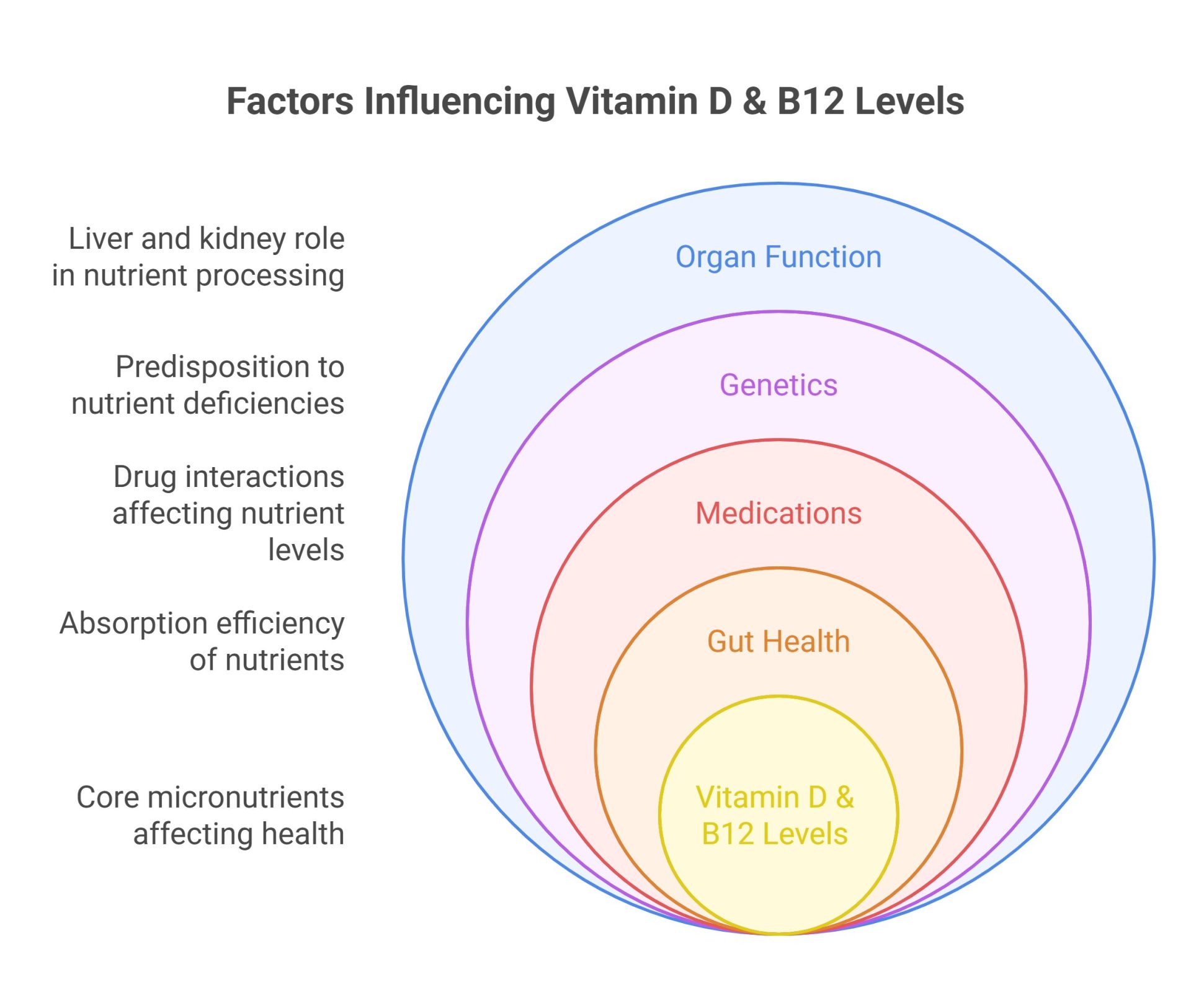
1. Your Gut Might Not Be Absorbing It Well

This is a big one. Vitamin D is fat-soluble, meaning it depends on proper fat digestion and a healthy gut lining to be absorbed. So, even if you’re taking a good supplement or eating well, if your gut is inflamed, stressed, or leaky (think undiagnosed IBS, food intolerances, acidity, or chronic constipation), your body simply isn’t getting the benefit.

I remember working with a 10-year-old boy who had recurrent infections and always seemed fatigued. Despite his outdoor play, his Vitamin D and B12 levels were consistently low, and it all traced back to poor gut health.

2. Certain Medicines Quietly Deplete It

We don’t talk enough about how common medications interfere with nutrients. Drugs like corticosteroids, antacids, epilepsy medications, or even weight-loss drugs can reduce Vitamin D absorption or increase its breakdown in the liver. I see this frequently in adults who are managing multiple conditions.

It’s not just about what you take in — it’s also about what your body is forced to excrete or break down faster than it should.

3. Vitamin D Gets Trapped in Body Fat

Yes, trapped! Vitamin D binds to fat cells and gets stored instead of being available for the body to use. That means people with higher body fat percentages — including children with early signs of obesity — might show normal levels but have poor bioavailability.

They often need 2–3 times the usual intake to achieve the same effect. A classic case of “looks fine on paper,” but clinically unwell.

4. The Liver & Kidneys Have More Work Than We Realize

The conversion of sunlight into usable vitamin D involves both the liver and kidneys. So if someone has fatty liver (common even in thin individuals), alcohol consumption, or age-related kidney slowdown, this chain is disrupted. It’s a silent issue, but one I screen for routinely in my practice.

5. Your Genes Might Be Wired Differently

Here’s something fascinating: some of us have genetic variations that affect how well our bodies use Vitamin D. This means that even with good levels, the cells aren’t getting the message.

This is especially important for immunity, mood, and neurological health. It reminds us that health is deeply personal, and sometimes, the standard lab report doesn’t tell the full story.

And what about B12?

Vitamin B12 is another quiet player in energy, memory, nerve health, and mood regulation. I’ve seen teenage girls with anxiety and low focus, new mothers with extreme fatigue, and young children with irritability — all showing low B12 levels despite no obvious risk.

Why?

Because B12 absorption requires something called “intrinsic factor” in the stomach, which gets hampered with age, poor diet, acidity, or gut inflammation, vegans and vegetarians are especially at risk, but even non-vegetarians aren’t immune. It’s not about eating enough — it’s about absorbing sufficient.

So… should we all supplement?

In an ideal world, food and lifestyle would be enough. But today, with depleted soil, long indoor hours, digestive issues, and environmental stressors, a little support goes a long way.

In my practice, I gently incorporate homeopathy to improve gut absorption, reduce inflammation, and enhance the body’s ability to process and utilize nutrients. Combined with the right diet and smart supplementation, it becomes a sustainable, long-term solution.

In Summary:

  • Low Vitamin D & B12 aren’t just due to poor sunlight or poor food.
  • Gut health, medications, genetics, and organ function all play a role.
  • Supplementing isn’t a sign of weakness — it’s a step toward long-term strength.
  • And most importantly, it’s never too early or too late to take charge of your child’s or your micronutrient health.

Is My Child Just Energetic—Or Hyperactive? 7 Signs Parents Shouldn’t Ignore

“He’s always on the move—even at bedtime.”
“My daughter talks non-stop, even when no one’s listening.”
“My child just cannot sit still—school is becoming a challenge.”

As a parent, you may have had these thoughts cross your mind. Some days, your child feels like a whirlwind of energy—and while it can be delightful at times, it can also leave you concerned, even overwhelmed.

So, how do you know if your child is just full of life, or showing signs of something more, like hyperactivity?

Let’s explore this together—with compassion, clarity, and care.

What Hyperactivity Looks Like (And When to Pay Attention)

It’s normal for young children to be active, restless, and curious. But in some children, this energy goes beyond the usual bounce and buzz of childhood.

Here are signs often noticed by parents and teachers:

  • Constant fidgeting or squirming, even when they should be still

  • Struggling to remain seated, often getting up or climbing

  • Seeming always on the go, rarely seeming tired

  • Talking excessively, interrupting conversations, and blurting answers

  • Difficulty engaging in quiet play or focused tasks

These signs aren’t just occasional bursts of energy—they appear consistently across different settings: home, school, outings, and even during rest periods.

One key clue is that typical children can wind down with a little guidance. Hyperactive children can’t, or struggle to.

But Why Is My Child So Restless?

This is the question most parents ask. And it’s a powerful one.

The truth is: hyperactivity is not caused by parenting mistakes, sugar intake, or being “naughty.”

Here’s what science tells us:

Brain Wiring and Genetics
Many hyperactive children have underlying differences in the brain areas that regulate attention, movement, and impulse control. These aren’t flaws—just variations. Often, there’s a family history of similar traits, even if undiagnosed.

Prenatal and Early Life Factors
Premature birth, stress during pregnancy, certain environmental exposures, or birth complications may influence early brain development.

Lifestyle and Environmental Aggravators
Lack of routine, poor sleep, chaotic surroundings, overstimulation, and excessive screen time can worsen restlessness, but they don’t cause it. Instead, they highlight the child’s sensitivity to rhythm and structure.

Gut Health and Nutrition
Some children may show gut-behavior links—certain food additives, preservatives, or sensitivities (like dairy or gluten) may aggravate restlessness or impulsivity.

This is where a holistic approach, including homeopathy, can be valuable.

Where Homeopathy Fits In: A Gentle, Whole-Child Approach

In my clinical practice, I often meet children who don’t just need a diagnosis—they need to be understood.

Homeopathy works by observing the child deeply, not just their symptoms, but their unique personality, sleep, cravings, fears, sensitivities, and developmental history.

A hyperactive child might:

  • Sleep restlessly, waking often

  • Show intense emotions that shift quickly

  • Crave certain foods or reject many

  • Be sensitive to noise, light, or temperature

  • Seems fearless or overly reactive

Each of these details helps us select a personalized remedy that supports the nervous system gently, helping reduce restlessness, improve emotional regulation, and restore balance.

Homeopathy doesn’t sedate or suppress. Instead, it supports the child’s own healing mechanisms—when combined with lifestyle support, nutrition, and structured routines, it becomes a powerful tool in the parenting journey.

So… Should I Be Worried?

Not necessarily. But awareness is important.

If your child’s restlessness creates problems at school or home, interferes with sleep, learning, or friendships, or is intense and persistent across months, it’s wise to explore further. Early guidance—not labels—can make a big difference.

A professional evaluation may include:

  • Feedback from parents and teachers

  • Observations across settings

  • Screening tools like the DSM-5 criteria

  • Ruling out other factors like anxiety, sensory issues, or autism

The goal isn’t to fix your child, but to understand them better and to offer them the right support.

You Don’t Have to Do This Alone

As a holistic developmental doctor and a parent myself, I’ve walked this road with many families. And here’s what I’ve learned:

You are not to blame.
Your child is not broken.
Support exists—and it works.

In our clinic, we offer:

  • Developmental screenings

  • Homeopathic consultations

  • Parent guidance sessions

  • Gut-behavior symptom tracking

  • Diet and routine planning

Together, we create a safe, non-judgmental space to explore your child’s behavior with depth and compassion.

In Closing: Watch, Don’t Worry—And Reach Out If Needed

Every child is unique. Not every active child is hyperactive. But if you feel something’s “off,” trust that inner voice—it’s not panic, it’s parenting intuition.

Observe. Reflect. And when needed, ask for help.

Because with the right approach—gentle yet informed, structured yet loving—your child can blossom in ways you never imagined.

Would you like to book a developmental screening or know if homeopathy might suit your child?
Click here to schedule a consultation or download our free Gut-Behavior Tracker.

Let’s decode the clues your child is giving you—together.

Wondering if your child’s behavior needs a deeper look, or just some gentle support?

Let’s talk.

Book a personalized online consultation with me and get clarity on whether your child’s hyperactivity is part of typical development or if they need early intervention, routine changes, or holistic support like homeopathy.

This is a safe, no-judgment space for parents who want real answers and kind guidance.

[Book Your Online Consultation Now]
And let’s take the first step—together.

Child Missing School Again? Read This

As a practicing homeopath and holistic child health consultant in the Mumbai–Thane region, I meet many concerned parents every monsoon season. Children who were otherwise active start falling sick frequently, with colds, viral fevers, diarrhea, and even dengue. I understand how exhausting this cycle can be—not just for the child, but for the whole family.

With this blog, I want to offer you a balanced, evidence-based understanding of what’s happening this season—and how you, as a parent, can act early, gently, and wisely to boost child immunity naturally.

1.Waterborne Illnesses

  Evidence & News Insights

According to Hindustan Times, there’s been a 40% rise in stomach-related infections among children this monsoon in Thane and Mumbai. Diarrhea, vomiting, stomach cramps—most of these are linked to contaminated water and food.

These illnesses often lead to dehydration, nutritional depletion, and missed school days. From my own clinical experience, children who have sensitive digestion or a history of frequent antibiotic use often struggle more during this time.

I remember treating a 6-year-old boy who fell sick every 10–15 days, mostly after eating out or getting wet in the rain. His immunity was low, his digestion was sensitive, and he had missed over 18 days of school in a term. After a constitutional homeopathic approach and lifestyle tweaks, he missed only 3 days in the following term.

In such cases, I’ve found that gentle, gut-supportive homeopathic remedies—selected after understanding the child’s symptom pattern—can help prevent relapse and strengthen digestive immunity over time.

2. Viral & Respiratory Infections

Evidence & News Insights

Flu-like infections are on the rise again. Hindustan Times reports that 20–50% of outpatient pediatric cases are related to seasonal viruses. Children present with persistent coughs, sore throat, low appetite, and lingering fatigue.

Indian Express (2023) highlighted that viral episodes are now lasting 10–15 days in many children under five. That’s a long time for a growing child to be weak, irritable, and missing out on learning.

While rest, fluids, and observation are essential, I’ve seen consistent improvements when we add constitutional homeopathy. Especially in children who fall sick repeatedly, this approach reduces both the intensity and duration of symptoms.

If your child is frequently unwell, consider home remedies for child fever and professional support before reaching for repeated antibiotics.

3. Hand‑Foot‑Mouth Disease (HFMD)

Evidence & News Insights

We’ve seen a rise in HFMD outbreaks across India. Caused by coxsackie and other enteroviruses, it mostly affects young children. Painful mouth ulcers, rashes, and reduced appetite can disrupt sleep, eating, and school.

The ICMR‑NIV lab in Thane has identified multiple strains of these viruses circulating locally.

Homeopathy can play a gentle but effective role in managing these symptoms, reducing skin discomfort and enhancing your child’s natural immunity without suppressing the illness artificially.

4. Vector‑Borne Illnesses: Dengue, Malaria, Chikungunya

Evidence & News Insights

As per BMC reports (June 2025), there have already been:

  • 395 dengue cases
  • 119 malaria cases
  • 658 chikungunya cases in the Mumbai–Thane belt

Some schools even shifted to online classes due to rising infections. Even actor Emraan Hashmi tested positive for dengue this season, highlighting the widespread risk.

In my practice, I support recovery with hydration, nutritional guidance, and individualized homeopathic remedies. This not only helps with acute symptoms but also reduces post-infection fatigue, which can drag on for weeks.

Reduced Absenteeism & Faster Recovery

Let me share what the data says:
A 2022 observational study in India found that homeopathic support reduced:

  • Fever duration by 1.5–2 days
  • Antipyretic use by 40%
  • Relapses within 6 months were halved

Schools that use integrative strategies—combining conventional and homeopathic support—report lower school absenteeism and faster child recovery.

In my clinic, I’ve seen this firsthand. Children who once missed 10–15 school days per term now miss just 1–2 days, even during peak flu season. Their immunity improves, and so does their attendance and mood.

How Homeopathy Helps Boost Child Immunity Naturally

As a doctor trained in scientific homeopathy, I don’t just suppress symptoms—I work to find a constitutional remedy that reflects your child’s physical traits, emotional tendencies, and response to illness.

Here’s what this approach can achieve:

  •  Shorten illness duration
  •  Reduce the intensity of symptoms
  •  Prevent frequent relapses
  •  Minimize medicine use and side effects

And most importantly, it builds deep, lasting immunity from within.

Why Parents Are Choosing Homeopathic Treatment

Every week, I hear things like:

“My child bounced back faster, without antibiotics every time.”
“We’ve had fewer days off from school this term.”
“Even when they get sick, it’s milder. That gives me peace of mind.”

This is not just anecdotal. It’s real-world evidence building over time. In fact, over 200+ families in the Thane–Mulund belt have used this integrative approach with promising results in the past 2 years.

What You Can Do As a Proactive Parent

  • If your child falls sick frequently, consult a trained homeopath
  • Watch for patterns: recurring fevers, lingering colds, slow recovery
  • Focus on gut health, sleep, hygiene, and fresh, seasonal food
  • Avoid self-medicating, especially with repeat antibiotics
  • Support your child with natural remedies under supervision

 A Gentle, Evidence-Aligned Step Forward

In my 15+ years of practice, I’ve seen how homeopathy—when applied with care and precision—can transform a child from sickly to strong. It’s not about replacing conventional medicine—it’s about complementing it, especially when your child’s immunity needs that extra boost.

If you’re tired of the sickness-antibiotic-sickness cycle, this could be the gentle, science-backed shift you’ve been looking for.

You don’t need to change everything overnight.
You just need to start.
And I’m here to walk with you.

Ready to Take the First Step?

If you’re wondering whether your child’s immune system is monsoon-ready, or if frequent illness is disrupting learning and growth, start here:

 Fill the Child Immunity Self-Check Form
In just 2 minutes, assess your child’s immunity with a simple checklist designed by a holistic doctor.

 Book an Online Consultation with Dr. Rajeshwari Yadav. Get personalized, integrative guidance to help your child recover faster and thrive naturally this season.


Menopause & Mental Health: Why You’re Feeling This Way

Let me start by saying: I see you.
You’re not imagining it.
The mood swings, the brain fog, the unexplained tears or irritability—it’s real. And you’re not alone.

As a woman myself of a certain age, now 40 years plus and a doctor working with women every day, I’ve come to understand that menopause isn’t just about hot flashes and missed periods. It’s deeply emotional. It’s mental. It’s hormonal. And sometimes, it can feel like you’re losing your sense of self.

Let’s unpack what’s going on.


What’s Happening to Our Bodies and Minds in Our 40s & 50s?

From around age 35 onward, our ovaries start producing less estrogen and progesterone—the hormones that not only regulate our periods, but also play a major role in our emotional and mental balance.

As we enter our 40s, this hormonal decline becomes more noticeable. Whether it’s perimenopause (the transition phase) or full menopause, these shifts can impact:

  • Mood (more irritability, sadness, even rage) 
  • Sleep (hello, 2 a.m. wake-ups) 
  • Memory (why did I walk into this room again?) 
  • Confidence (feeling unsure, insecure, or lost) 
  • Anxiety or panic attacks 
  • Low motivation or emotional burnout 

Does any of this sound familiar?

I ask because I’ve seen it in my clinic, and I’ve felt it in my own skin too. One moment, I’m managing the day like a boss, and the next, a small thing triggers tears or makes me feel overwhelmed. This isn’t weakness—it’s biology.


Hormones and Mental Health: The Hidden Link

Our sex hormones—especially estrogen—affect brain chemicals like serotonin, which keeps us feeling calm, happy, and emotionally balanced. When estrogen drops, serotonin drops too. That’s why you might feel suddenly anxious, weepy, or emotionally reactive—even if everything else in life seems “okay.”

Research shows:

  • Women going through perimenopause are 4x more likely to develop depression than at other times in life. 
  • The longer the transition lasts, the higher the risk. 
  • Emotional symptoms often worsen when menopause is triggered suddenly (after surgery or cancer treatments, for example). 

It’s not just “in your head.”
Your brain chemistry is literally changing during this phase. The frustration, the mood dips, the sudden anger—it all has a hormonal explanation.

So What Can We Do?

This is where we take back control.

Hormonal changes are natural, but suffering through them isn’t necessary. You have options—safe, gentle, and holistic ones.


A Homeopathic Approach to Mental Health in Menopause

Homeopathy doesn’t treat you as a list of symptoms. It treats you, your story, your feelings, and your unique experience.

A skilled homeopath will choose a remedy not just based on your mood, but how your whole system is reacting—emotionally, physically, and hormonally.


Lifestyle Support Matters Too

I always encourage my patients (and myself!) to combine natural remedies with healthy lifestyle changes. These help smooth the transition:

  • Regular exercise – especially walking, yoga, or strength training 
  • Balanced diet – rich in omega-3s, calcium, magnesium, and phytoestrogens 
  • Good sleep hygiene – keep bedtime consistent and reduce screen time 
  • Connection – talk to other women, join support groups, don’t isolate 
  • Mindfulness – journaling, meditation, prayer, or simply deep breathing 

Menopause Mood Tracker (Printable PDF)

Track your emotional and physical symptoms throughout the month to better understand your body and hormonal patterns.

Download the Menopause Mood Tracker Printable:- Click Here 

How to Use It:

  • Print one sheet for each month.

  • Take 2 minutes each evening to reflect and jot down the day’s mood and symptoms.

  • After 3–4 weeks, you’ll see patterns: “Every 10 days, I feel very anxious,” or “I sleep worse during hot flashes.”

  • This insight can help personalize your treatment and lifestyle adjustments.


You Are Not Broken. You Are Transforming.

Let’s stop looking at menopause as a “problem” or an “end.”
It’s a transition—yes, often messy, confusing, and hard—but also powerful.

You’ve carried families, careers, and emotional loads for years. Now your body is asking you to slow down, listen, and take care of yourself in new ways. It’s not weakness. It’s wisdom.

So, if you’re between 35 and 55 and you’ve been feeling “off,” please don’t ignore it. Talk to someone. Seek support. You’re not alone, and you don’t have to “just deal with it.”


Want Personalised Help?

If you’d like to explore safe and natural ways to manage mood swings, anxiety, or other menopausal symptoms, I’m here. As a woman walking this path too, I understand what you’re going through and I believe healing should be gentle, empowering, and rooted in understanding.


Why Does My Child Still Wet the Bed?” Understanding Nocturnal Enuresis 

Dear Parent,

If you’re reading this, you’re probably concerned about your child still wetting the bed — maybe even feeling helpless, frustrated, or worried. Let me begin by reassuring you: you are not alone, and this is not your fault — or your child’s.

In fact, bedwetting — medically known as nocturnal enuresis — is much more common than most people realize. And more importantly, there is a way to understand and address it from the root, especially with a gentle, holistic approach like homeopathy.


What Is Nocturnal Enuresis?

In simple terms, nocturnal enuresis means involuntary urination during sleep in children aged five years or older. It is classified into two types:

  • Primary Nocturnal Enuresis (PNE): Your child has never been dry at night for at least six months in a row.
  • Secondary Nocturnal Enuresis: Your child was dry at night for several months (usually at least six), but has started wetting the bed again.

Each of these has a different set of causes, and understanding them helps us tailor the right healing approach.


Why Does Bedwetting Happen?

Bedwetting is not simply a habit or laziness — it’s multifactorial, which means many things can contribute. Let’s explore some of the real, science-backed causes:

1. Genetics

If you or your spouse had bedwetting in childhood, there’s a good chance your child inherited the same tendency. One parent with a history of PNE raises the child’s risk to 40%; if both had it, the risk climbs to 70%.

2. Bladder Maturity

Some children’s bladders take longer to develop. This includes the size, control, and the nerves that signal when it’s time to wake up and go.

3. Hormonal Imbalance

A hormone called ADH (antidiuretic hormone) reduces urine production at night. Some children don’t produce enough ADH while sleeping — so their body simply produces more urine than the bladder can hold.

4. Deep Sleep

Some kids sleep so deeply that they genuinely don’t register the urge to urinate. This is not intentional — it’s neurological.

5. Psychological Triggers

Stress from school, a move, new sibling, or even bullying can contribute — especially in children who were dry earlier and start wetting again.

6. Irritation or Infections

Urinary tract infections or constipation can irritate the bladder and lead to enuresis.

7. Underlying Conditions

In rare cases, issues like diabetes, spinal problems, or anatomical anomalies may be involved.


How Homeopathy Helps — Not Just the Symptoms, But the Root Cause

As a child development expert and homeopathic physician, I’ve seen the transformative potential of homeopathy in children with enuresis.

Unlike conventional treatments that often focus on bladder training or medications to suppress symptoms, homeopathy works by understanding the child as a whole — physically, emotionally, and constitutionally.

Here’s how:

  • We individualize treatment. No two children are treated the same, even if they both wet the bed.
  • Medicines are selected after studying your child’s urinary patterns, sleep quality, stress levels, developmental milestones, emotional makeup, and more.
  • Homeopathy helps address the hormonal imbalances, delayed sphincter maturity, psychological stressors, and even inherited tendencies.
  • It’s safe, gentle, and non-habit forming — making it ideal for young children.

And most importantly, we do all this without making the child feel “wrong” or “broken.” That’s something conventional approaches sometimes miss.


Supporting Your Child — What You Can Do

Along with homeopathy, I always guide parents to follow some basic lifestyle and emotional support strategies:

  • Avoid punishing or shaming your child. This only adds anxiety and worsens the issue.
  • Encourage regular toileting habits during the day.
  • Limit fluids close to bedtime.
  • Ensure your child empties the bladder before sleeping.
  • Address any stressors — changes at school, family environment, or sleep disruptions.
  • Use a bedwetting diary to track patterns — this can help us during consultation.


When to Seek Help

If your child is over five and has never had dry nights, or was dry and has suddenly started wetting again, it’s time to evaluate deeper causes.

The sooner we intervene, the better the results — not only in resolving bedwetting, but in protecting the child’s self-esteem, emotional confidence, and social development.

I always tell parents — bedwetting is not a disease, but a message from the body. We just need to understand what it’s trying to say.

To help you observe patterns and triggers in your child’s bedwetting, I’ve created a Bedwetting Tracker Printable.
You can download and print it to record daily observations like dry or wet nights, fluid intake, and any emotional or lifestyle factors.
👉 Download the Bedwetting Tracker here


A Final Word 

In my clinical practice, I’ve helped many families move past the confusion and frustration of nocturnal enuresis with clarity, care, and confidence. Homeopathy is not a one-size-fits-all solution — it’s a personalized journey, and it works best when started early.

If you feel called to explore a natural, science-backed, and child-friendly approach, I’d be happy to support your child’s healing process. Let’s work together — not just to stop bedwetting, but to nurture confidence and calmness in your child’s mind and body.

You are welcome to consult me at Caitanya Healing by Homeopathy. Let’s take the first step, together.

Warmly,
Dr. Rajeshwari Yadav


How We Work at Caitanya Healing by Homeopathy

When a patient or parent walks into our clinic, they come with a simple yet profound expectation 

 “I need relief. I want answers. I want to understand what is going on.”

As a physician, my role is not just to give a quick solution, but to understand deeply, investigate thoroughly, and care completely. This process, in the language of medical science, is called Clinical Investigation — a disciplined, step-by-step mode of enquiry that helps us arrive at the right diagnosis and effective plan of care.

Let me walk you through what this means at Caitanya Healing — and how it shapes the way we support you and your family.


Step 1: Clinical Investigation — The Heart of Medical Practice

Patients come to us with symptoms — pain, behaviour issues, fevers, poor school performance, and developmental concerns.

But behind every symptom is a story.

At our clinic, the first thing we do is screen the problem to understand the nature, intensity, duration, and pattern. This is followed by a detailed clinical interview. Sometimes, this includes speaking to family members, caregivers, teachers, or anyone else who plays a significant role in the patient’s life.

For instance:

  • A child struggling in school may require input from parents and teachers
  • A teenager with emotional issues may require input from both school and home
  • A chronic smoker with a mouth ulcer may need advanced tests to rule out malignancy

We go step-by-step, identifying the objectives of the enquiry, collecting detailed history, performing clinical examinations, and ordering investigations where needed. This includes:

  • Medical reports
  • Psychological assessments
  • Lab tests or scans
  • Scholastic performance records (in children)

We can take confident, informed, and compassionate decisions only when all relevant information is in place.

You can check here our screen form that asks to fill in

For Children:- Click Here 

For  Adult:- Click Here 

Step 2: Defining the Problem Clearly

Once we gather the data, our goal is to arrive at clinical clarity.

This means:

  • Understanding what the real problem is
  • Understanding why it started and what maintains it
  • Identifying obstacles to a cure

For example:

  • A child labelled as “naughty” may actually have ADHD or a Learning Disability
  • A quiet teen may be silently going through anxiety or bullying
  • A patient with frequent headaches may be struggling with chronic stress or gut issues

Each case is different. Each solution must be tailored.

Step 3: Creating a Care Plan – Not Just Treatment

Once we understand the case fully, we don’t just prescribe and forget.
We create a comprehensive care plan that includes:

  • Customized Homeopathic Medicines
  • Lifestyle & Diet Advice
  • Parent Guidance Sessions
  • Behavioural and Emotional Coaching
  • Regular Follow-ups to Monitor Progress

Our aim is not just to reduce symptoms, but to restore balance in the patient’s entire system — mind, body, and emotions.

Step 4: The Purpose Behind Our SOP — To Deliver Total Care

All of this is part of the Standard Operating Procedure (SOP) we follow at our clinic.

Our SOP ensures:

  • No detail is missed
  • The patient feels truly heard
  • All angles — physical, emotional, social — are examined
  • The treatment is ethical, scientific, and personalized
  • Healing happens at the root level, not just superficially

Because at the heart of medicine lies a simple truth:

CARE = Listening deeply + Thinking clearly + Treating wisely

And when this is done holistically, we achieve what we call Total Care.

Conclusion: Why Our Approach Works

At Caitanya Healing by Homeopathy, we don’t treat diseases.
We treat people.
We don’t chase symptoms.
We seek understanding.

We investigate deeply. We heal holistically. We care genuinely.

If you or your child is struggling, don’t wait for things to “settle on their own.” Let’s start a conversation. Let’s investigate it properly. And let’s work toward lasting healing — together.


The Science Behind Tantrums, Fidgeting, and Fear

Understanding Your Child’s Brain: Why They Think, Feel, and Behave Differently

“Why does my child overreact to small things?”
“Why can’t she sit still?”
“Is it just a phase — or should I be worried?”

These are questions I hear almost every day in my clinic. And I completely understand where they come from. As a parent, watching your child behave in ways you don’t fully understand can feel confusing, emotional, and sometimes even isolating.

But what I want you to know — as a doctor and as a fellow human being — is this:
Most behavior is not defiance. It’s communication. And behind that behavior is your child’s developing brain, doing its best with what it has.

Let me explain — scientifically, simply, and honestly — what’s going on in your child’s brain.

The Child Brain is Still Under Construction

The brain develops in layers. The emotional brain—the limbic system- becomes active early in life, which is why children feel so deeply: fear, anger, excitement, and anxiety. But the thinking brain—the prefrontal cortex, responsible for self-control, decision-making, and reasoning—matures much more slowly, well into the mid-twenties.

That’s why you might see your child scream in frustration instead of using words. They aren’t being difficult; they’re neurologically overwhelmed. When toddlers struggle to wait their turn or follow instructions, it’s not always intentional — it’s often because their brain’s control systems haven’t matured yet.

In fact, between birth and six years of age, a child’s brain creates over a million new neural connections every second. This makes early childhood the most sensitive phase for learning, emotional development, and social understanding. Experiences during this window — whether nurturing or stressful — shape how the brain wires itself for life.

Every Brain is Wired Uniquely — Understanding Neurodiversity

Your child’s brain is not a carbon copy of anyone else’s. Some children are more sensitive to sounds, others to textures or lights. Some process information quickly, others need time. These individual differences are what science calls neurodiversity.

Sometimes, these brain differences show up more noticeably and may fall under diagnoses such as Autism Spectrum Disorder, which includes challenges in social communication, emotional reciprocity, and sensory sensitivity. Other children may display signs of Attention-Deficit/Hyperactivity Disorder (ADHD), such as impulsivity, inattention, or hyperactivity. Still others may struggle with specific learning disabilities like dyslexia (difficulty reading), dysgraphia (writing difficulties), or dyscalculia (challenges with math), despite having normal or even high intelligence.

Developmental neuroscience studies using brain imaging techniques have shown that these children often have distinct patterns of brain connectivity. These behaviors are not the result of poor parenting or disobedience — they reflect how the child’s brain is structurally and functionally organized.

Physiology and Daily Health Habits Matter More Than We Think

Many parents are surprised to learn how deeply sleep, nutrition, and digestion affect their child’s brain function and behavior.

Poor sleep raises cortisol, the body’s stress hormone, which can affect emotional control, focus, and even memory. Nutrient deficiencies — especially in iron, zinc, omega-3 fatty acids, and magnesium — are strongly linked with irritability, anxiety, and difficulty concentrating. Even something as simple as skipping breakfast or eating too much sugar can disrupt a child’s ability to regulate their mood and attention.

There’s also a powerful connection between the gut and the brain. Over 90 percent of the body’s serotonin — a chemical that helps stabilize mood — is made in the gut. If your child has digestive issues, frequent constipation, food intolerances, or an overly processed diet, their emotional and cognitive functioning may be affected as well.

Several pediatric studies have shown that improving sleep hygiene and correcting nutritional imbalances often leads to noticeable improvements in attention, mood, and emotional stability, especially in children with ADHD traits or anxiety.

Behavior Reflects Brain Regulation — Not Intent

Children don’t always say “I’m anxious” or “I’m overwhelmed” — but their behavior tells the story. An overstimulated child might appear hyperactive or restless. A child who is feeling anxious may cry often, avoid tasks, or cling to a parent. Confusion or frustration may show up as tantrums or aggression. And when children are emotionally or physically exhausted, they may seem inattentive, irritable, or zoned out.

This is not bad behavior. It is the brain asking for help.

From a neuroscience perspective, much of this behavior is driven by heightened activity in the amygdala — the brain’s emotion and fear center — with not enough calming influence from the still-developing prefrontal cortex. That’s why children need us, the adults, to help them co-regulate. When we stay calm, they learn calm. Over time, this repeated experience teaches their brain how to regulate itself.

Emotions Are Fast — Logic Develops Slowly

Young children often feel big emotions before they can think through them. That’s because the emotional centers of the brain are wired to activate quickly, while the logical and reasoning centers are still maturing.

So when your child hits or yells, it doesn’t mean they are aggressive or spoiled. It usually means they haven’t yet learned how to manage big feelings. When they refuse to do homework or run away from tasks, it’s often a sign of anxiety or fear of failure, not laziness.

Neuropsychological research has found that children with emotional and behavioral regulation challenges often show delayed development in the white matter areas of the brain responsible for planning, inhibition, and self-control. This reinforces what we already know — that our children are not broken. They are growing.

What You Can Do As a Parent

Start by observing patterns. Notice what typically happens before, during, and after your child’s behavioral episodes. This helps you understand triggers and what your child may be trying to express.

Establish daily routines. Predictability gives children a sense of safety and control, calming their internal alarm system.

Support the basics. Make sure your child is getting enough sleep, staying well hydrated, and eating brain-friendly foods. These are simple yet powerful tools for emotional regulation.

Protect their environment. Reduce overstimulation — such as loud noises, excessive screen time, or rushed schedules — especially if your child is sensitive.

And most importantly, don’t wait. If you consistently notice delays in your child’s speech, focus, social interactions, or unusual sensory responses, consider getting a developmental screening. It’s not about labeling. It’s about understanding — and getting the right support at the right time.

Where Homeopathy Fits In

As a homeopathic doctor, I see how much value individualized remedies can add when used alongside developmental therapy and lifestyle support.

Homeopathic treatment can help reduce emotional reactivity — calming frequent anger, fear, or irritability. It often improves sleep, digestion, and sensory tolerance. In children with ADHD tendencies, we sometimes see better focus, reduced impulsivity, and improved emotional balance. Sensitive children struggling with anxiety or social discomfort often respond well, too.

While large randomized controlled trials in this area are still emerging, clinical audits and observational studies, including from pediatric and integrative clinics, have documented promising results when homeopathy is part of a comprehensive care approach.

Final Thoughts: Your Child’s Brain Is Not Broken — It’s Still Growing

Every child is different. Every behavior is a clue. And every time you respond with understanding instead of frustration, you are actively helping to build your child’s brain.

So instead of asking, “What’s wrong with my child?”
Let’s ask, “What is my child’s brain trying to tell me?”

Because when we understand the brain, we don’t just manage behavior — we nurture development. We support healing. And we allow our children to flourish in their unique way.

With science, support, and compassion,
Dr. Rajeshwari Yadav