Category: Children Therapy

Neurodivergence Treatment and Support with Homeopathy in Vasai-Virar

Neurodivergence is becoming an increasingly important subject in healthcare and education today. It refers to natural variations in how human brains function, including conditions like autism spectrum disorder (ASD), attention-deficit/hyperactivity disorder (ADHD), dyslexia, and other learning differences.

At Caitanya Clinic, Vasai-Virar, we often meet parents and patients with questions like:

  • What is neurodivergence?
  • How do I know if my child has autism, ADHD, or dyslexia?
  • Is homeopathy effective for managing neurodivergence?
  • When should we seek professional help?

This article is written in a clear, simple way to help families understand the basics, know what to look for, and learn how timely support (including homeopathic care) can make a big difference.

What is neurodivergence?

Neurodivergence means differences in how people think, learn, communicate, and process the world. These are not “problems” to be cured but natural variations in brain wiring. Some people may face challenges in school, work, or social interactions, but with the right interventions, they can thrive.

How common is it?

  • Globally, 15–20% of people are considered neurodivergent.
  • WHO estimates that 1 in 100 children has autism spectrum disorder (ASD).
  • In India, studies show nearly 1 in 8 children may have at least one neurodevelopmental condition.

This is not rare. It affects many families around us.

Common neurodivergent conditions

  • Autism Spectrum Disorder (ASD): difficulties with social communication, repetitive patterns, and intense focus on specific interests.
  • ADHD: problems with attention, hyperactivity, and impulse control.
  • Dyslexia and learning disorders: struggles with reading, spelling, and language processing.

Every child presents differently. Two children with autism, for example, may need very different kinds of support.

Early signs parents and teachers should watch for

  • Delayed speech or motor milestones.
  • Difficulty with eye contact or social play.
  • Trouble focusing, staying still, or following instructions.
  • Struggles with reading or writing tasks.
  • Repetitive behaviours or unusual sensory sensitivities.

Some conditions can be detected as early as 18–24 months (especially autism), while others, like ADHD or dyslexia, become clear only after school starts.

Challenges in India

In urban areas, awareness is increasing, and families have better access to specialists. But in rural regions, myths, stigma, and a lack of trained professionals make it harder for families to seek help. Schools often lack proper screening programmes, meaning many children remain undiagnosed until much later.

How homeopathy can help

At Caitanya Clinic, we believe in holistic and supportive care for neurodivergent individuals. Homeopathy aims to address the underlying constitution, emotional balance, and behavioural challenges without harsh side effects. Our approach includes:

  • Individualised homeopathic prescriptions based on the child’s total personality and symptoms.
  • Guidance on routines, diet, and lifestyle for parents.
  • Integration with therapies such as speech therapy, occupational therapy, and behavioural interventions.

When to seek professional help

If your child has ongoing difficulties in speech, behaviour, focus, or learning that affect daily life, do not delay. Early diagnosis and intervention lead to the best outcomes.


Frequently Asked Questions (FAQs)

1. What is the difference between neurodivergence and a mental illness?

Neurodivergence refers to natural differences in brain functioning, such as autism, ADHD, and dyslexia. It is not a disease. Mental illness refers to conditions like depression or anxiety, which may co-exist but are separate.

2. Can homeopathy treat autism or ADHD completely?

Homeopathy does not claim to cure autism or ADHD. Instead, it helps manage symptoms such as hyperactivity, poor focus, irritability, and emotional imbalances. It works best when combined with therapies like speech and occupational therapy.

3. At what age can neurodivergence be diagnosed?

Autism can sometimes be diagnosed as early as 18–24 months. ADHD and dyslexia usually become more obvious in preschool or early school years (ages 4–7).

4. What are the early warning signs parents should look for?

Delayed speech, poor eye contact, hyperactivity, repetitive behaviours, trouble with reading/writing, and difficulty following instructions are common early indicators.

5. How can schools support neurodivergent children?

Schools can provide accommodations like extra time for exams, structured learning environments, special reading programmes, and sensory-friendly classrooms.

6. Is neurodivergence hereditary?

Genetics play an important role, but environmental factors such as pregnancy health, nutrition, and early childhood experiences also contribute.

7. How do I know if my child needs professional help?

If your child shows consistent difficulties with speech, learning, behaviour, or social interactions that interfere with daily life, consult a paediatrician or developmental specialist immediately.

8. Does Caitanya Clinic provide only homeopathic treatment?

No. We believe in an integrative approach. Along with personalised homeopathic remedies, we guide parents on lifestyle, diet, and therapy support for the child’s overall development.

Why choose Caitanya Clinic, Vasai-Virar?

  • Experienced doctors in homeopathic management of neurodevelopmental conditions.
  • Compassionate, family-centred care.
  • Supportive integration with school and therapy programmes.
  • Focus on strengths and long-term development, not just symptom suppression.

Final word

Neurodivergence is not a weakness; it’s simply a different way of experiencing the world. With awareness, acceptance, and the right medical and emotional support, children and adults can flourish. If you are in Vasai-Virar and concerned about autism, ADHD, dyslexia, or related challenges, reach out to us at Caitanya Clinic


What Mobile Addiction Is Doing to Your Child’s Brain

“She was just 16. When her 10-year-old brother snatched her phone during dinner, she strangled him in rage.”

This horrifying incident was reported just yesterday—and it’s not an isolated case.

In a similar case from Maharashtra, a 14-year-old boy who had been addicted to mobile gaming for over 8 hours a day jumped from the terrace after being denied his phone.
Another child smashed every plate in the house and locked himself in the bathroom for hours when screen time was reduced.

These aren’t just tantrums. This is digital withdrawal rage—a real, measurable psychological and neurological reaction.

As a doctor, mother, and child development specialist, I am deeply alarmed. That’s why I’m writing this.

The Silent Rewiring of Your Child’s Brain

We often think of mobile addiction as a “bad habit.”
But what’s happening is a rewiring of the developing brain—quietly and dangerously.

Let’s break this down.

1. Hijacked Dopamine Pathways

Every scroll, like, or game win releases dopamine—your child’s brain’s “feel-good” chemical.
Too much of it too often leads to desensitization, meaning they require more stimulation to feel normal.
That’s why they become restless, bored, or angry without the screen.

2. Prefrontal Cortex Shutdown

This part of the brain controls reasoning, emotional regulation, and decision-making.
Excessive screen use slows its development, which is why children with high screen time struggle with:

  • Self-control
  • Delayed gratification
  • Empathy and connection

3. Hyperactive Amygdala

The amygdala is the brain’s alarm system—responsible for fear and aggression.
Mobile addiction triggers chronic fight-or-flight.
This explains the rage outbursts, hitting, screaming, and emotional breakdowns you see when the screen is taken away.

What Parents See—And Often Miss

You may notice your child:

  • Gets irritated easily over small issues
  • Cries, shouts, or isolates when the phone is taken away
  • Loses interest in hobbies, friends, and even food
  • Refuses to talk, avoids eye contact, or zones out
  • Begins lying or stealing to access screens
  • Wakes up tired, struggles with sleep, or has frequent headaches

These are not just “bad moods.” These are signs of emotional and neurological imbalance.

Why This Hurts More Than You Think

You’re not just dealing with screen time.
You’re dealing with an addiction that disrupts the core of your child’s development.

Children’s brains are highly neuroplastic (malleable).
Excessive mobile use during this stage can:

  • Delay emotional maturity
  • Lower frustration tolerance
  • Suppress melatonin, leading to poor sleep
  • Impact academic focus and social relationships
  • Increase risk of anxiety, depression, and even suicidal ideation

5 Steps to Heal Your Child’s Brain and Emotions

This can feel scary—but the good news is, healing is possible.

 1. Set Up a Digital Reset

  • No screens 2 hours before bed
  • Fix a routine for “screen use” (e.g., only 30 mins post homework)
  • Remove phones from bedrooms at night

 Download my free “Screen Reset Tracker” below.

2. Replace the Dopamine Source

Shift the reward system:

  • Encourage outdoor play or sports
  • Use family rituals, storytelling, or gardening as joy sources
  • Celebrate “offline wins” at home

 3. Reconnect Emotionally

  • Spend 10 distraction-free minutes daily with each child
  • Let them talk freely—no lectures, just listen
  • Acknowledge their frustrations and help them name their emotions

4. Support the Brain Holistically

  • Provide a whole-food plant-based diet rich in Omega-3s, fruits, and iron
  • Ensure hydration and physical activity
  • Use homeopathy or natural remedies to calm nervous system overstimulation (under guided care)

 5. Establish a Parent-Child Tech Agreement

Set boundaries together, not by force.
Create rules like:

  • “We watch one movie together per week.”
  • “We don’t eat with screens.”
  • “We charge devices in the living room only.”

 You can download my editable “Family Tech Agreement” below.

A Note From My Clinic

In just the last few weeks, I’ve seen over 12 children showing signs of screen-triggered emotional disorders—ranging from anxiety and rage to withdrawal and even psychosomatic symptoms like unexplained stomachaches and sleep issues.

But I’ve also seen the transformations—children slowly returning to themselves after a detox, parents rebuilding warm connections, and homes turning from battlegrounds into havens.

Ready to Begin?

If this blog touched something in you, take the first step today.

Childhood is precious. Let’s not let the screen steal it.

You’re not alone in this. And it’s never too late to reset.


Bullying, How to Spot It, Stop It, and Heal Your Child with Homeopathy

“Mumma, please don’t send me to school today… my head hurts.”

What if it’s not a fever, but fear?

In India, 42% of school-going children have faced bullying. It’s silent. It’s scarring. And for many children, it becomes a hidden trauma that affects their mood, health, and confidence.

As a parent, how can you recognize the signs of a child’s mental health issues? And how can you help your child heal—emotionally and physically—without resorting to harsh measures?

Let’s explore the impact of bullying, how to spot it, how to respond, and how gentle, constitutional homeopathy can become your child’s emotional rescue tool.

 Quick Facts About Bullying in India

  • 42% of students report being bullied at school (NCPCR)
  • Bullying is more common in middle school (Classes 6–8)
  • Girls experience more emotional bullying; boys experience more physical bullying
  • Cyberbullying is rising among children aged 10–16
  • Verbal abuse, teasing over appearance, caste, or academic performance are common triggers

Why Do Kids Bully?

Before rushing to punish, take a pause and ask—why is this happening?

Bullying is often a symptom, not the root cause.

Your child—or another child—may be bullying because:

  • They feel powerless or ignored at home
  • They’re mimicking aggressive behavior from parents, teachers, or the media
  • They’ve been victims of bullying themselves
  • They’re struggling emotionally and don’t know how to ask for help

Important: Children who bully also need healing, not just punishment. Treating them with compassion opens the door for real change.

Is Your Child Being Bullied? Look for These Signs

Bullying doesn’t always leave bruises. But the emotional signs can be just as painful.

Watch out for these subtle red flags:

  • Sudden refusal to attend school or tuition
  • Repeated complaints of headaches, stomachaches, especially on school days
  • Mood swings, crying spells, or emotional withdrawal
  • Declining interest in friends, hobbies, or social events
  • Sudden changes in screen time—either constant use or complete avoidance
  • Quickly hiding screens or switching tabs
  • Deleted social media accounts or sudden changes in digital behavior

Note: If you notice these signs, listen first. Be calm. Don’t rush to judge or react. Your child needs safety, not solutions.

Types of Bullying in Indian School Contexts

  • Verbal bullying: Teasing over looks, caste, accent, or academic marks
  • Physical bullying: Pushing, slapping, hitting—especially among boys
  • Cyberbullying: Trolling, shaming, leaking photos, or group chat exclusion
  • Social bullying: Isolation, gossip, or turning peer groups against a child
  • Academic bullying: Teachers or peers mocking performance or learning difficulties

How You Can Help: Practical Actions for Indian Parents

At Home:

  • Create a non-judgmental space to talk. Let your child vent.
  • Reassure them: “You didn’t do anything wrong.”
  • Build emotional literacy—help them name their feelings.
  • Role-play safe responses: “Please stop,” or “That’s not okay.”
  • Reinforce self-worth through stories, affirmations, and routine.

At School:

  • Document incidents—dates, names, screenshots.
  • Approach the class teacher, school counselor, or principal.
  • Refer to CBSE/State anti-bullying policies. Schools are now legally required to respond.

In Case of Cyberbullying:

  • Take screenshots, save chat logs, and report abusive posts
  • If needed, file a complaint with your local Cyber Crime Cell under the IT Act
  • Set healthy screen-time routines and reinforce boundaries around sharing personal content

How Homeopathy Can Gently Heal the Emotional Scars of Bullying

Bullying doesn’t just affect the mind—it affects the entire child.

A bullied child may develop:

  • Anxiety, phobias, or panic attacks
  • Bedwetting or frequent illness
  • Sleep disturbances and nightmares
  • Aggression, withdrawal, or poor concentration
  • Gut issues, appetite loss, or hormonal imbalances

This is where constitutional homeopathy works beautifully.

Instead of suppressing symptoms, it:

  • Addresses the deep emotional trauma stored in the body
  • Matches your child’s unique personality, emotions, and physical complaints
  • Calms the nervous system and boosts emotional regulation
  • Restores confidence, sleep, appetite, and overall well-being

Real Healing: A Story from My Practice

A 12-year-old boy came to me with daily headaches and withdrawal from school. Gentle questioning revealed that classmates had mocked him for his stammer. With a carefully selected constitutional remedy, lifestyle tweaks, and emotional coaching, his symptoms resolved. He returned to school with courage and even joined a drama group six months later.

Your Child Deserves to Feel Safe, Seen, and Strong

Bullying can shake a child’s sense of self. But with love, clarity, and holistic support, healing is always possible.

You don’t have to do it alone.

Need Support?

Is your child showing signs of stress, withdrawal, or frequent illness?
You don’t have to wait for it to get worse.

Let’s gently uncover what’s beneath the surface—and start healing from the inside out.


Is My Child Just Energetic—Or Hyperactive? 7 Signs Parents Shouldn’t Ignore

“He’s always on the move—even at bedtime.”
“My daughter talks non-stop, even when no one’s listening.”
“My child just cannot sit still—school is becoming a challenge.”

As a parent, you may have had these thoughts cross your mind. Some days, your child feels like a whirlwind of energy—and while it can be delightful at times, it can also leave you concerned, even overwhelmed.

So, how do you know if your child is just full of life, or showing signs of something more, like hyperactivity?

Let’s explore this together—with compassion, clarity, and care.

What Hyperactivity Looks Like (And When to Pay Attention)

It’s normal for young children to be active, restless, and curious. But in some children, this energy goes beyond the usual bounce and buzz of childhood.

Here are signs often noticed by parents and teachers:

  • Constant fidgeting or squirming, even when they should be still

  • Struggling to remain seated, often getting up or climbing

  • Seeming always on the go, rarely seeming tired

  • Talking excessively, interrupting conversations, and blurting answers

  • Difficulty engaging in quiet play or focused tasks

These signs aren’t just occasional bursts of energy—they appear consistently across different settings: home, school, outings, and even during rest periods.

One key clue is that typical children can wind down with a little guidance. Hyperactive children can’t, or struggle to.

But Why Is My Child So Restless?

This is the question most parents ask. And it’s a powerful one.

The truth is: hyperactivity is not caused by parenting mistakes, sugar intake, or being “naughty.”

Here’s what science tells us:

Brain Wiring and Genetics
Many hyperactive children have underlying differences in the brain areas that regulate attention, movement, and impulse control. These aren’t flaws—just variations. Often, there’s a family history of similar traits, even if undiagnosed.

Prenatal and Early Life Factors
Premature birth, stress during pregnancy, certain environmental exposures, or birth complications may influence early brain development.

Lifestyle and Environmental Aggravators
Lack of routine, poor sleep, chaotic surroundings, overstimulation, and excessive screen time can worsen restlessness, but they don’t cause it. Instead, they highlight the child’s sensitivity to rhythm and structure.

Gut Health and Nutrition
Some children may show gut-behavior links—certain food additives, preservatives, or sensitivities (like dairy or gluten) may aggravate restlessness or impulsivity.

This is where a holistic approach, including homeopathy, can be valuable.

Where Homeopathy Fits In: A Gentle, Whole-Child Approach

In my clinical practice, I often meet children who don’t just need a diagnosis—they need to be understood.

Homeopathy works by observing the child deeply, not just their symptoms, but their unique personality, sleep, cravings, fears, sensitivities, and developmental history.

A hyperactive child might:

  • Sleep restlessly, waking often

  • Show intense emotions that shift quickly

  • Crave certain foods or reject many

  • Be sensitive to noise, light, or temperature

  • Seems fearless or overly reactive

Each of these details helps us select a personalized remedy that supports the nervous system gently, helping reduce restlessness, improve emotional regulation, and restore balance.

Homeopathy doesn’t sedate or suppress. Instead, it supports the child’s own healing mechanisms—when combined with lifestyle support, nutrition, and structured routines, it becomes a powerful tool in the parenting journey.

So… Should I Be Worried?

Not necessarily. But awareness is important.

If your child’s restlessness creates problems at school or home, interferes with sleep, learning, or friendships, or is intense and persistent across months, it’s wise to explore further. Early guidance—not labels—can make a big difference.

A professional evaluation may include:

  • Feedback from parents and teachers

  • Observations across settings

  • Screening tools like the DSM-5 criteria

  • Ruling out other factors like anxiety, sensory issues, or autism

The goal isn’t to fix your child, but to understand them better and to offer them the right support.

You Don’t Have to Do This Alone

As a holistic developmental doctor and a parent myself, I’ve walked this road with many families. And here’s what I’ve learned:

You are not to blame.
Your child is not broken.
Support exists—and it works.

In our clinic, we offer:

  • Developmental screenings

  • Homeopathic consultations

  • Parent guidance sessions

  • Gut-behavior symptom tracking

  • Diet and routine planning

Together, we create a safe, non-judgmental space to explore your child’s behavior with depth and compassion.

In Closing: Watch, Don’t Worry—And Reach Out If Needed

Every child is unique. Not every active child is hyperactive. But if you feel something’s “off,” trust that inner voice—it’s not panic, it’s parenting intuition.

Observe. Reflect. And when needed, ask for help.

Because with the right approach—gentle yet informed, structured yet loving—your child can blossom in ways you never imagined.

Would you like to book a developmental screening or know if homeopathy might suit your child?
Click here to schedule a consultation or download our free Gut-Behavior Tracker.

Let’s decode the clues your child is giving you—together.

Wondering if your child’s behavior needs a deeper look, or just some gentle support?

Let’s talk.

Book a personalized online consultation with me and get clarity on whether your child’s hyperactivity is part of typical development or if they need early intervention, routine changes, or holistic support like homeopathy.

This is a safe, no-judgment space for parents who want real answers and kind guidance.

[Book Your Online Consultation Now]
And let’s take the first step—together.

The Science Behind Tantrums, Fidgeting, and Fear

Understanding Your Child’s Brain: Why They Think, Feel, and Behave Differently

“Why does my child overreact to small things?”
“Why can’t she sit still?”
“Is it just a phase — or should I be worried?”

These are questions I hear almost every day in my clinic. And I completely understand where they come from. As a parent, watching your child behave in ways you don’t fully understand can feel confusing, emotional, and sometimes even isolating.

But what I want you to know — as a doctor and as a fellow human being — is this:
Most behavior is not defiance. It’s communication. And behind that behavior is your child’s developing brain, doing its best with what it has.

Let me explain — scientifically, simply, and honestly — what’s going on in your child’s brain.

The Child Brain is Still Under Construction

The brain develops in layers. The emotional brain—the limbic system- becomes active early in life, which is why children feel so deeply: fear, anger, excitement, and anxiety. But the thinking brain—the prefrontal cortex, responsible for self-control, decision-making, and reasoning—matures much more slowly, well into the mid-twenties.

That’s why you might see your child scream in frustration instead of using words. They aren’t being difficult; they’re neurologically overwhelmed. When toddlers struggle to wait their turn or follow instructions, it’s not always intentional — it’s often because their brain’s control systems haven’t matured yet.

In fact, between birth and six years of age, a child’s brain creates over a million new neural connections every second. This makes early childhood the most sensitive phase for learning, emotional development, and social understanding. Experiences during this window — whether nurturing or stressful — shape how the brain wires itself for life.

Every Brain is Wired Uniquely — Understanding Neurodiversity

Your child’s brain is not a carbon copy of anyone else’s. Some children are more sensitive to sounds, others to textures or lights. Some process information quickly, others need time. These individual differences are what science calls neurodiversity.

Sometimes, these brain differences show up more noticeably and may fall under diagnoses such as Autism Spectrum Disorder, which includes challenges in social communication, emotional reciprocity, and sensory sensitivity. Other children may display signs of Attention-Deficit/Hyperactivity Disorder (ADHD), such as impulsivity, inattention, or hyperactivity. Still others may struggle with specific learning disabilities like dyslexia (difficulty reading), dysgraphia (writing difficulties), or dyscalculia (challenges with math), despite having normal or even high intelligence.

Developmental neuroscience studies using brain imaging techniques have shown that these children often have distinct patterns of brain connectivity. These behaviors are not the result of poor parenting or disobedience — they reflect how the child’s brain is structurally and functionally organized.

Physiology and Daily Health Habits Matter More Than We Think

Many parents are surprised to learn how deeply sleep, nutrition, and digestion affect their child’s brain function and behavior.

Poor sleep raises cortisol, the body’s stress hormone, which can affect emotional control, focus, and even memory. Nutrient deficiencies — especially in iron, zinc, omega-3 fatty acids, and magnesium — are strongly linked with irritability, anxiety, and difficulty concentrating. Even something as simple as skipping breakfast or eating too much sugar can disrupt a child’s ability to regulate their mood and attention.

There’s also a powerful connection between the gut and the brain. Over 90 percent of the body’s serotonin — a chemical that helps stabilize mood — is made in the gut. If your child has digestive issues, frequent constipation, food intolerances, or an overly processed diet, their emotional and cognitive functioning may be affected as well.

Several pediatric studies have shown that improving sleep hygiene and correcting nutritional imbalances often leads to noticeable improvements in attention, mood, and emotional stability, especially in children with ADHD traits or anxiety.

Behavior Reflects Brain Regulation — Not Intent

Children don’t always say “I’m anxious” or “I’m overwhelmed” — but their behavior tells the story. An overstimulated child might appear hyperactive or restless. A child who is feeling anxious may cry often, avoid tasks, or cling to a parent. Confusion or frustration may show up as tantrums or aggression. And when children are emotionally or physically exhausted, they may seem inattentive, irritable, or zoned out.

This is not bad behavior. It is the brain asking for help.

From a neuroscience perspective, much of this behavior is driven by heightened activity in the amygdala — the brain’s emotion and fear center — with not enough calming influence from the still-developing prefrontal cortex. That’s why children need us, the adults, to help them co-regulate. When we stay calm, they learn calm. Over time, this repeated experience teaches their brain how to regulate itself.

Emotions Are Fast — Logic Develops Slowly

Young children often feel big emotions before they can think through them. That’s because the emotional centers of the brain are wired to activate quickly, while the logical and reasoning centers are still maturing.

So when your child hits or yells, it doesn’t mean they are aggressive or spoiled. It usually means they haven’t yet learned how to manage big feelings. When they refuse to do homework or run away from tasks, it’s often a sign of anxiety or fear of failure, not laziness.

Neuropsychological research has found that children with emotional and behavioral regulation challenges often show delayed development in the white matter areas of the brain responsible for planning, inhibition, and self-control. This reinforces what we already know — that our children are not broken. They are growing.

What You Can Do As a Parent

Start by observing patterns. Notice what typically happens before, during, and after your child’s behavioral episodes. This helps you understand triggers and what your child may be trying to express.

Establish daily routines. Predictability gives children a sense of safety and control, calming their internal alarm system.

Support the basics. Make sure your child is getting enough sleep, staying well hydrated, and eating brain-friendly foods. These are simple yet powerful tools for emotional regulation.

Protect their environment. Reduce overstimulation — such as loud noises, excessive screen time, or rushed schedules — especially if your child is sensitive.

And most importantly, don’t wait. If you consistently notice delays in your child’s speech, focus, social interactions, or unusual sensory responses, consider getting a developmental screening. It’s not about labeling. It’s about understanding — and getting the right support at the right time.

Where Homeopathy Fits In

As a homeopathic doctor, I see how much value individualized remedies can add when used alongside developmental therapy and lifestyle support.

Homeopathic treatment can help reduce emotional reactivity — calming frequent anger, fear, or irritability. It often improves sleep, digestion, and sensory tolerance. In children with ADHD tendencies, we sometimes see better focus, reduced impulsivity, and improved emotional balance. Sensitive children struggling with anxiety or social discomfort often respond well, too.

While large randomized controlled trials in this area are still emerging, clinical audits and observational studies, including from pediatric and integrative clinics, have documented promising results when homeopathy is part of a comprehensive care approach.

Final Thoughts: Your Child’s Brain Is Not Broken — It’s Still Growing

Every child is different. Every behavior is a clue. And every time you respond with understanding instead of frustration, you are actively helping to build your child’s brain.

So instead of asking, “What’s wrong with my child?”
Let’s ask, “What is my child’s brain trying to tell me?”

Because when we understand the brain, we don’t just manage behavior — we nurture development. We support healing. And we allow our children to flourish in their unique way.

With science, support, and compassion,
Dr. Rajeshwari Yadav

School Refusal or Real Anxiety? A Parent’s Guide to What’s Really Going On

“Every morning, it breaks my heart…”

If you’re a parent walking away from school drop-off with a heavy heart because your child is still crying or clinging to you, let me begin by saying—I understand. You’re not alone. And what you’re seeing is not bad behaviour. It’s not stubbornness. It’s real emotional distress, often rooted in the developing brain, early experiences, and your child’s unique temperament.

Let’s walk through this together—scientifically, psychologically, and with deep empathy.

When Is Separation Anxiety a Concern?

It’s normal for young children, especially between 18 months and 5 years, to feel anxious when separated from their caregivers. But when this anxiety:

  • Lasts beyond 4–6 weeks of regular school attendance,
  • Begins to interfere with sleep, appetite, or learning,
  • Or escalates instead of settling down.
  • It may be more than just a “phase.”

Let’s look deeper at what could be causing this.

What Could Be Going On in Your Child’s Mind and Body?

1. Insecure Attachment Patterns

Children thrive on consistency. If caregiving has been unpredictable—due to frequent changes in caregivers, emotional unavailability, or inconsistent routines—children may struggle to feel safe when away from their secure base.

2. Highly Sensitive Temperament

Some children are biologically wired to feel more deeply. They’re more sensitive to noise, change, unfamiliar faces, or transitions. For these children, a school setting can feel emotionally overwhelming.

3. Parental Anxiety or Overprotection

Children mirror our emotional energy. They might internalize this fear if you’re anxious during drop-offs or hesitant to let them explore. Indian parenting styles often emphasise protection, but sometimes, unintentionally, this delays a child’s confidence to separate.

4. Past Stressful Experiences

Even one difficult experience—like an illness, hospitalisation, or abrupt change in the caregiving environment—can leave an emotional imprint. A child may begin to associate separation with distress or danger.

5. Lack of Gradual Exposure

Many children today enter preschool without prior exposure to playgroups, time with extended family, or moments away from their parents. The sudden shift to a structured environment can feel abrupt and scary.

6. Poor Emotional Regulation Skills

Your child’s brain is still under construction, especially the part that calms big emotions. Until this matures, they rely on external support (you!) to feel safe. Meltdowns often signal that they don’t yet have the internal tools to cope.

7. Delays in Language or Social Development

If a child struggles to express their needs or connect with peers, school may feel isolating. They may act out simply because they can’t say, “I feel scared,” or “I don’t know what’s going on.”

8. Separation Anxiety Disorder (SAD)

In about 4–5% of children, the distress is intense and clinically significant. These children experience persistent worry, physical symptoms, and a strong fear of harm. In such cases, a professional child psychologist can offer tremendous support.

What You Can Do — Practical, Heart-Based Solutions

 Stay Regulated Yourself

Children sense everything. Your calmness is the foundation for their calm. If you feel nervous, practice deep breathing or grounding techniques before drop-off.

 Build Predictable Routines

Children find safety in rhythm. Wake, dress, eat, and travel to school in the same order each day. Visual schedules with pictures also help children know what to expect.

 Say a Warm, Predictable Goodbye

Never sneak away. That breaks trust. Instead, use a consistent goodbye ritual (a hug, a phrase like “I’ll be back after tiffin”) to build reassurance.

 Use Transitional Comforts

A small object with your scent, a photo, or a love note tucked in their pocket can ease the gap between home and school.

 Stay in Touch With Teachers

Often, children settle within minutes of your leaving. Regular communication helps you stay informed and reduce your worry.

 Use Stories to Process Feelings

Books like The Kissing Hand or Indian stories about brave little animals help children feel understood and validated.

 Know When to Seek Help

Red flags include:

  • Daily meltdowns that don’t improve over time
  • Regressions like bedwetting or thumb-sucking
  • Frequent physical complaints like stomach aches
  • Silence or withdrawal when asked about school

When to Consider a Developmental Evaluation

If your child also:

  • Has trouble with speech or comprehension
  • Struggles to make eye contact
  • Can’t follow routines or transitions easily
  • Is unusually fearful of new spaces or people

 It might be time to consult a child development specialist. Early support can transform your child’s school journey.

How Homeopathy Can Help

In my clinical practice, I’ve seen many children benefit from homeopathy in ways that complement behavioral and emotional support:

  • Reduced nervousness and irritability
  • Improved sleep and appetite
  • Better adaptation to change

Homeopathy doesn’t suppress symptoms—it supports the child’s inner balance. Through constitutional treatment tailored to your child’s emotional and physical profile, we gently help their nervous system regulate.

To Every Loving Parent Reading This…

If your child cries at school drop-off, it’s not your fault. You haven’t “failed” at parenting. And your child isn’t misbehaving.

You’re both going through a growth journey of trust, independence, and love.

Give it time. Be consistent. Ask for help when needed.

And most importantly—remember, you’re not alone in this.

The Hidden Danger in Your Child’s Breakfast

If you’re a parent, your morning probably feels like a race — packing tiffins, managing work calls, and getting your little one dressed and fed before 9 a.m., in my case, it’s 6.30 am. In all that chaos, convenience often becomes a lifeline.

So we reach for what looks easy and promising — that colourful cereal box, a biscuit packet, a “health drink” that claims to make kids stronger and taller, or a fruit juice that says “no added sugar.”

But as a doctor and a fellow parent, I want to pause with you today and ask: Are these ready-made options nourishing your child, or are we just falling for smart packaging?

What Recent Research Tells Us

Let’s start with cereals, which are a popular choice for children. A study from the United States reviewed 1,200 new children’s cereals launched between 2010 and 2023. What they found was concerning:

  • Fat content increased by over 30 percent
  • Salt (sodium) increased by over 30 percent.
  • Sugar levels went up.
  • Meanwhile, fiber and protein, two nutrients children truly need, decreased

While this study was conducted in the U.S., the patterns hold in India too. Many Indian cereal brands follow the same formulation or are direct imports.

But It’s Not Just Cereals

In my clinic, I see that the average Indian child’s breakfast or snack routine often includes  a combination of:

  • Ready-to-eat cereals
  • Health drinks (like those added to milk)
  • Biscuits or cookies (often labelled “whole wheat” or “high fiber”)
  • Flavoured yoghurts
  • Packaged juices or milkshakes

Parents choose these because they feel safer, more nutritious, and easier to prepare. But when we look at the labels, here’s what we find:

What I See on Indian Food Labels

Let me share some real figures I’ve gathered from reading labels of popular products:

  • Cereals: 8 to 12 grams of sugar per serving, barely 1–2 grams of protein or fiber
  • Health drinks: Often 15 to 20 grams of sugar per serving (that’s about 4 to 5 teaspoons)
  • Biscuits: Marketed as “healthy,” but still packed with refined flour, palm oil, and added sugar
  • Juices or milkshakes: Even the “no added sugar” varieties may have natural sugar content equivalent to soft drinks

These numbers matter because, according to the Indian Academy of Pediatrics and ICMR, a child’s daily added sugar should not exceed 5 to 6 teaspoons (20 to 25 grams). A breakfast of cereal, a biscuit, and a health drink can easily cross this limit before your child even leaves for school.

Why This Is a Bigger Concern Than It Seems

I don’t want to scare you, but I do want to show you what I see:

  • Children are coming in with complaints of fatigue, mood swings, and poor concentration
  • Unexplained weight gain or digestive issues in children as young as 5
  • Blood tests showing borderline cholesterol or early insulin resistance
  • And worst of all, a generation growing up on sugar without even realising it

The food industry is clever — they use words like “fortified,” “energy,” “growth,” and “natural” to win your trust. But as a doctor, I always say: flip the pack and read the back. The truth is in the label.

So What Can We Do?

Here’s what I tell young parents in my clinic:

  1. Stop trusting front-label claims. “No maida,” “Made with milk,” “High protein” — these are often marketing tricks. Check the actual nutritional chart.
  2. Limit added sugar, especially in breakfast and snacks. Avoid cereals and drinks with more than 6 grams of sugar per serving.
  3. Rethink ‘health drinks’. If your child eats a balanced diet, they don’t need chocolate-flavoured powders. Simple milk, nuts, fruit, and home-cooked meals do a better job.
  4. Use biscuits as a rare treat, not a daily snack.
  5. Return to our roots. Our traditional Indian breakfasts are full of fiber, complex carbs, and natural protein, and cost a fraction of these packaged foods.

Here’s what I recommend to working parents who ask for something quick and realistic:

  • Poha with vegetables
  • Moong dal or besan chilla
  • Dalia with jaggery and dry fruits
  • Idlis with sambar
  • Roti roll with paneer or aloo sabzi
  • Whole wheat toast with nut butter and banana slices

These may not come in glossy boxes, but they build real health, not just hype.

My Final Thought

I know we all want the best for our children. And I know that sometimes, it feels like you don’t have time to cook or plan every meal perfectly. But let me remind you — you don’t have to be perfect. Just be aware.
Start small. Maybe swap the cereal three days a week. Or keep biscuits out of the snack box and replace them with fruit or nuts.

A few mindful steps today can protect your child from years of health struggles later.

Want a Ready-to-Use Weekly Breakfast Plan?
If you found this helpful and would like a simple, quick, and nutritious 7-day breakfast chart for your child, designed by me to fit into real Indian mornings, you can download it here. It’s packed with tasty ideas your child will love and your routine will welcome.

Click here to download Dr. Rajeshwari’s 7-Day Healthy Breakfast Plan

With warmth and care,
Dr. Rajeshwari Yadav


A Doctor’s Guide to Early Signs of Autism, ADHD & Learning Issues in Indian Kids

Apna bachpan yaad hai? Hamare parents ne kai baar bola hoga — “Bachpan mein sabhi aise hote hain, theek ho jaayega.” And honestly, unki baat mein pyaar toh tha, lekin aaj ke zamane mein sirf pyaar kaafi nahi hai — clarity bhi zaroori hai.

This question, “Is it just a phase?”, is one of the most common and important doubts I hear from parents. And if you’ve been wondering the same about your child, aap akelay nahi ho.

Let’s break it down together — one step at a time. Scientifically. Compassionately. No jargon. Just a real conversation that might bring you clarity and peace

Sabhi bachhe alag hote hain — True or just comfort talk?

Yes — it’s true that every child develops at their own pace. Some walk at 10 months, some at 15. Some speak by 1.5 years, others by 2. But there’s a range of normal. Science calls these developmental milestones — important markers to help us catch when a child might need extra support.

For example, if your child is:

    • Not making eye contact
    • Doesn’t respond to name by 12 months
    • Is not pointing or waving by 15 months
    • Hasn’t spoken meaningful words by 18–24 months
    • Repeats phrases but doesn’t use them to communicate
    • Can’t sit still for even a few minutes
    • Lines up toys, flaps hands, or avoids interaction

Yeh sirf “alag” hona nahi hai — yeh developmental red flags ho sakte hain. Not labels, not judgments — just signals. Aur jitni jaldi hum in par kaam karein, utna accha outcome hota hai.

It’s Not Just Behavior — It’s Brain Wiring

Neurodevelopmental disorders — like Autism Spectrum Disorder (ASD), Attention Deficit Hyperactivity Disorder (ADHD), and Learning Disabilities (LD) — parenting se nahi hote. Inka base hota hai brain wiring, genetics, sometimes early birth-related complications or environmental influences.

Indian parents often hear or think:

  • “Ladka hai, isliye late bol raha hai.”
  • “Ghar mein sab late bolte hain.”
  • “Shayad TV zyada dekh liya.”
  • “Main working mom hoon, meri wajah se toh nahi?”

Please remember: Blame doesn’t help. Awareness does. Yeh kisi ka fault nahi hai — but knowing early helps us give the child the right tools to thrive.

Why Waiting Can Hurt

Kai baar relatives ya even doctors bolte hain, “Waqt ke saath theek ho jaata hai.”

But science tells us something else. The brain is most adaptable — neuroplastic — in the first 5–6 years of life. After that, it’s like clay that begins to harden.

Studies show that children who receive support before the age of 3 show significantly better long-term outcomes in language, attention, behavior, and social development.

But what if I’m overthinking?

That’s a genuine fear many parents share — “Kahi main overreact toh nahi kar rahi?”

Think of it this way — agar aapke bacche ko blurred vision ho, aap uska eyesight test karwaate ho na? Evaluation means clarity. If everything’s fine, you get peace. If there’s a concern, you get time to act.

How Can Homeopathy Help — Scientifically?

Once we know what we’re dealing with, the next step is support.

This is where integrative care, including homeopathy, comes in. Now, I want to be very clear — homeopathy is not a replacement for therapies like speech, occupational therapy, or special education. But what it does offer is internal support to the child’s nervous system.

Homeopathic medicines are selected based on the child’s complete symptom picture — not just the diagnosis, but the child’s unique personality, fears, sleep, digestion, and emotional responses.

Emerging research shows that:

  • Homeopathy can help regulate sensory processing, especially in hypersensitive children.
  • It may help in improving sleep, anxiety, attention span, and emotional control — all crucial for learning.
  • Children receiving homeopathic care alongside therapies often show faster emotional settling and better engagement in sessions.

The goal is not to “cure” the child — the goal is to support their nervous system, reduce stress responses, improve adaptability, and gently assist development from the inside out.

Most importantly, homeopathy is safe, gentle, and non-toxic, making it ideal for growing brains and bodies.

What You Can Do Today

Start observing and noting patterns in your child over a few weeks.

Consult a developmental expert, not just a general pediatrician.

Don’t delay screening — tools like M-CHAT or Conners Scale are simple and available in many clinics.

Consider integrative support, including homeopathy, alongside therapy.

Trust yourself. You know your child best.

From Confusion to Clarity

I’ve seen non-verbal 3-year-olds become confident communicators.

I’ve seen children once lost in their own world slowly but surely begin to respond, connect, and even shine.

Kya yeh overnight hua? Nahi. Yeh hua because parents didn’t ignore their doubts — they acted on them.

So if you’re asking yourself, “Is this just a phase?” — it’s time to trust that instinct. Because early action is not fear — it’s faith in your child’s potential.

Let’s make decisions not out of panic, but out of informed compassion.


Mumma, Papa… Why Isn’t He Talking Yet?

If you’re reading this, chances are… you’re concerned about your child.

Maybe your toddler isn’t talking like other children their age.
Maybe they avoid eye contact, don’t respond when you call their name, or spend hours lining up toys instead of playing pretend.
Maybe you’ve heard someone say, “It’s just a phase,” but your gut says otherwise.

As a parent, your instinct is powerful. And you’re right to listen to it.

At Caitanya, I’ve met countless mothers and fathers who noticed something early on — even if they couldn’t quite put it into words. What matters is: you noticed. That’s the beginning of everything.

So, what could these early signs mean?
Could it be a temporary delay — or is it pointing to something deeper?

Let’s understand one of the possibilities that many parents today are navigating with strength, awareness, and love — Autism Spectrum Disorder.

What Is Autism?

Autism Spectrum Disorder (ASD) is a neurodevelopmental condition, which means it affects how a child’s brain grows and understands the world.

It’s not a disease, not something “caught,” and certainly not the parent’s fault.
It’s a difference in brain wiring — in how your child learns, plays, feels, and interacts.
And it can influence more than just speech or behavior. Many children with autism may also experience differences in:

  • Communication – speaking, using gestures, or understanding others
  • Social interaction – forming relationships or playing with peers
  • Sensory processing – how they respond to sounds, touch, smells, light
  • Emotional regulation – managing excitement, frustration, or routine changes
  • Physical health – sleep disturbances, digestive issues, food intolerances

Importantly, autism exists on a spectrum — every child presents differently.

 Early Signs Parents Should Watch For

You, as a parent, are often the first to observe something “different.” These signs can appear as early as infancy, or may become noticeable by 18–24 months.

 Baby and Toddler Signs

  • Doesn’t respond to name being called
  • Avoids eye contact
  • Doesn’t smile back or react to peekaboo
  • Rarely gestures (waving, pointing, showing objects)
  • Doesn’t babble, coo, or attempt early speech sounds
  • Doesn’t reach out to be picked up

 Social and Play Behaviors

  • Prefers to play alone; avoids peers
  • Doesn’t imitate actions (clapping, playing house, etc.)
  • Lines up toys or spins objects
  • Doesn’t show shared enjoyment (like pointing to something exciting)
  • May seem unaware of others’ emotions or expressions

 Sensory & Physical Cues

  • Overreacts to common sounds (pressure cooker, mixer)
  • Sensitive to clothes tags, water temperature, or bright lights
  • Repeats unusual behaviors like spinning, hand-flapping, or toe-walking
  • May chew on non-food items or repeat specific sounds
  • Either extremely active or unusually quiet

 Let’s Clear Some Myths

In Indian households, we often hear:

  • “Boys talk late, don’t worry.”
  • “He’s just naughty, not autistic.”
  • “She doesn’t speak because no one else talks to her at home.”

While these comments come from a good place, they can delay timely support.

Autism isn’t caused by parenting style, screen time, or vaccines.
It’s a biological-neurological condition — not a character flaw or a bad habit.

The earlier we identify it, the better the outcome.

 Why Early Intervention Matters

The first few years of life are when the brain is most adaptable — this is called neuroplasticity. During this time, the right support can help your child:

  • Build social understanding
  • Develop communication skills (verbal or non-verbal)
  • Learn daily routines and self-care
  • Reduce overwhelming behaviors
  • Strengthen emotional connection and bonding

We’ve seen beautiful transformations:
Children who once had no words begin to speak in full sentences.
Children who couldn’t bear touch now enjoy hugs and closeness.
Families once lost in confusion now feel hopeful, connected, and empowered.

 What’s Next?

If you’ve noticed any of the signs above, don’t panic.
But don’t wait either.

Every child develops differently — yes — but certain milestones are important signals. If your child seems to be missing multiple early milestones, it’s time to evaluate further.

A proper diagnosis doesn’t put a label on your child. It opens the door to support, therapy, and real change.

Our Approach at Caitanya Healing by Homeopathy

At Caitanya, we offer a specialized, system-based approach to support children with autism.

We combine:

  • Classical homeopathic treatment tailored to your child’s constitution
  • Evidence-based therapies to enhance sensory processing and focus
  • Parental coaching for home routines and behavior strategies
  • Nutritional guidance to support gut-brain health
  • And most importantly, compassionate, personalized care

Concerned About Autism? Let’s Evaluate, Not Assume.

If you’re unsure whether your child is showing signs of autism or simply facing a temporary delay, early assessment is key.

 Book a free one-on-one consultation with Dr. Rajeshwari:
👉 https://calendly.com/doctorsconsultation/free-one-to-one-consulting-dr-rajeshwari

We offer evidence-based guidance, developmental screening, and a clear path forward — without fear, stigma, or guesswork.

Early action isn’t about labeling — it’s about timely support and better outcomes.
Let’s take that step, together.

Speech Delay in Children: How Homeopathy Can Help

Is Your Child Facing Speech Delay? Let’s Talk About It

As a parent, it can be worrying if your child isn’t talking as expected. Maybe they’re not saying words yet, or they struggle to put sentences together. You might be wondering—why is this happening? What can you do to help? Let’s break it down in simple terms and explore how homeopathy can play a role in supporting your child’s speech development.

Prevalence of Speech Delay in India

Recent studies in India have reported varying prevalence rates of speech and language delays among children:-

  • A study conducted in North India found a prevalence of 6.2% among children .
  • Another study reported a prevalence of 7% in children aged 0-3 years .​
  • Research from South India indicated a prevalence of 13.7% in children up to six years of age .

What is Speech and Language Delay?

Speech and language delay happens when a child doesn’t start talking or understanding words at the expected age. It’s more common than you might think, affecting about 5-10% of preschool-aged children.

  • Speech is about making sounds and words clearly.
  • Language is about understanding and using words to communicate.

Some children may have difficulty with one or both, which can lead to frustration—for both them and you.

Why is My Child Facing a Speech Delay?

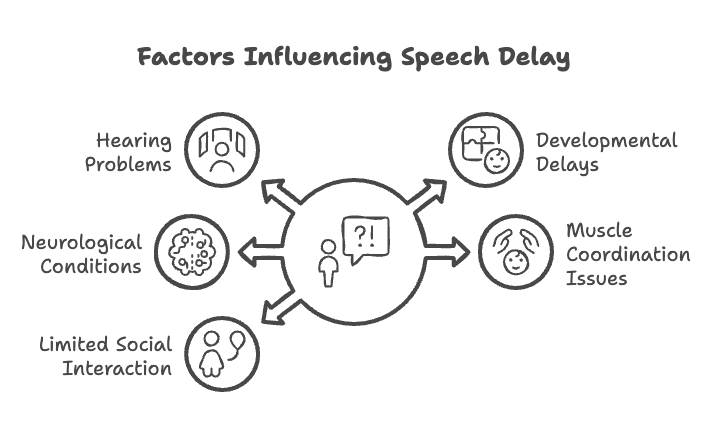
There isn’t just one reason. Many factors can influence speech development, such as:

  • Hearing problems: If your child struggles to hear clearly, learning to talk becomes harder.
  • Developmental delays: Some conditions, like autism or ADHD, can slow speech development.
  • Neurological conditions: The brain and nervous system play a big role in speech. Any delays in these areas can affect communication.
  • Muscle coordination issues: Speaking requires precise control of the lips, tongue, and jaw. Weakness or poor coordination can make speech difficult.
  • Limited social interaction: If a child doesn’t hear enough spoken language or isn’t encouraged to express themselves, their speech development may be slower.

How Can You Tell if Your Child Has a Speech Delay?

Every child develops at their own pace, but here are some common signs to watch for:

  • By 12 months: Not babbling or making simple sounds.
  • By 18 months: Not saying single words like “mama” or “dada.”
  • By 2 years: Not combining two words like “want toy.”
  • Difficulty understanding you or following simple instructions.
  • Struggling to express needs or getting frustrated when trying to communicate.
  • Unclear pronunciation that makes it hard for others to understand them.

If any of these sound familiar, don’t panic—there are ways to help!

What Can You Do to Help Your Child?

The good news is that speech delays can often be improved with the right approach. Some important steps include:

  • Encouraging conversation: Talk to your child often, even if they’re not talking back yet.
  • Reading together: This helps build vocabulary and understanding.
  • Play-based learning: Playing with toys, singing songs, and engaging in interactive games all support language development.
  • Speech therapy: A professional speech therapist can help guide your child’s speech growth.
  • Providing a supportive environment: Be patient and give your child plenty of opportunities to express themselves.

How Can Homeopathy Help?

Many parents turn to homeopathy as a natural way to support their child’s speech development. Homeopathy doesn’t just focus on the symptoms—it looks at the child as a whole, including their emotional well-being, behavior, and neurological development.

Here’s How Homeopathy Works:

  • Supports Brain and Nerve Function: Homeopathy works to balance the nervous system, helping the brain process speech more effectively.
  • Improves Muscle Coordination: Speech requires control of the tongue, lips, and jaw. Homeopathy can help improve muscle tone and coordination, making it easier for your child to form words.
  • Helps in Developmental Delays: If speech delay is linked to conditions like autism or ADHD, homeopathy supports overall cognitive and emotional development.
  • Reduces Anxiety and Frustration: Speech delays can be frustrating for children, leading to behavioral challenges. Homeopathy helps children feel calmer and more confident in expressing themselves.
  • Stimulates Natural Development: Instead of forcing speech, homeopathy gently encourages the body to develop speech skills at its own pace.

A Holistic Approach to Speech Development

No single solution works for every child, but combining homeopathy with speech therapy, a language-rich environment, and emotional support can make a real difference. Every child’s journey is unique, and progress may take time—but with the right approach, improvements can be seen.

Final Thoughts

If your child is facing speech delays, you’re not alone. Early intervention, a nurturing environment, and natural approaches like homeopathy can help them find their voice. If you’re considering homeopathy, consult with a qualified homeopath to find the best support for your child’s needs.

Remember, every child learns at their own pace. With patience, encouragement, and the right help, your child can develop strong communication skills and thrive.