Blog

The Hidden Danger in Your Child’s Breakfast

If you’re a parent, your morning probably feels like a race — packing tiffins, managing work calls, and getting your little one dressed and fed before 9 a.m., in my case, it’s 6.30 am. In all that chaos, convenience often becomes a lifeline.

So we reach for what looks easy and promising — that colourful cereal box, a biscuit packet, a “health drink” that claims to make kids stronger and taller, or a fruit juice that says “no added sugar.”

But as a doctor and a fellow parent, I want to pause with you today and ask: Are these ready-made options nourishing your child, or are we just falling for smart packaging?

What Recent Research Tells Us

Let’s start with cereals, which are a popular choice for children. A study from the United States reviewed 1,200 new children’s cereals launched between 2010 and 2023. What they found was concerning:

  • Fat content increased by over 30 percent
  • Salt (sodium) increased by over 30 percent.
  • Sugar levels went up.
  • Meanwhile, fiber and protein, two nutrients children truly need, decreased

While this study was conducted in the U.S., the patterns hold in India too. Many Indian cereal brands follow the same formulation or are direct imports.

But It’s Not Just Cereals

In my clinic, I see that the average Indian child’s breakfast or snack routine often includes  a combination of:

  • Ready-to-eat cereals
  • Health drinks (like those added to milk)
  • Biscuits or cookies (often labelled “whole wheat” or “high fiber”)
  • Flavoured yoghurts
  • Packaged juices or milkshakes

Parents choose these because they feel safer, more nutritious, and easier to prepare. But when we look at the labels, here’s what we find:

What I See on Indian Food Labels

Let me share some real figures I’ve gathered from reading labels of popular products:

  • Cereals: 8 to 12 grams of sugar per serving, barely 1–2 grams of protein or fiber
  • Health drinks: Often 15 to 20 grams of sugar per serving (that’s about 4 to 5 teaspoons)
  • Biscuits: Marketed as “healthy,” but still packed with refined flour, palm oil, and added sugar
  • Juices or milkshakes: Even the “no added sugar” varieties may have natural sugar content equivalent to soft drinks

These numbers matter because, according to the Indian Academy of Pediatrics and ICMR, a child’s daily added sugar should not exceed 5 to 6 teaspoons (20 to 25 grams). A breakfast of cereal, a biscuit, and a health drink can easily cross this limit before your child even leaves for school.

Why This Is a Bigger Concern Than It Seems

I don’t want to scare you, but I do want to show you what I see:

  • Children are coming in with complaints of fatigue, mood swings, and poor concentration
  • Unexplained weight gain or digestive issues in children as young as 5
  • Blood tests showing borderline cholesterol or early insulin resistance
  • And worst of all, a generation growing up on sugar without even realising it

The food industry is clever — they use words like “fortified,” “energy,” “growth,” and “natural” to win your trust. But as a doctor, I always say: flip the pack and read the back. The truth is in the label.

So What Can We Do?

Here’s what I tell young parents in my clinic:

  1. Stop trusting front-label claims. “No maida,” “Made with milk,” “High protein” — these are often marketing tricks. Check the actual nutritional chart.
  2. Limit added sugar, especially in breakfast and snacks. Avoid cereals and drinks with more than 6 grams of sugar per serving.
  3. Rethink ‘health drinks’. If your child eats a balanced diet, they don’t need chocolate-flavoured powders. Simple milk, nuts, fruit, and home-cooked meals do a better job.
  4. Use biscuits as a rare treat, not a daily snack.
  5. Return to our roots. Our traditional Indian breakfasts are full of fiber, complex carbs, and natural protein, and cost a fraction of these packaged foods.

Here’s what I recommend to working parents who ask for something quick and realistic:

  • Poha with vegetables
  • Moong dal or besan chilla
  • Dalia with jaggery and dry fruits
  • Idlis with sambar
  • Roti roll with paneer or aloo sabzi
  • Whole wheat toast with nut butter and banana slices

These may not come in glossy boxes, but they build real health, not just hype.

My Final Thought

I know we all want the best for our children. And I know that sometimes, it feels like you don’t have time to cook or plan every meal perfectly. But let me remind you — you don’t have to be perfect. Just be aware.
Start small. Maybe swap the cereal three days a week. Or keep biscuits out of the snack box and replace them with fruit or nuts.

A few mindful steps today can protect your child from years of health struggles later.

Want a Ready-to-Use Weekly Breakfast Plan?
If you found this helpful and would like a simple, quick, and nutritious 7-day breakfast chart for your child, designed by me to fit into real Indian mornings, you can download it here. It’s packed with tasty ideas your child will love and your routine will welcome.

Click here to download Dr. Rajeshwari’s 7-Day Healthy Breakfast Plan

With warmth and care,
Dr. Rajeshwari Yadav


A Doctor’s Guide to Early Signs of Autism, ADHD & Learning Issues in Indian Kids

Apna bachpan yaad hai? Hamare parents ne kai baar bola hoga — “Bachpan mein sabhi aise hote hain, theek ho jaayega.” And honestly, unki baat mein pyaar toh tha, lekin aaj ke zamane mein sirf pyaar kaafi nahi hai — clarity bhi zaroori hai.

This question, “Is it just a phase?”, is one of the most common and important doubts I hear from parents. And if you’ve been wondering the same about your child, aap akelay nahi ho.

Let’s break it down together — one step at a time. Scientifically. Compassionately. No jargon. Just a real conversation that might bring you clarity and peace

Sabhi bachhe alag hote hain — True or just comfort talk?

Yes — it’s true that every child develops at their own pace. Some walk at 10 months, some at 15. Some speak by 1.5 years, others by 2. But there’s a range of normal. Science calls these developmental milestones — important markers to help us catch when a child might need extra support.

For example, if your child is:

    • Not making eye contact
    • Doesn’t respond to name by 12 months
    • Is not pointing or waving by 15 months
    • Hasn’t spoken meaningful words by 18–24 months
    • Repeats phrases but doesn’t use them to communicate
    • Can’t sit still for even a few minutes
    • Lines up toys, flaps hands, or avoids interaction

Yeh sirf “alag” hona nahi hai — yeh developmental red flags ho sakte hain. Not labels, not judgments — just signals. Aur jitni jaldi hum in par kaam karein, utna accha outcome hota hai.

It’s Not Just Behavior — It’s Brain Wiring

Neurodevelopmental disorders — like Autism Spectrum Disorder (ASD), Attention Deficit Hyperactivity Disorder (ADHD), and Learning Disabilities (LD) — parenting se nahi hote. Inka base hota hai brain wiring, genetics, sometimes early birth-related complications or environmental influences.

Indian parents often hear or think:

  • “Ladka hai, isliye late bol raha hai.”
  • “Ghar mein sab late bolte hain.”
  • “Shayad TV zyada dekh liya.”
  • “Main working mom hoon, meri wajah se toh nahi?”

Please remember: Blame doesn’t help. Awareness does. Yeh kisi ka fault nahi hai — but knowing early helps us give the child the right tools to thrive.

Why Waiting Can Hurt

Kai baar relatives ya even doctors bolte hain, “Waqt ke saath theek ho jaata hai.”

But science tells us something else. The brain is most adaptable — neuroplastic — in the first 5–6 years of life. After that, it’s like clay that begins to harden.

Studies show that children who receive support before the age of 3 show significantly better long-term outcomes in language, attention, behavior, and social development.

But what if I’m overthinking?

That’s a genuine fear many parents share — “Kahi main overreact toh nahi kar rahi?”

Think of it this way — agar aapke bacche ko blurred vision ho, aap uska eyesight test karwaate ho na? Evaluation means clarity. If everything’s fine, you get peace. If there’s a concern, you get time to act.

How Can Homeopathy Help — Scientifically?

Once we know what we’re dealing with, the next step is support.

This is where integrative care, including homeopathy, comes in. Now, I want to be very clear — homeopathy is not a replacement for therapies like speech, occupational therapy, or special education. But what it does offer is internal support to the child’s nervous system.

Homeopathic medicines are selected based on the child’s complete symptom picture — not just the diagnosis, but the child’s unique personality, fears, sleep, digestion, and emotional responses.

Emerging research shows that:

  • Homeopathy can help regulate sensory processing, especially in hypersensitive children.
  • It may help in improving sleep, anxiety, attention span, and emotional control — all crucial for learning.
  • Children receiving homeopathic care alongside therapies often show faster emotional settling and better engagement in sessions.

The goal is not to “cure” the child — the goal is to support their nervous system, reduce stress responses, improve adaptability, and gently assist development from the inside out.

Most importantly, homeopathy is safe, gentle, and non-toxic, making it ideal for growing brains and bodies.

What You Can Do Today

Start observing and noting patterns in your child over a few weeks.

Consult a developmental expert, not just a general pediatrician.

Don’t delay screening — tools like M-CHAT or Conners Scale are simple and available in many clinics.

Consider integrative support, including homeopathy, alongside therapy.

Trust yourself. You know your child best.

From Confusion to Clarity

I’ve seen non-verbal 3-year-olds become confident communicators.

I’ve seen children once lost in their own world slowly but surely begin to respond, connect, and even shine.

Kya yeh overnight hua? Nahi. Yeh hua because parents didn’t ignore their doubts — they acted on them.

So if you’re asking yourself, “Is this just a phase?” — it’s time to trust that instinct. Because early action is not fear — it’s faith in your child’s potential.

Let’s make decisions not out of panic, but out of informed compassion.


8 Practical Tips to Find the Best Homeopathy Doctor Near You (Without Getting Misled!)

In today’s world, where every other lane has a board flashing “Homeopathy Clinic,” finding the right homeopath—who actually understands you and treats your illness from the root—can be quite confusing.

This blog is written with one purpose: to guide you step-by-step so you don’t end up in the wrong hands, especially when it comes to your health.

Whether you’re from Mumbai, Pune, or a remote town, these 8 tried and tested tips will help you identify the best homeopathy doctor near you—online or offline.

Tip 1: Check the Doctor’s Qualification

Not everyone prescribing sweet pills is a doctor!

Always check if the person is qualified. In India, a recognized homeopath will have degrees like:

  • BHMS (Bachelor of Homeopathic Medicine and Surgery)
  • MD (Homeopathy)
  • Older degrees like LCEH or DHMS (valid for senior practitioners)

Avoid those who’ve just read books or taken short courses. Homeopathy is a medical science—it demands proper medical education and clinical training.

Tip 2: Experience Matters (Especially for Chronic & Complex Diseases)

If you or your child is dealing with:

  • Autism, ADHD
  • PCOS, Hypothyroidism
  • Psoriasis, Vitiligo
  • Renal issues
  • Autoimmune diseases

then opt for senior practitioners with over a decade of experience.

In many corporate clinics, you’ll meet fresh BHMS graduates, while the senior doctor whose name appears in ads rarely sees patients personally. That’s fine for a cold or allergy, but not ideal for long-standing health conditions.

Want to check our doctors’ profiles and areas of expertise?
You can view Dr. Shailesh Yadav’s experience here: Click Here

Or explore Dr. Rajeshwari Yadav’s profile: Click Here

Tip 3: Read Real Reviews, Not Just Fancy Testimonials

Reading online reviews is the new word-of-mouth.

  • Look at Google Business Listings
  • Check the clinic’s website or Facebook page
  • Read long-form testimonials, not just celebrity videos or 5-star emojis

If possible, ask the doctor to share a couple of patient references (especially for similar diseases).

Tip 4: Talk to the Doctor Before You Decide

One conversation can tell you a lot.

  • Does the doctor listen patiently?
  • Are your doubts being cleared?
  • Are treatment options explained in simple language?
  • Is the doctor accessible by WhatsApp or phone, especially in emergencies?

At Caitanya Clinic, we’ve seen how much this matters. Patients love that they can share their reports, videos, or follow-ups directly with us—even from outside Maharashtra or India.

Tip 5: Choose a Homeopath Who Takes a Holistic View

Homeopathy isn’t about giving one medicine for each complaint.

A true homeopath:

  • Digs deep into your mind-body connection
  • Asks about emotions, stress, personality
  • Spends time (usually 1–2 hours) in the first consultation
  • Believes in healing you as a person, not just suppressing symptoms

Beware of practitioners who give 3–4 different homeopathic remedies at once, like one for thyroid, another for skin, and a third for hair loss. That’s not classical homeopathy.

Tip 6: Observe the Clinic Setup

A good clinic setup reflects a doctor’s sincerity.

  • Is the clinic clean, ventilated, and well-maintained?
  • Do they follow timely appointments or make you wait endlessly?
  • Is it child-friendly, especially if you’re consulting for pediatric issues?

At Caitanya, for example, we’ve created a warm, welcoming atmosphere for all age groups—from restless toddlers to anxious elders.

Tip 7: Ask About Record-Keeping & Data Privacy

Gone are the days of paper files.

Make sure:

  • The doctor uses digital records
  • Your medical data is backed up and secure
  • You can access old prescriptions or case notes if needed—even years later

This becomes essential when you’re traveling or need to consult from another city or country.

Tip 8: Online Treatment is Better Than Self-Medication

Don’t make this mistake: ordering homeopathic syrups or combos online without guidance.

We’ve seen this happen often:

  • A mother gives her child over-the-counter ‘cough syrup’ for months
  • A young woman takes herbal pills for PCOS and ends up worsening the problem
  • Patients overseas rely on random YouTube remedies

If you can’t find a good homeopath near you, choose online consultation with an experienced homeopath instead. At Caitanya, we regularly treat patients from the USA, UAE, UK, and South Africa with structured case-taking, couriered medicines, and follow-ups—all online.

What Else Should You Look For?

Here’s a checklist to keep handy:

  •  Qualification (BHMS, MD, etc.)
  •  Years of Experience
  •  Specific Disease Expertise
  •  One-to-one Consultation (not handled by assistants)
  •  Clinic Website & Google Reviews
  •  No Mix-Practice (avoid those who also prescribe allopathy)
  •  Transparent Fees and Prescription
  •  Long-Term Availability & Data Privacy

Conclusion: Choose Right, Heal Better

Your health is too valuable to be a trial-and-error experiment.

Whether you’re from Vasai-Virar, Mumbai, or anywhere in India or abroad—ask the right questions, and trust your instincts.

Still unsure? You’re welcome to schedule a free 15-minute clarity call with one of our doctors at Caitanya Clinic. We’ll help you understand whether homeopathy can help you—and how.

 Reach out via our contact page: https://caitanyahbh.com/contact-us/


The Body Remembers What the Mind Tries to Forget

Let me talk to you like I would to a dear patient or friend.

There’s something you already know — but maybe never said aloud.

You’ve been holding life for years. Not with addiction. Not with outbursts. But with something more socially acceptable — productivity. Niceness. Being the one who “has it all together.”

And your nervous system? It’s screaming.

But it doesn’t use words. It uses symptoms.

And those symptoms — I want to show you — are not random. They’re not separate. They’re not just bad luck. They’re messages. And they will keep getting louder until you finally listen.

  1. The 3 AM Wake-Up Call

You fall asleep, but suddenly, like clockwork at 3:17 AM — boom — your eyes snap open.

Your heart’s racing. Mind spinning. You tell yourself, “I need better sleep hygiene.”

“Your body thinks sleeping = danger.

But the truth? Your nervous system doesn’t believe deep sleep is safe. Your body thinks danger could strike while you’re unconscious. So it jolts you awake just when you’re about to enter deep, restorative sleep.

I had a patient, a successful banker, who woke up between 3:00 and 3:30 AM daily for two years. His reports were normal. But his mind wasn’t. After understanding the suppressed stress he carried from a family trauma, one remedy brought deep, unbroken sleep within a week.

This isn’t insomnia. It’s survival mode. And I’ve seen so many patients trying to treat this with melatonin or pills, when what they really needed was a medicine that told their body: You’re finally safe now.

  1. Breathlessness Without Effort

You’re sitting at your desk. No one’s chasing you. But you can’t catch your breath. Chest tightens. You sigh every two minutes.

This isn’t a lung problem. This is a nervous system that’s constantly in fight or flight.

You tell yourself, “I must have a lung issue.”

But your body says:

“We must be ready to run. We’re not safe yet.”

Like my young patient who was an IT professional — she had no history of asthma, but had breathlessness and tightness daily. She thought it was a heart issue. But her case revealed deep anticipatory anxiety about losing control. One remedy, and her breath returned to her gently, fully.

In homeopathy, we recognize this as a state — a fixed internal fear response. Not a flaw. Not a failure. A sign. And once we find the right match — the right remedy — your system can come down. Like a child being held, finally exhaling.

Left unchecked, this constant fight-or-flight breathing contributes to:

  • High blood pressure
  • Cardiovascular issues
  • Chronic fatigue
  • Anxiety
  • Hormonal imbalances
  1. The Nothing-But-Exhausted Feeling

You’ve rested. You slept. But by 2 PM, you feel like a truck ran over you.

You’re not lazy. You’re not unmotivated. You’re in freeze mode.

I once treated a young homemaker, mother of two, who would crash every afternoon. All tests were clear. But she lived in a constant state of overwhelm, responsible for everything, supported by no one. One deep-acting remedy tailored to her emotional pattern changed that in 10 days.

This is what happens when your nervous system says, “We can’t fight or flee. So let’s shut down.”

“When fight and flight don’t work, your body shuts down to survive.

Conditions I’ve seen develop from this state: fibromyalgia, thyroid dysfunction, adrenal fatigue, chronic fatigue syndrome.

Again, your body isn’t failing. It’s adapting. It’s surviving. Let’s help it feel safe enough to live.

Staying in this state too long? It may lead to:

  • Chronic Fatigue Syndrome
  • Autoimmune conditions
  • Depression
  • Thyroid dysfunction
  • PCOD/PCOS
  1. The Inability to Sit Still

You try to meditate — your leg starts bouncing. You need to clean. Work. Scroll. Move.

It’s not ADHD. It’s not just “being busy.”

“Your body has learned: movement = safety. Stillness = risk.”

A young boy I saw had trouble sitting through his online classes. Parents feared ADHD. But his restlessness came from the environment, frequent parental fights. His behavior changed not with labels but with a remedy that calmed his inner chaos.

Long-standing hyperactivity like this can lead to hypertension, heart palpitations, and even gut issues. But in homeopathy, we treat not just the physical, but the why.

Once we touch that wound with the right medicine, stillness becomes safe.

Prolonged restlessness is linked to:

  • ADHD-like symptoms
  • IBS
  • Panic attacks
  • Poor sleep
  • High cortisol levels

  1. The Chronic Clench

You didn’t even notice — but your jaw? Locked. Stomach? Tight. Shoulders? Like rocks.

You’ve been bracing for impact for years. But no one ever told you that constant tension becomes your baseline.

A college professor once came to me with chronic jaw pain. She wore mouthguards. Took muscle relaxants. Nothing worked. But in her case, the jaw held back anger she never spoke out loud. The moment that emotion got a voice through homeopathy, the clenching eased.

And this can lead to TMJ, migraines, IBS, and even autoimmune conditions like Hashimoto’s or RA. But I’ve seen patients heal — not just their pain, but their deep-rooted fear — once the right homeopathic remedy meets their lived experience.

Years of this? Welcome to:

  • TMJ disorders
  • Migraines
  • Neck and back pain
  • Ulcers
  • Reproductive health issues
  1. The Phantom Pains

Migraines before hard conversations. Stomach aches when you’re overwhelmed. Pains that medical tests can’t explain.

It’s not “all in your head.” It’s all in your nervous system.

“Your body is converting emotional pain into physical symptoms — because it has to go somewhere.”

I had a patient who’d spent over ₹1.5 lakhs on tests. Everything normal. Yet the body screamed. We took the case in detail, not just symptoms, but her story. And when the remedy touched that story, the body started letting go.

Chronic unexplained pain is often linked to:

  • Fibromyalgia
  • IBS
  • Tension headaches
  • Interstitial cystitis
  • Autoimmune flares
  1. The Constant ‘ON’ Mode

Even in silence, your brain scans for danger. You read every tone, every face, every shift in energy. You’re always on.

That’s not anxiety. That’s hypervigilance. And it’s not a defect. It’s an adaptation.

“You’re not reading the room. You’re scanning for threats.

A teacher once told me she felt safest in control. She anticipated everything, including people’s reactions. But it came at a cost — bloating, poor sleep, fatigue. When we addressed the emotional root, her body relaxed. And so did her digestion, mood, and breath.

But staying in this mode long-term can lead to chronic inflammation, high cortisol, weakened immunity, and even heart disease.

This leads to:

  • Anxiety disorders
  • Insomnia
  • High blood pressure
  • Hormonal chaos
  1. When It All Goes Numb

No sadness. No joy. No tears. Just… blank. But also? Your heart races. Chest tightens.

You call it logic. I call it a functional freeze.

This isn’t emotional stability. It’s emotional amputation. You’re not calm — you’re shut down.

Long-term emotional disconnection can lead to:

  • Chronic fatigue
  • Low libido
  • Digestive issues
  • Detachment in relationships

One young woman told me, “I feel like a ghost in my own life.” She wasn’t depressed. She was dissociated. Her mind had shut off to protect her. The remedy helped her re-enter her life, bit by bit, with gentleness.

  1. When the Floodgates Break

You’re “fine” for weeks. Then someone cuts you off in traffic, and you sob for 20 minutes.

That’s your body finally discharging what it’s been holding back.

You think: “That was an overreaction.”

Your body says, “I’ve been waiting to release this for years.”

One patient of mine spent years saying, “I just don’t cry.” Then one day, while talking about her childhood, she wept for the first time in 15 years. Not weakness — healing.

So What Do We Do?

Here’s where I come in — as a homeopath. And here’s where I feel so deeply grateful for the science I practice.

Because in homeopathy, we don’t just treat the symptom. We trace the map.

We ask:

  • When did this begin?
  • What was happening in your life then?
  • What belief got formed?
  • What emotion got buried?
  • What part of your identity became a performance?

The best part? Homeopathic medicines, when chosen by someone trained to listen deeply, can unlock these frozen circuits. They don’t suppress the body’s cry. They resolve the inner conflict that caused it.

I feel proud to say — homeopathy is the only science that consistently addresses these silent patterns, this trauma held in your cells, without side effects, and with profound healing.

We don’t silence these alarms. We listen. We understand their language.

Homeopathy, when practiced with depth, does just that. It connects the dots. It doesn’t ask, “What’s wrong with you?” It asks, “What happened to you — and how did your body learn to survive it?”

And when we understand that? We don’t suppress your symptoms — we translate them. Then match them to a remedy that whispers to your system: You can rest now. It’s safe.

I’ll leave you with this:

Your symptoms are not the enemy. They’re the most loyal part of you — the ones who stayed behind to keep the lights on.

Let’s stop pretending we’re fine. Let’s stop duct-taping the check engine light.

Let’s finally listen — and respond.

This is the work I live for. This is why I practice homeopathy.

You weren’t faking being okay. You were surviving.

Let’s help your system learn how to live again.

If this felt like your story — or the story of someone you love — please don’t ignore the alarm.

 Book a one-on-one consultation. Let’s decode what your body’s been trying to say.

 Share this with someone silently suffering. It might be their first step toward healing.

Dr. Shailesh Yadav
Caitanya Homeopathic Clinic

80% of Kids Fall Sick During Monsoon – Here’s What’s Really Happening

I often see a surge of anxious parents walking into my clinic the moment monsoon begins — and rightly so. This season, while beautiful, brings a predictable rise in infections among children, especially when school has just reopened. The body is already coping with heat, humidity, and fatigue, and this becomes an open invitation for microbes.

What’s most important in this season is early recognition of signs and symptoms, because timely support can prevent minor illnesses from becoming complicated.

Let’s understand this together, not with fear, but with clarity.

Why Children Fall Sick More During Monsoon

The monsoon environment — fluctuating temperatures, dampness, waterlogging, and contaminated food or water — creates an ideal setting for bacteria, viruses, and parasites to thrive. Children, due to their developing immune systems and close contact in schools, become more vulnerable.

Most Common Monsoon Illnesses in Children & Their Early Warning Signs

  1. Viral Fever & Flu-like Illnesses
    • Sudden onset of high-grade fever
    • Sore throat, runny nose, fatigue, body aches
    • Watery eyes, mild cough
    • Often confused with “normal” fever and missed early
  2. Gastroenteritis & Food/Water-borne Infections
    • Repeated vomiting, diarrhea (loose or mucousy stools)
    • Mild to severe dehydration
    • Loss of appetite, abdominal pain
    • Usually due to spoiled tiffin food, unclean hands, or unfiltered water
  3. Dengue & Malaria (Mosquito-borne)
    • High fever that doesn’t respond well to paracetamol
    • Rash, low platelet count (in dengue)
    • Chills, sweating cycles (in malaria)
    • Watch for excessive tiredness, bleeding gums, and red eyes
  4. Typhoid Fever
    • Persistent fever lasting more than 4-5 days
    • Weakness, loss of appetite, abdominal discomfort
    • Often mistaken for viral fever and mistreated
    • Common in children who consume unsafe food/water
  5. Skin Infections & Fungal Rashes
    • Itchy, red patches behind knees, in folds, groin
    • Fungal infections in damp socks, innerwear
    • Children may not report it until discomfort becomes unbearable
  6. Ear Infections
    • Complaints of ear pain or pulling the ear repeatedly
    • Fever, discharge, irritability in infants
    • It can worsen if water remains trapped after bathing or playing in the rain

What Parents Should NOT Ignore

  • Fever that lasts more than 2 days or comes with a rash
  • Reduced urine output or excessive sleepiness
  • Refusal to eat or sudden weight loss
  • Excessive crying in infants, especially with ear pain
  • Loose motions with signs of dehydration
  • Unexplained bruises, gum bleeding, or red patches (dengue alert)

These are not ‘just seasonal issues’ — they are your child’s body signaling that it needs help.

Myth Buster Section

  • It’s just a viral. Let’s wait it out.
    Not all fevers are benign. Early treatment reduces complications and prevents the spread in school settings.
  • Antibiotics are always needed.
    No. In most monsoon illnesses, viruses are the cause. Antibiotics do more harm when used without clinical need.
  • Street food is okay if hot.
    Not necessarily. Monsoon humidity encourages contamination even in cooked food, especially chutneys, curd, and pani-based items.

When Should You Seek Medical Advice?

If your child’s symptoms are not settling within 48 hours, or if they seem unusually tired, irritable, or off-balance, don’t wait. Medical evaluation at the right time can make all the difference, especially when it comes to dehydration, dengue, or typhoid-like illnesses.

What Can You Do Beyond Emergency Treatment? A Gentle, Evidence-Based Approach

It’s not just about managing acute symptoms. Monsoon illnesses in children, especially when they become frequent, are a clear sign that the immune system needs support.

This is where homeopathy offers parents a well-researched, safe, and natural treatment choice that goes beyond just “relief.”

Unlike chemical-based medicines, homeopathy works with the body’s own defense mechanisms. It has shown clinical effectiveness in bringing most acute ailments under control quickly and naturally, without adverse effects or risk of overmedication.

How Homeopathy Helps in Acute and Recurrent Illnesses

  • Speeds up recovery during fevers, colds, cough, stomach infections, or skin issues
  • Reduces recurrence, especially in children with frequent illness cycles
  • Boosts the immune system, helping your child stay stronger over time
  • Prevents antibiotic overuse, protecting the gut and long-term health
  • Is gentle, non-toxic, and safe for all age groups, even infants

If your child experiences recurrent cold, cough, fever, tonsillitis, diarrhea, or allergic flare-ups, homeopathy not only decreases the intensity and frequency of these illnesses, but also helps in building long-term immunity and vitality.

Final thought to Leave You With…

Monsoon doesn’t have to be a season of illness. It can be a time for joyful school returns, paper boats, hot soups, and family warmth — if we listen to our children’s bodies and act early.

At our clinic, we offer a specialised, child-focused, evidence-based homeopathic approach that helps manage acute diseases effectively, prevent relapses, and increase the body’s natural healing potential — without suppressing symptoms or burdening the body.

Whether you’re looking to manage an acute illness or want to help your child break the cycle of falling sick again and again, we invite you to explore a system of care that is gentle, scientific, and deeply effective.

Reach out to us to schedule a consultation — and take the first step toward restoring your child’s health the natural way.


Why Is Your Psoriasis Flaring Up? Let’s Understand the Real Triggers

Let me start by telling you something I’ve seen repeatedly in my practice—psoriasis is not just skin-deep.

Yes, it’s an autoimmune condition. And yes, it shows up on the skin as red, silvery, scaly plaques that can be itchy, painful, and confidence-breaking. But what many people don’t realize is that the triggers for psoriasis flare-ups go far beyond what’s visible. They are often tied to your immune system, hormones, emotional stress, and even what’s on your plate or in your medicine cabinet.

Let’s break this down, one-on-one, so you can better understand what could be causing your flare—and how to manage it smartly and holistically.

  1. Infections 

One of the most common patterns I’ve seen is a psoriasis flare right after an infection—especially throat infections like strep. Earaches, tonsillitis, even a mild cold or respiratory infection can set off your immune system in a way that it starts attacking your own skin.

This isn’t surprising when you remember that psoriasis itself is an immune system disorder. In fact, several studies show a strong connection between streptococcal infections and guttate psoriasis, especially in children and young adults.

  1. Skin Trauma 

Have you ever noticed a psoriatic lesion appearing after you got a scratch, insect bite, or even a sunburn? That’s called the Koebner phenomenon. It’s your body saying, “Hey, something happened here,” and then overreacting.

It’s fascinating—and frustrating—but very real. Even a tattoo or small wound can lead to a flare in places you never had psoriasis before.

  1. Stress 

Stress is such a major trigger that I often ask my patients: “What changed in your life before this flare?”

Emotional stress can cause or worsen a flare-up. Many people experience their first-ever psoriasis episode after a high-stress event—loss of a loved one, work pressure, marriage troubles, or exam anxiety.

And let me tell you—lack of sleep, constant overthinking, or even too much multitasking—these are all stressors in disguise.

A review published in JAMA Dermatology even highlighted how stress-reduction therapies like meditation, acupuncture, and counseling showed visible improvement in psoriasis patients.

  1. Alcohol & Smoking 

Now this might sting a little, but it’s important: Alcohol and tobacco are both known to worsen psoriasis. In fact, smokers are twice as likely to develop psoriasis.

Also, regular alcohol consumption makes many psoriasis treatments less effective. It’s not just about your liver—it’s about how your immune system responds under chemical stress.

So if you’re trying to manage your symptoms, this is one area where you must take control.

  1. Hormonal Changes 

Hormones play a massive role. During pregnancy, many women see their psoriasis improve—thanks to natural immune suppression during pregnancy.

However, after delivery, or during puberty and menopause, the condition often flares due to dropping estrogen levels. I’ve seen many new mothers walk into my clinic confused, asking “Why now?”—and this is usually the reason.

  1. New Medications 

Some medicines, even if prescribed for good reasons, can trigger psoriasis flares. These include:

  • Lithium (for bipolar disorder)
  • Beta-blockers (for hypertension)
  • NSAIDs like ibuprofen
  • Antimalarials

This doesn’t mean you should stop your meds—but if you’re noticing a link between a new prescription and worsening symptoms, it’s worth discussing alternatives with your doctor.

How Long Do Flares Last?

A psoriasis flare can last a few weeks to a few months. It’s followed by a remission phase—sometimes complete, sometimes partial. The patches may get dry, red, itchy, and scaly, and often burn when scratched. Every person’s pattern is different.

And no—psoriasis itself doesn’t reduce your lifespan, but the associated risks like heart disease, diabetes, and depression can—which is why early and holistic management is vital.

So… What’s the Way Forward?

I’ll be honest—psoriasis has no permanent cure in modern medicine. But that doesn’t mean you live helplessly with it.

This is where homeopathy comes in—not as a magic pill, but as a system of deep healing.

At Caitanya Clinic, we’ve seen consistent, long-term relief in psoriasis patients by treating the root cause—the immune dysregulation, the emotional patterns, the stress markers.

The Evidence?

  • Clinical trials published in journals like the International Journal of Homeopathy have shown improvement in chronic plaque psoriasis with individualized homeopathic treatment.
  • A 2020 study in Complementary Therapies in Medicine documented better quality of life and symptom reduction in psoriasis patients using homeopathy.
  • Plus, homeopathy has zero long-term side effects, unlike steroids or immune suppressants.

Your Next Step

If you or someone you love is struggling with psoriasis, don’t wait for the next flare to steal your comfort and confidence.

 Let’s talk. Let’s understand your triggers. Let’s work on the real problem.

Caitanya Clinic is proudly rated as one of the best-rated homeopathy centers in Vasai-Virar for chronic skin diseases like psoriasis.

We’re here to help you heal—not just your skin, but your system.

Book your one-on-one consultation today. Your body knows how to heal—it just needs the right nudge. Let homeopathy be that nudge.


Mumma, Papa… Why Isn’t He Talking Yet?

If you’re reading this, chances are… you’re concerned about your child.

Maybe your toddler isn’t talking like other children their age.
Maybe they avoid eye contact, don’t respond when you call their name, or spend hours lining up toys instead of playing pretend.
Maybe you’ve heard someone say, “It’s just a phase,” but your gut says otherwise.

As a parent, your instinct is powerful. And you’re right to listen to it.

At Caitanya, I’ve met countless mothers and fathers who noticed something early on — even if they couldn’t quite put it into words. What matters is: you noticed. That’s the beginning of everything.

So, what could these early signs mean?
Could it be a temporary delay — or is it pointing to something deeper?

Let’s understand one of the possibilities that many parents today are navigating with strength, awareness, and love — Autism Spectrum Disorder.

What Is Autism?

Autism Spectrum Disorder (ASD) is a neurodevelopmental condition, which means it affects how a child’s brain grows and understands the world.

It’s not a disease, not something “caught,” and certainly not the parent’s fault.
It’s a difference in brain wiring — in how your child learns, plays, feels, and interacts.
And it can influence more than just speech or behavior. Many children with autism may also experience differences in:

  • Communication – speaking, using gestures, or understanding others
  • Social interaction – forming relationships or playing with peers
  • Sensory processing – how they respond to sounds, touch, smells, light
  • Emotional regulation – managing excitement, frustration, or routine changes
  • Physical health – sleep disturbances, digestive issues, food intolerances

Importantly, autism exists on a spectrum — every child presents differently.

 Early Signs Parents Should Watch For

You, as a parent, are often the first to observe something “different.” These signs can appear as early as infancy, or may become noticeable by 18–24 months.

 Baby and Toddler Signs

  • Doesn’t respond to name being called
  • Avoids eye contact
  • Doesn’t smile back or react to peekaboo
  • Rarely gestures (waving, pointing, showing objects)
  • Doesn’t babble, coo, or attempt early speech sounds
  • Doesn’t reach out to be picked up

 Social and Play Behaviors

  • Prefers to play alone; avoids peers
  • Doesn’t imitate actions (clapping, playing house, etc.)
  • Lines up toys or spins objects
  • Doesn’t show shared enjoyment (like pointing to something exciting)
  • May seem unaware of others’ emotions or expressions

 Sensory & Physical Cues

  • Overreacts to common sounds (pressure cooker, mixer)
  • Sensitive to clothes tags, water temperature, or bright lights
  • Repeats unusual behaviors like spinning, hand-flapping, or toe-walking
  • May chew on non-food items or repeat specific sounds
  • Either extremely active or unusually quiet

 Let’s Clear Some Myths

In Indian households, we often hear:

  • “Boys talk late, don’t worry.”
  • “He’s just naughty, not autistic.”
  • “She doesn’t speak because no one else talks to her at home.”

While these comments come from a good place, they can delay timely support.

Autism isn’t caused by parenting style, screen time, or vaccines.
It’s a biological-neurological condition — not a character flaw or a bad habit.

The earlier we identify it, the better the outcome.

 Why Early Intervention Matters

The first few years of life are when the brain is most adaptable — this is called neuroplasticity. During this time, the right support can help your child:

  • Build social understanding
  • Develop communication skills (verbal or non-verbal)
  • Learn daily routines and self-care
  • Reduce overwhelming behaviors
  • Strengthen emotional connection and bonding

We’ve seen beautiful transformations:
Children who once had no words begin to speak in full sentences.
Children who couldn’t bear touch now enjoy hugs and closeness.
Families once lost in confusion now feel hopeful, connected, and empowered.

 What’s Next?

If you’ve noticed any of the signs above, don’t panic.
But don’t wait either.

Every child develops differently — yes — but certain milestones are important signals. If your child seems to be missing multiple early milestones, it’s time to evaluate further.

A proper diagnosis doesn’t put a label on your child. It opens the door to support, therapy, and real change.

Our Approach at Caitanya Healing by Homeopathy

At Caitanya, we offer a specialized, system-based approach to support children with autism.

We combine:

  • Classical homeopathic treatment tailored to your child’s constitution
  • Evidence-based therapies to enhance sensory processing and focus
  • Parental coaching for home routines and behavior strategies
  • Nutritional guidance to support gut-brain health
  • And most importantly, compassionate, personalized care

Concerned About Autism? Let’s Evaluate, Not Assume.

If you’re unsure whether your child is showing signs of autism or simply facing a temporary delay, early assessment is key.

 Book a free one-on-one consultation with Dr. Rajeshwari:
👉 https://calendly.com/doctorsconsultation/free-one-to-one-consulting-dr-rajeshwari

We offer evidence-based guidance, developmental screening, and a clear path forward — without fear, stigma, or guesswork.

Early action isn’t about labeling — it’s about timely support and better outcomes.
Let’s take that step, together.

Speech Delay in Children: How Homeopathy Can Help

Is Your Child Facing Speech Delay? Let’s Talk About It

As a parent, it can be worrying if your child isn’t talking as expected. Maybe they’re not saying words yet, or they struggle to put sentences together. You might be wondering—why is this happening? What can you do to help? Let’s break it down in simple terms and explore how homeopathy can play a role in supporting your child’s speech development.

Prevalence of Speech Delay in India

Recent studies in India have reported varying prevalence rates of speech and language delays among children:-

  • A study conducted in North India found a prevalence of 6.2% among children .
  • Another study reported a prevalence of 7% in children aged 0-3 years .​
  • Research from South India indicated a prevalence of 13.7% in children up to six years of age .

What is Speech and Language Delay?

Speech and language delay happens when a child doesn’t start talking or understanding words at the expected age. It’s more common than you might think, affecting about 5-10% of preschool-aged children.

  • Speech is about making sounds and words clearly.
  • Language is about understanding and using words to communicate.

Some children may have difficulty with one or both, which can lead to frustration—for both them and you.

Why is My Child Facing a Speech Delay?

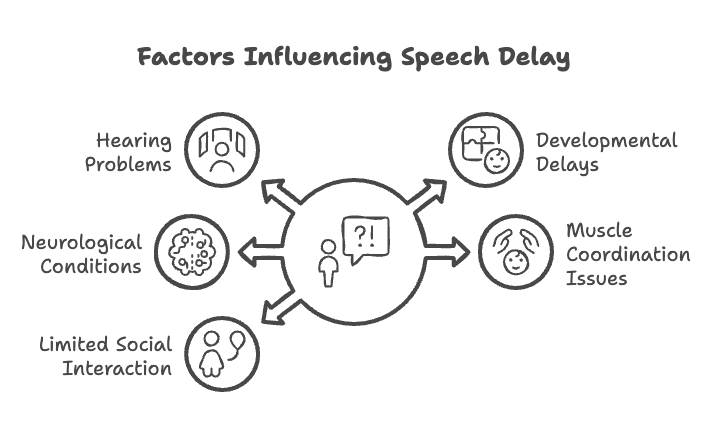
There isn’t just one reason. Many factors can influence speech development, such as:

  • Hearing problems: If your child struggles to hear clearly, learning to talk becomes harder.
  • Developmental delays: Some conditions, like autism or ADHD, can slow speech development.
  • Neurological conditions: The brain and nervous system play a big role in speech. Any delays in these areas can affect communication.
  • Muscle coordination issues: Speaking requires precise control of the lips, tongue, and jaw. Weakness or poor coordination can make speech difficult.
  • Limited social interaction: If a child doesn’t hear enough spoken language or isn’t encouraged to express themselves, their speech development may be slower.

How Can You Tell if Your Child Has a Speech Delay?

Every child develops at their own pace, but here are some common signs to watch for:

  • By 12 months: Not babbling or making simple sounds.
  • By 18 months: Not saying single words like “mama” or “dada.”
  • By 2 years: Not combining two words like “want toy.”
  • Difficulty understanding you or following simple instructions.
  • Struggling to express needs or getting frustrated when trying to communicate.
  • Unclear pronunciation that makes it hard for others to understand them.

If any of these sound familiar, don’t panic—there are ways to help!

What Can You Do to Help Your Child?

The good news is that speech delays can often be improved with the right approach. Some important steps include:

  • Encouraging conversation: Talk to your child often, even if they’re not talking back yet.
  • Reading together: This helps build vocabulary and understanding.
  • Play-based learning: Playing with toys, singing songs, and engaging in interactive games all support language development.
  • Speech therapy: A professional speech therapist can help guide your child’s speech growth.
  • Providing a supportive environment: Be patient and give your child plenty of opportunities to express themselves.

How Can Homeopathy Help?

Many parents turn to homeopathy as a natural way to support their child’s speech development. Homeopathy doesn’t just focus on the symptoms—it looks at the child as a whole, including their emotional well-being, behavior, and neurological development.

Here’s How Homeopathy Works:

  • Supports Brain and Nerve Function: Homeopathy works to balance the nervous system, helping the brain process speech more effectively.
  • Improves Muscle Coordination: Speech requires control of the tongue, lips, and jaw. Homeopathy can help improve muscle tone and coordination, making it easier for your child to form words.
  • Helps in Developmental Delays: If speech delay is linked to conditions like autism or ADHD, homeopathy supports overall cognitive and emotional development.
  • Reduces Anxiety and Frustration: Speech delays can be frustrating for children, leading to behavioral challenges. Homeopathy helps children feel calmer and more confident in expressing themselves.
  • Stimulates Natural Development: Instead of forcing speech, homeopathy gently encourages the body to develop speech skills at its own pace.

A Holistic Approach to Speech Development

No single solution works for every child, but combining homeopathy with speech therapy, a language-rich environment, and emotional support can make a real difference. Every child’s journey is unique, and progress may take time—but with the right approach, improvements can be seen.

Final Thoughts

If your child is facing speech delays, you’re not alone. Early intervention, a nurturing environment, and natural approaches like homeopathy can help them find their voice. If you’re considering homeopathy, consult with a qualified homeopath to find the best support for your child’s needs.

Remember, every child learns at their own pace. With patience, encouragement, and the right help, your child can develop strong communication skills and thrive.


Prostate Enlargement & Homeopathic Management

Understanding Prostate Enlargement (Benign Prostatic Hyperplasia) and Homeopathic Treatment Options

The prostate is a walnut-sized gland located between the bladder and the penis in men. It surrounds the urethra, the tube responsible for draining urine from the bladder. The primary function of the prostate is to secrete fluid that nourishes and protects sperm.

What is Benign Prostatic Hyperplasia (BPH)?

Benign Prostatic Hyperplasia (BPH) refers to the non-cancerous enlargement of the prostate gland. While the exact cause remains unclear, it’s believed to be linked to hormonal changes as men age. This condition is prevalent among men over 50 and can lead to various urinary symptoms due to the prostate pressing against the urethra.

Symptoms of BPH

As the prostate enlarges, it can constrict the urethra, leading to:

  • Frequent urination
  • Strong, sometimes uncontrollable urges to urinate
  • Increased need to urinate during the night (nocturia)
  • Difficulty initiating urination
  • Weak urine stream
  • Sensation of incomplete bladder emptying

Complications of BPH

If left untreated, BPH can result in:

  • Urinary tract infections
  • Acute urinary retention (sudden inability to urinate)
  • Bladder stones
  • Kidney damage in advanced stages

Conventional Treatment Options

Treatment for BPH depends on symptom severity and impact on quality of life. Options include:

  • Lifestyle Modifications: Reducing caffeine and alcohol intake, avoiding fluids before bedtime, and increasing dietary fiber to prevent constipation.
  • Medications: Alpha-blockers to relax prostate muscles and 5-alpha reductase inhibitors to shrink the prostate.
  • Surgical Interventions: Procedures like transurethral resection of the prostate (TURP) for severe cases.

Homeopathic Approach to Prostate Enlargement

Homeopathy offers a holistic approach to managing BPH by addressing both physical symptoms and underlying causes. Individualized remedies are selected based on the patient’s unique symptom profile.

Research Evidence Supporting Homeopathy for BPH

Several studies have explored the efficacy of homeopathic treatments for BPH:

Why Choose Homeopathy for Prostate Enlargement?

  • Personalized Treatment: Homeopathy tailors remedies to the individual’s specific symptoms and constitution.
  • Minimal Side Effects: Homeopathic remedies are known for their safety and lack of adverse effects.
  • Holistic Healing: Addresses not just physical symptoms but also emotional and psychological well-being.
  • Consulting the Best Homeopathic Doctor in Vasai-Virar

For residents of Vasai-Virar seeking alternative treatments for prostate enlargement, consulting an experienced homeopathic practitioner is essential. A qualified homeopath will conduct a thorough assessment and prescribe remedies tailored to your unique symptoms, ensuring a comprehensive and individualized approach to managing BPH.

Note: While homeopathy offers promising results for many, it’s crucial to consult with healthcare professionals to determine the most appropriate treatment for your condition.


Post-Chikungunya Joint Pain? Discover the Best Homeopathic Treatment for Lasting Relief

Chikungunya, much like malaria and dengue, is a mosquito-borne viral infection that has resurged in India since 2005, leading to multiple epidemic outbreaks. While it typically presents as an acute febrile illness with high fever, fatigue, and severe body pain, its hallmark symptom is persistent joint pain, swelling, and morning stiffness. This lingering joint discomfort has earned chikungunya the name “bone-break fever.”

What Is Post-Chikungunya Arthritis?

While most patients recover within weeks, around 30-40% develop prolonged joint symptoms that can last for months, resembling inflammatory arthritis like rheumatoid arthritis. The virus triggers immune dysregulation, leading to prolonged inflammation. Studies suggest that impaired viral clearance may allow the virus to persist in joints, mimicking autoimmune arthritis. Individuals with pre-existing arthritis or underlying conditions are at higher risk of developing chronic joint pain after chikungunya.

Symptoms: How to Identify Post-Chikungunya Arthritis

Chikungunya starts with high-grade fever and body pain, followed within a day or two by joint pain, swelling, and stiffness.

Key Symptoms:

  • Swelling commonly affects the feet, ankles, and small hand joints.
  • Severe morning stiffness makes gripping objects difficult.
  • Walking becomes painful upon waking, though stiffness improves gradually through the day.
  • In severe cases, joint pain can be debilitating, making daily tasks challenging for previously active individuals.

Diagnosis: The Key Lies in the Onset

The sudden onset of high fever followed by severe joint pain and swelling in the ankles, wrists, and fingers within a day or two is a strong diagnostic clue. Unlike autoimmune arthritis, which develops gradually, chikungunya arthritis is sudden and intense.

Diagnostic Considerations:

  • PCR, IgM, and IgG tests can confirm past infection but may not always be positive.
  • Clinical history and signs like darkening of the nose (Chik sign) help guide diagnosis.
  • Symptoms lasting beyond three months require further evaluation to rule out other inflammatory conditions.

Homeopathic Treatment for Post-Chikungunya Arthritis

Many patients struggling with post-viral arthritis seek long-term relief through homeopathy, as conventional treatments mainly focus on painkillers and anti-inflammatory drugs. Homeopathy works by addressing the root cause and modulating the immune response, providing lasting relief without side effects.

Benefits of Homeopathy:

  • Reduces joint pain and stiffness naturally.
  • Enhances the body’s self-healing ability.
  • Prevents chronic joint damage.
  • Tailored treatment based on individual symptoms.

At Caitanya Homeopathy Clinic, we provide the best homeopathic treatment in Vasai-Virar for patients suffering from joint pain post-chikungunya. Our approach focuses on personalized medicine that supports long-term recovery and improved joint mobility.

Prevention: A Shared Responsibility

Preventing long-term complications starts with mosquito control and sanitation. Individual efforts like using mosquito repellents, wearing protective clothing, and eliminating stagnant water can reduce the risk. However, stronger public health measures are necessary to prevent large-scale outbreaks.

Conclusion: The Expanding Role of Homeopathy in Treating Post-Chikungunya Arthritis

Chikungunya arthritis is a growing health concern, often confused with autoimmune arthritis. Early diagnosis and the right treatment approach are essential to prevent misdiagnosis and unnecessary long-term medication use. Homeopathy plays a vital role in recovery, offering holistic, side-effect-free relief for those suffering from persistent joint pain.

If you or your loved one is experiencing chronic joint pain after chikungunya, book a consultation at Caitanya Homeopathy Clinic today. Get the best homeopathic treatment in Vasai-Virar and regain your mobility naturally!